Before the interim results of the much-delayed Afghanistan’s presidential elections are announced on October 19, seriously contested issues, which could condemn the polls in a long, violent dispute and possibly a run-off, remain. First, how many votes were actually polled in the elections? Of these, will all votes be tallied or just biometric ones? Second, and more important, how will the United States (US)-mediated peace process that endeavours to bring back the Taliban in the future Afghan government impact the outcome of the polls?
The possible return of the Taliban is an unappetising prospect for India that sees it as an encouragement to Islamic radicalism, but also military and political empowerment of Pakistan. Despite the conundrum the presidential candidates and their supporters face, there is still unanimity in Kabul that the US will decide the outcome of the elections. Their impress is visible in the manner in which this has supported the counting of only biometric votes, which constitute less than one-third of the total voters. The Independent Election Commission (IEC) does not want to consider ballot votes believing that, like last time, they were stuffed to alter the outcome. Reading the IEC’s insistence on only counting biometric votes to his advantage, presidential candidate, Abdullah Abdullah, declared victory.
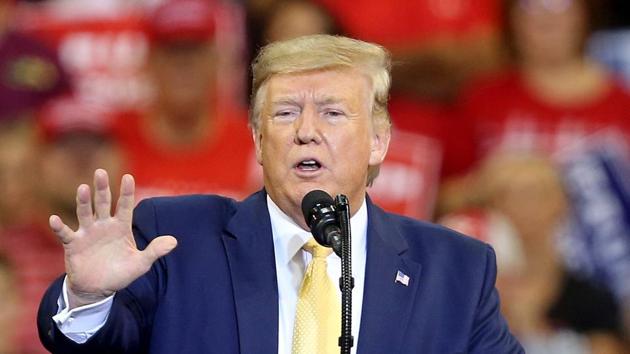
When the election campaign began, Abdullah, of mixed Tajik-Pashtun parentage in a country obsessed with the purity of bloodlines, seemed a non-starter. But he struck up critical alliances with communities and tribes that seem to be hurting the prospects of President Ashraf Ghani, who won the 2014 elections against Abdullah after the US-brokered recount. The late shift of half a million Ismailis led by an articulate Farkhunda Naderi and her family in favour of Abdullah is politically significant. Naderi’s brother, Sadat, was a minister in Ghani’s government and she was the president’s envoy to the United Nations. Both resigned from the government. Ghani is on a difficult wicket due to the shift in alliances and revival of interest in US President Donald Trump attempts to mediate and work out a deal with the Taliban to bring his troops back home. With the US elections drawing near, this resolve has acquired urgency. It was visible when Trump spoke with Turkish President Reccep Erdogan and broke the US alliance with the Syrian Democratic Front of the Kurds and asked his troops to return to the US. The US-Kurds alliance had helped wrest many areas in Syria from the Islamic State (IS), including its capital, Raqqa.
{{/usCountry}}When the election campaign began, Abdullah, of mixed Tajik-Pashtun parentage in a country obsessed with the purity of bloodlines, seemed a non-starter. But he struck up critical alliances with communities and tribes that seem to be hurting the prospects of President Ashraf Ghani, who won the 2014 elections against Abdullah after the US-brokered recount. The late shift of half a million Ismailis led by an articulate Farkhunda Naderi and her family in favour of Abdullah is politically significant. Naderi’s brother, Sadat, was a minister in Ghani’s government and she was the president’s envoy to the United Nations. Both resigned from the government. Ghani is on a difficult wicket due to the shift in alliances and revival of interest in US President Donald Trump attempts to mediate and work out a deal with the Taliban to bring his troops back home. With the US elections drawing near, this resolve has acquired urgency. It was visible when Trump spoke with Turkish President Reccep Erdogan and broke the US alliance with the Syrian Democratic Front of the Kurds and asked his troops to return to the US. The US-Kurds alliance had helped wrest many areas in Syria from the Islamic State (IS), including its capital, Raqqa.
{{/usCountry}}However, the US may not recall its troops from Afghanistan for other geostrategic reasons. The US is trying to scale down its presence and is exploring through its envoy, Zalmay Khalilzad, how its interests and military bases can be protected by arm-twisting Pakistan and its cash-strapped army. First, Pakistan, which claimed a legitimate interest in meddling in Kabul to preserve its “strategic depth” (an escape route to Afghanistan in the event of a debacle against India), assured the US that it had jettisoned the idea. This declamation came from Pakistan’s Prime Minister Imran Khan during his first visit to the White House. Second, ambassador Khalilzad got the Russians and the Chinese on board when it came to an agreement on the Taliban’s accommodation in the new arrangement. After all, it was Russia that began to reach out to Taliban to counter the growing presence of the IS in Afghanistan. Moscow blamed the US for the rise of IS in Afghanistan. Last, China, due to its investments in Pakistan did not want its assets to be impacted by violence in the neighbouring country.
What about India? The US envisaged a limited role for New Delhi. Besides collaborating with Iran on the Chabahar Port — which has been exempted from sanctions by the US — to create a new sea route for Afghanistan, India was to make an effort to work with the Taliban, but New Delhi found the idea unacceptable. Suggestions were made by intermediaries that the Taliban was keen to be weaned away from Islamabad, if India showed intent. The deal with the Taliban was to be signed by Trump before the UN general assembly at Camp David, but Trump cancelled it claiming that the radical Islamists didn’t keep their part of the deal to stop the violence. They were also supposed to promise that their cadres would not join hands with al-Qaeda. Taliban failed to deliver on that.
The US has again returned to the centre-stage and the compelling, but simple logic of the Afghan street is that whichever presidential candidate listens to the US and plays ball with it by promising accommodation to the Taliban in the new government will get a shot at power. Both Ghani and Abdullah believe that each of them is the one.