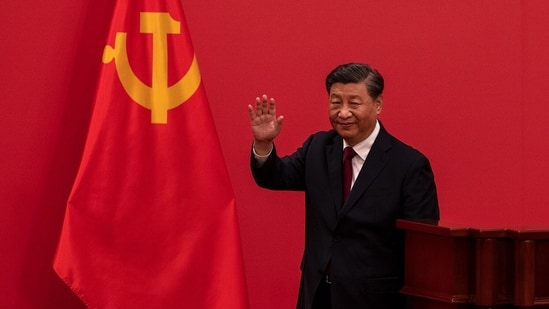
The funding of an online media entity by a Chinese linked US tech entrepreneur is part of a larger game of influence and narrative peddling by the Xi Jinping regime commensurate with the rise of Beijing as an aspiring global super power.
Since PLA belligerence in East Ladakh in May 2020, the Indian intelligence has been monitoring Chinese penetration of sensitive sectors through automated investment routes and have taken action against suspicious entities in the infrastructure sector like power, road and telecom. Of late, the Indian intelligence has also pointed out to the Modi government about Chinese influence peddling in Indian media through investments and other lures including funding of education of media recruit or paid vacations, travels to sensitive places like Lhasa or simply paying cold cash.
While many are rightly shocked about the Chinese funding of media entities, positive narrative setting or influence peddling is “legitimate” operation for Chinese intelligence as the same has been done by US, Russian or even British intelligence over the past decades. It is part and process of a country's seeding in global power rankings. And it is not only the media but even political parties that are subverted or aligned to understand the view of a third country like China through innocent appearing diplomatic interactions, invites to lectures in think tanks or a fully paid vacation abroad. The deep penetration of Chinese intelligence has been noticed in countries in the Indo-Pacific, particularly in the Indian sub-continent with dark arts in full display. The posting of envoys belonging to the United Front Works Department of the Communist Party of China in the Indian sub-continent and Africa are part of this effort to set a positive narrative for Xi Jinping regime.
Given that China is number two economic and military power in the world, amounts like ₹38 crore invested in an online website are peanuts for Beijing as it is investing humongous amounts to set the narrative in the US media, Europe and Australia. The CPC has been successful to a large extent as despite the global pandemic clearly having origins in Wuhan in China, the media and political outrage was largely subdued and contained from Beijing perspective even though the global economy was devastated by the disease.
{{/usCountry}}Given that China is number two economic and military power in the world, amounts like ₹38 crore invested in an online website are peanuts for Beijing as it is investing humongous amounts to set the narrative in the US media, Europe and Australia. The CPC has been successful to a large extent as despite the global pandemic clearly having origins in Wuhan in China, the media and political outrage was largely subdued and contained from Beijing perspective even though the global economy was devastated by the disease.
{{/usCountry}}That the Chinese influence peddling through paid or propaganda media is a huge success is also evident from the virtual silence of the Muslim World over serious repression of Sunni Uighur Muslims in Sinkiang (Xinjiang in mandarin) province by the Xi Jinping regime. Countries like Turkey, Pakistan, Qatar, Iran, which drum up any Muslim cause to take leadership of Islamic world, have maintained silence on Uighur repression at the hands of CPC over the past decades even as they strengthen their economic ties with Beijing, The west largely Europe, UK and Canada, who carry human rights on their political shoulders, have also been quiet with stray noises coming out of US. The same is the case of Buddhist repression in Tibet as Beijing does demographic changes in the region with influx of Han Chinese from hinterland through brute force. There is hardly any criticism of the umbilical cord that China has dictatorships in North Korea, Myanmar or for that matter Iran.
While the Narendra Modi government has taken note of intelligence reports about other media organizations under Chinese influence and will take legal action on them based on proof, time has come for India also to use its influence to correct the anti-India narrative by reaching out to adversarial media or political parties abroad. It may be treason for some, but in the power world this is a “legitimate” force multiplier if India has ambitions to become a power in the coming decades. This is the job that the Indian government and its arms had forgotten over the decades as the country was just involved in bread and butter issues or domestic political chaos. Indian diplomacy has only now realized that soft power comes only from hard power.
If India aspires to be a world power instead of a regional one, it is important for the Modi government to strengthen counter-intelligence (CI) to cut down those spreading false propaganda on behalf of an adversarial power like China or its tributary state Pakistan. While steps have been taken to add muscle to CI in the past two years, the Indian system is not even a fraction of what is functioning in either China or the US. For example, the Indians military personnel involved in cyber security are less than 1000 while there are more than 5000 involved in China and nearly 10,000 in the US for counter-cyber operations.
Over the decades, India has justified its ignorance about the way decisions are made by Chinese leadership by saying that the Communist system was opaque while Beijing used its political and media proxies to glean information about Indian decision making. Even though the Google maps show cartographical variance in favour of China over the Doklam tri-junction, India has just not been able to counter the Chinese narrative of what happened in 2017 or in 2020. Nothing has changed since 1962, when many within India supported China and the clueless Indian intelligence chief told the Nehru government that the PLA will not initiate war against India. India needs to counter Chinese dark operations or else it will always be following a false narrative through paid media.