Over the last one year, those in the highest echelons of government have claimed that India is facing a jobs’ data crisis, not a jobs crisis. In the absence of any officially released employment-unemployment statistics since the Labour Bureau’s household survey of 2015-16, the lack of any recent data (barring that of the Centre for Monitoring Indian Economy, a private agency ) is certainly a problem. But the real issue, which is more deep rooted and structural than any data challenge and has attracted relatively little attention in the jobs debate, is that of the dominance of informal employment.
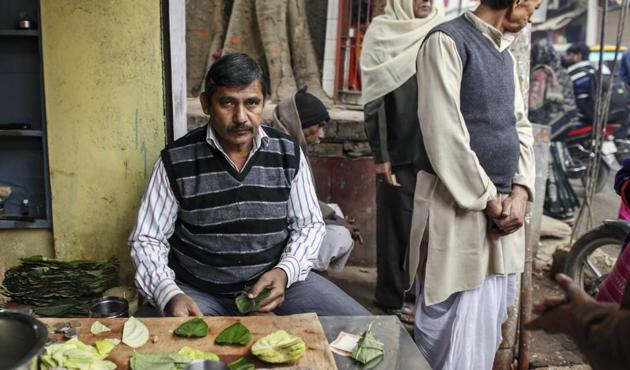
The National Sample Survey’s (NSS) last quinquennial employment-unemployment survey (2011-12) showed that 92% of India’s workforce is informally employed. More recently, the International Labour Organization (ILO) provided comparable estimates on the size of the informal economy at the global and regional levels for the first time (Women and men in the informal economy: A statistical picture, 2018). The report found that 88.2% of employment in India was informal, significantly higher than the global average of 60%. What is more, the prevalence of informal employment in India was comparable to that of sub-Saharan Africa (89.2%). With little job security and limited access to safety nets, most of the informally employed remain vulnerable to health hazards, economic downturns and natural catastrophes. It is no surprise that the ILO estimates that three out of four workers in India will fall in the category of vulnerable employment by 2019.
The extent and importance of the traditional informal sector has persisted in India over the decades and it has not been absorbed by the modern sector as expected with robust economic growth. Many attribute this to factors such as India’s labour regulatory environment and trends in trade and technology. However, it needs to be noted that India’s pattern of structural transformation where the GDP growth has been driven by sectors which are not employment intensive has generated limited productive formal job opportunities for the country’s low skilled and unskilled workforce. Consequently, the poor, who do not have the luxury to remain unemployed in their wait for formal jobs, resort to informal employment as a survival mechanism.
{{/usCountry}}The extent and importance of the traditional informal sector has persisted in India over the decades and it has not been absorbed by the modern sector as expected with robust economic growth. Many attribute this to factors such as India’s labour regulatory environment and trends in trade and technology. However, it needs to be noted that India’s pattern of structural transformation where the GDP growth has been driven by sectors which are not employment intensive has generated limited productive formal job opportunities for the country’s low skilled and unskilled workforce. Consequently, the poor, who do not have the luxury to remain unemployed in their wait for formal jobs, resort to informal employment as a survival mechanism.
{{/usCountry}}What is more, many of the new jobs being created in the platform economy (such as the often-cited success stories of taxi aggregators like Ola and Uber) are also non-standard in nature. In other words, they are outside the ambit of laws and regulations covering minimum wages and other benefits. While for some, these informal work arrangements may be a matter of choice and a way of supplementing their income, for most others they are associated with job insecurity, earnings volatility and reflect precarious work as they can no longer rely on an employer to pay their pension or cover their health care. Thus, as old forms of informal employment persist, new forms are also emerging. We need to confront the reality that the informal economy is increasingly the norm, not the exception. Informal workers are not the marginal or temporary entities depicted in early development theories.
There is no denying the importance of creating an enabling environment for productive enterprises to flourish and generate more formal jobs. It is another matter that this cannot be achieved by mandating a 10% quota in government jobs for economically weaker sections (defined generously by annual family income of less than ₹8 lakhs), when the pool of government jobs is shrinking. But, the real policy challenge lies in how we can improve the quality of informal work and reduce the decent work deficit in the informal sector. This requires a multipronged approach.
In addition to providing social security benefits for informal workers, there is a need to rethink how social protection systems and labour market institutions need to adapt to a changing world of work where traditional employer-employee relationships are likely to erode. We need to identify strategies to organise informal workers (both the working poor and gig economy workers) to increase their collective representative voice and ensure that their fundamental rights at work are not violated. The lack of data cannot any longer be cited as an excuse to deny the enormity of these challenges.
Radhicka Kapoor is a fellow at ICRIER, and has worked with the Planning Commission and International Labour Organization
The views expressed are personal