A mild sense of panic is creeping into the country’s financial markets. The finance minister would have everyone believe that it is just part of a global problem, but that is not strictly true. Market participants know from history that whenever the finance ministry, the SEBI and the RBI come out together to voice assurances that all is well, it usually means the opposite — that it is not. These soothing noises have therefore, predictably, been read as signs of desperation. The rupee continues its slide, stocks have fallen and the bond market roiled by fears of default.
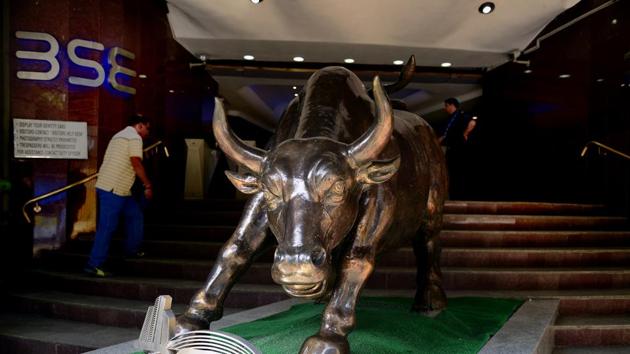
New bombs are going off every day. One day, it is a crash in the Yes Bank stock on news that its promoter CEO may soon be forced out by RBI; another time it is fears of an imminent collapse of IL&FS setting off ripples in the bond market and mutual fund fraternity. Investors fret, justifiably, that many of their beloved banks have been run by CEOs who were artful with facts about asset quality. They also fear for the ultimate bailout machine — the LIC, as it is forced to shore up one sinking ship after another, from IDBI to IL&FS. Are we creating another monstrous problem with the country’s largest insurance company?
In other news, petrol prices have crossed ₹90 in Mumbai. Will we soon have petrol at ₹100 and would that be the tipping point for public outrage? Globally, trade war, US sabre rattling with Iran and other irritants remain in play. The US Federal Reserve has dropped its accommodative stance indicating interest rates will continue to rise, adding to the local gloom. Foreign investors have sold ₹73,000 crore of Indian equities and debt since April this year, ₹20,000 crore this month alone. The India story is slipping, in the eyes of the world. And all this, before election season has even begun. Who knows what nasty surprises await the market from there?
For Indian households who have steadfastly reposed faith in the economic recovery narrative over the last two years, it is a time of reckoning. So far, they haven’t blinked, and that is the only reason the Sensex is still where it is, despite the barrage of bad news. This year, domestic mutual funds have pumped in ₹50,000 crore into the stock market, neutralising the selling impact of foreign investors. But cracks are showing. The run rate of monthly inflows from Indian investors into equity mutual funds is slowing down. Last year, the inflow crossed ₹15,000 crore in some months, that slowed down to an average of ₹10,000-12,000 crores at the beginning of the year. In September, we will be lucky to cross ₹7,000 crore. Caution is seeping in, slowly but surely. The one thing that stands between market stability and a substantial correction is SIPs: Systematic Investment Plans. If SIP inflows dwindle, we are staring at a big problem.
{{/usCountry}}For Indian households who have steadfastly reposed faith in the economic recovery narrative over the last two years, it is a time of reckoning. So far, they haven’t blinked, and that is the only reason the Sensex is still where it is, despite the barrage of bad news. This year, domestic mutual funds have pumped in ₹50,000 crore into the stock market, neutralising the selling impact of foreign investors. But cracks are showing. The run rate of monthly inflows from Indian investors into equity mutual funds is slowing down. Last year, the inflow crossed ₹15,000 crore in some months, that slowed down to an average of ₹10,000-12,000 crores at the beginning of the year. In September, we will be lucky to cross ₹7,000 crore. Caution is seeping in, slowly but surely. The one thing that stands between market stability and a substantial correction is SIPs: Systematic Investment Plans. If SIP inflows dwindle, we are staring at a big problem.
{{/usCountry}}Professional or active investors have already started to leave the scene. The debilitating fall in mid and small cap stocks, their favourite stomping ground, has crippled them. Huge drawdowns in Portfolio Management Service (PMS) portfolios and trading positions have seen lumpy inflows into stocks dry up. But SIPs come from salaried individuals, often in B and C cities, who have taken a basic asset allocation call in favour of equities after staying out for six long years. It is a habit, and habits don’t change overnight. Yet, when bad news proliferates, returns start to vanish and fear of capital erosion seeps in, even strong convictions can get shaken. Equally, debt returns are rising. Fixed maturity plans (FMPs) and accrual funds are now offering close to 9% return. Not bad, in a rising volatility equity scenario. Thus, a dilemma. Stopping a SIP habit is usually not a good idea, as it is precisely the price averaging that comes with staying the course in uncertain times that leads to good long-term returns. The question is whether we are staring at a prolonged period of uncertainty, stretching into the post-election period next year and if a more defensive positioning and tweaked asset allocation is advisable. For nimble investors, the objective now should be capital protection. For true long term investors, good entry points may be on their way, as stock prices adjust to new realities. Meanwhile, keep taking small SIPs, to keep your portfolio hydrated.
Udayan Mukherjee is Consulting Editor, CNBC TV18. His first novel, Dark Circles, is being published by Bloomsbury on November 1
The views expressed are personal