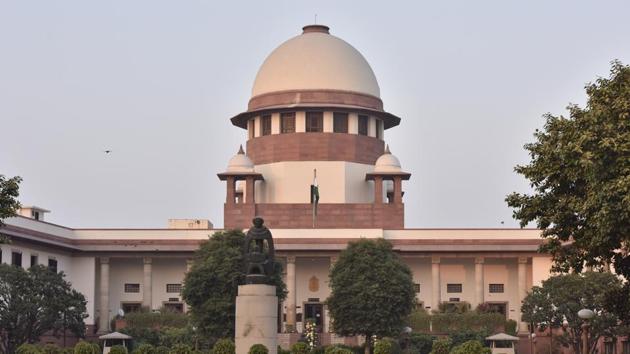
On April 3, while listening to a review petition against its controversial judgment on the Scheduled Castes and Scheduled Tribes (Prevention of Atrocities) Act, a bench of the Supreme Court observed that “we have... only safeguarded the interest of innocents from being arrested”. A few months earlier, the same bench of the court had issued similar orders in the context of Section 498A of the Indian Penal Code, whose purpose is to protect wives from cruelty in the marital home. In both cases, the court reasoned that arrests had become so easy and so costless, that these provisions were now being abused by the very people that they had been designed to protect.
Both judgments have been criticised.
It has been argued that the court should substitute Parliament, and amend laws. It has been pointed out that, there was no credible evidence that the SC/ST Act or Section 498A were being “misused” any more than any other law.
It is in this context that the court’s response — “we have safeguarded the interest of innocents” — is a telling one. In essence, the court’s argument is that even laws that are designed to remedy social imbalances of power — and, therefore, must be asymmetrical in whom they protect, and how — cannot be so asymmetrical that they efface the basic procedural rights of individuals. Or, to put it simply, civil rights cannot be sacrificed in order to restore social balance.
While the correctness of this argument, in the context of what the court did to Section 498A and the SC/ST Act, can be debated, what is immediately striking about it is the inconsistency with which it is wielded. There are laws in India that contain far more radical departures from normal procedural safeguards for the accused, and are far more stringent in their application. For example, the now-lapsed Terrorist and Disruptive Activities (Prevention) Act (TADA) allowed police confessions to be admissible in evidence, made the grant of bail virtually impossible, and allowed trials where the details of witnesses and their evidence would be redacted to a degree that an effective cross-examination was all but impossible. When TADA was challenged, the apex court passed some guidelines to check the possibility of abuse, but left these provisions untouched; many of these were retained in TADA’s successor, the POTA, and some have been carried over into India’s current umbrella anti-terrorism legislation, the Unlawful Activities (Prevention) Act.
{{/usCountry}}While the correctness of this argument, in the context of what the court did to Section 498A and the SC/ST Act, can be debated, what is immediately striking about it is the inconsistency with which it is wielded. There are laws in India that contain far more radical departures from normal procedural safeguards for the accused, and are far more stringent in their application. For example, the now-lapsed Terrorist and Disruptive Activities (Prevention) Act (TADA) allowed police confessions to be admissible in evidence, made the grant of bail virtually impossible, and allowed trials where the details of witnesses and their evidence would be redacted to a degree that an effective cross-examination was all but impossible. When TADA was challenged, the apex court passed some guidelines to check the possibility of abuse, but left these provisions untouched; many of these were retained in TADA’s successor, the POTA, and some have been carried over into India’s current umbrella anti-terrorism legislation, the Unlawful Activities (Prevention) Act.
{{/usCountry}}If, in its judgments on Section 498A and the SC/ST Act, the court adopted the perspective of the innocent individual wrongly arrested, in its judgments on anti-terror laws, it adopted the perspective of the guilty man standing ready to misuse the procedural safeguards of criminal law. It upheld witness anonymity by observing that witnesses might be too afraid of terrorists to testify openly, and it upheld stringent anti-bail provisions by pointing to the grave consequences of letting terrorists out on bail.
While the court justified its judgments on Section 498A and the SC/ST Act by invoking the value of liberty, in its judgments on anti-terror laws, it held that personal liberty had to be “balanced” against other social values, including the interests of the victims and of society. The result has been devastating: the last few years have seen multiple acquittals of terror accused, who spent between seven and 22 years in jail, because the law virtually prohibits the grant of bail.
The highest court in the land cannot take a Janus-faced approach to personal liberty. If its goal is to protect the liberty of the innocent, then it cannot selectively protect that liberty under some laws, but not under others. It is no answer to say that the gravity of terrorism requires special laws that depart from the norms, because violence against women and against Dalits has been around for far longer than terrorism ever has been.
We therefore need to have a debate not just about the correctness about the court’s judgments in the 498A and SC/ST Act cases, but also about how much our criminal law values preserving individual liberty, and the protection of the innocent from a criminal justice system that is often brutal, biased, and targeted against the most vulnerable in society.
Gautam Bhatia is an advocate in the Supreme CourtThe views expressed are personal