For decades, Pakistan, a fountainhead of global terrorism, has consistently tried to deftly deflect fingers pointed towards its roguish actions in perpetrating terrorism in the region and other nations in the world. Some of its powerful mentors have bailed it out from international sanctions in the past. The move by the financial watchdog, Financial Action Task Force (FATF), in placing Pakistan on its grey list for its ham-handed efforts in restricting terror financing is a welcome, if long-delayed, step.
In pursuance of these sanctions, it is incumbent on Pakistan to improve its global Anti-Money Laundering (AML) and Countering Financing of Terrorism (CFT) compliance regimes. Pakistan has to ensure stringent observance by September 2019, failing which it will be blacklisted by the FATF, thereby inviting even stricter international financial sanctions. In view of its precarious financial situation, with its current international net reserves falling to less than $1 billion from slightly more than $7 billion in September 2016, Pakistan will be ill-advised to remain lax in the scrupulous implementation of the recent FATF diktat.
Pakistan is home to many terror ‘tanzeems’ (organisations) whose primary focus is directed against India (especially in Jammu and Kashmir), Afghanistan and globally, against the US and Europe. Some of these include the Lashkar e Tayyeba (LeT), the Jaish-e-Mohammad, the Hizbul Mujaihdeen, the Lashkar-e-Jhangvi, the Jamat-ul-Ahrar; elements of the Haqqani network, the Al Qaeda and even the dreaded ISIS. Reportedly, Pakistan has prepared a 26-point action plan to stem terror financing. Other nations, India and Afghanistan in particular, will be keeping an eye on Pakistan’s counter-terrorism efforts over the next few months.
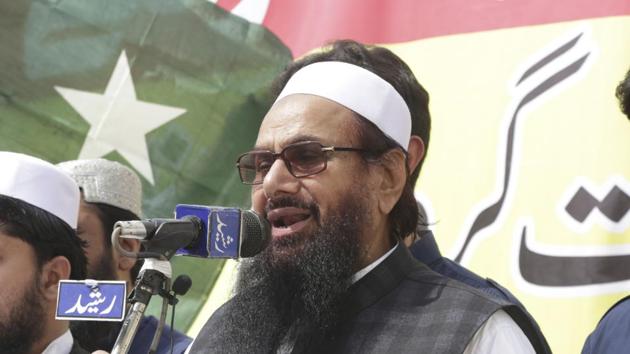
Pakistan’s earlier record of curbing terrorism in the region is at best double-faced with the nation not acting against the so-called “good terrorists” that it employs and considers as its “strategic assets”. It is not surprising then that the Mumbai 26/11 mastermind Hafiz Saeed, a UN-designated terrorist, continues to openly spew anti-India venom on the streets of Karachi and Lahore and has recently floated a political party (Mili Muslim League) to participate in the general elections due this month. As intelligence agencies know, Pakistan’s action against the LeT headquarters in Muridke and seizing the financial assets of the Falah-e-Insaniyat (LeT’s front for donations) is nothing more than a façade.
{{/usCountry}}Pakistan’s earlier record of curbing terrorism in the region is at best double-faced with the nation not acting against the so-called “good terrorists” that it employs and considers as its “strategic assets”. It is not surprising then that the Mumbai 26/11 mastermind Hafiz Saeed, a UN-designated terrorist, continues to openly spew anti-India venom on the streets of Karachi and Lahore and has recently floated a political party (Mili Muslim League) to participate in the general elections due this month. As intelligence agencies know, Pakistan’s action against the LeT headquarters in Muridke and seizing the financial assets of the Falah-e-Insaniyat (LeT’s front for donations) is nothing more than a façade.
{{/usCountry}}The chances of Pakistan ever forsaking terrorism as a part of its state policy, directed against India and Afghanistan, appear remote. Nevertheless, with the US also taking some firm measures against Pakistan and the latter’s wobbly financial stability may prompt Pakistan to shed its cloak of terrorism, at least for the time being. The Pakistani people may seriously consider that their frequent economic bailouts at the hands of the Chinese will come at some serious cost to their sovereignty.
Kamal Davar, a retired Lieutenant General, is president of the Delhi Forum for Strategic Studies
The views expressed are personal