
 E-Paper



Women under Taliban rule: Real life mirrors dystopian fiction
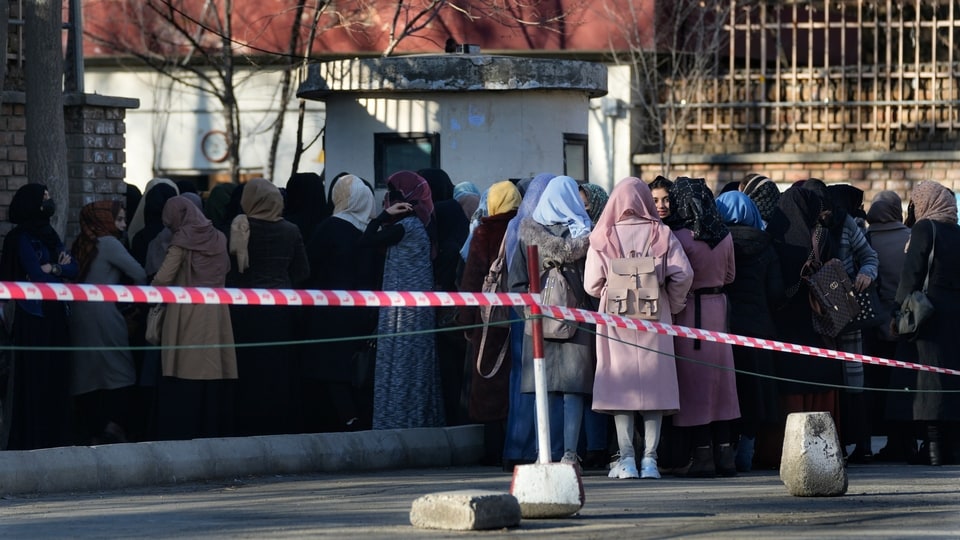
Since taking over Afghanistan in 2021, the Taliban have become more empowered to expedite women’s erasure from public life.

 Prefer HTon Google


Afghanistan under Taliban rule today bears striking resemblance to the dystopian modalities depicted in Margaret Atwood’s The Handmaid’s Tale.
Set in the Republic of Gilead, a totalitarian patriarchal theocracy that has replaced the United States, the story follows Offred, a handmaid assigned to Commander Fred (from whom the protagonist derives her name, ‘Of Fred’) and his wife, an elite couple unable to conceive, as infertility has plagued the society.
In Gilead, handmaids are fertile young women reduced to mere symbols of reproduction, and all women’s rights, regardless of their social status, are severely restricted, with their limited movements in public monitored by a secret police force known as the Eyes. Offred, who recalls her freedom and life prior to Gilead, is eventually rescued by Mayday, a secret underground resistance organisation, seeking to overthrow Gilead’s fundamentalist regime.
Similarly, the Taliban administration mirrors Gilead’s oppressive regime, while their ‘Ministry for Propagation of Virtue and Prevention of Vice’ (PVPV) functions much like the Eyes. And, as for Mayday, well, the National Resistance Front of Afghanistan, the Taliban’s chief opposition, is currently too weak and without considerable support to be considered a parallel force.
Living in a dystopia
A little over three years ago, on August 15, 2021, the Taliban swept to power in Afghanistan, with some nursing hopes that a ‘Taliban 2.0’ would adopt a more moderate modus operandi, as opposed to ‘Taliban 1.0’, often referred to their stint from 1996 to 2001. All that came crashing down, when the Taliban, by imposing some of the worst institutionalised gender-discriminatory policies, showed to the world that they had evolved little since the mid-1990s. And, they continue to do so with impunity, even as nations withhold formal recognition of the Taliban regime, principally because of the war they have unleashed against Afghan women and girls.
More recently, in late August 2024, the Taliban introduced the new “vice and virtue” law, ratified by their supreme leader Hibatullah Akhundzada, which is a 114-page, 35-article document detailing a lengthy list of restrictions, particularly targeting women.
Article 13, the most controversial of the lot, virtually prohibits women from singing, reciting, or reading aloud in public, as their voices are deemed ‘awrah’ (intimate parts of the human body that must be covered according to Islam). Many Afghan women inside and outside the country, in a brave act of defiance, have posted videos on social media of them singing songs.
Article 13 goes on to further stipulate that women’s bodies be covered at all times in public, and faces veiled to avoid ‘fitna’ (temptation), while their clothing should not be “thin, short, or tight”. Muslim women, on top of that, are instructed to steer clear of 'non-Muslim' women to prevent being corrupted and conceal their faces and bodies in the presence of male strangers, with both men and women forbidden from looking at members of the opposite sex who are not family members.
Under Article 17, the publication of images of living beings is prohibited, a move that is set to strengthen the Taliban’s crackdown on Afghanistan’s media landscape. Article 19, on the other hand, bans the playing of music, transporting unveiled women and those without a male guardian, intermingling of unrelated men and women, along with requiring drivers and passengers to perform prayers at designated times. This law extends to men as well (though less stringently), obliging them to cover their bodies from their navels to knees when outside, and not shave their beards beyond a certain threshold.
The law also grants the ‘muhtasib’ (morality police), working under the PVPV ministry, sweeping powers to enforce it by detaining or punishing individuals as they see fit. A UN report released in July had already brought to the forefront the role of the morality police and the “unpredictability of enforcement measures” in creating a “climate of fear and intimidation” among Afghans.
Roza Otunbayeva, who heads the UN Assistance Mission in Afghanistan (UNAMA), condemned these laws stating that they signal a “distressing vision” for Afghanistan’s future, and “extend the already intolerable restrictions” on the rights of Afghan women and girls, with even “the sound of a female voice outside the home apparently deemed a moral violation”. The Taliban have characteristically dismissed criticisms pouring in from many quarters, labelling them as an “expression of arrogance”, and going forward, they have declared to no longer cooperate with UNAMA, which they now regard as “an opposing side” due to its “continued propaganda”.
The latest edict prior to the new vice and virtue laws was issued in March this year via an audio broadcast from the supreme leader, who decreed that women would be publicly flogged and stoned to death for adultery. It bears recalling that between August 2021 and now, girls have been prohibited from education beyond the sixth grade, while women have been banned from attending public and private universities, and going to gyms, parks and beauty salons - the latter by dint of them being ordered to shut down. In addition, women are barred from working with local and international non-governmental organisations (NGOs), and have also been detained for not wearing the hijab ‘properly’.
The engagement conundrum
Human rights watchdogs are of the opinion that the Taliban are committing the ‘crime against humanity’ of gender persecution, arguing that their regime could be classified as one practising ‘gender apartheid’. But, leaders on the global stage continue to parrot outworn shibboleths, convincing themselves that their words of condemnation will somehow bring about tangible change on the ground.
Countries are now increasingly courting the Taliban, with two nations - China and the UAE - having accepted Taliban-appointed diplomats as Afghanistan’s ambassadors. Others are taking a supposedly measured approach by recognising Taliban chargés d'affaires (Kazakhstan being the latest), allowing the Taliban to run their Afghan embassies, striking business deals and considering removing the Taliban from their list of proscribed organisations (like Russia).
Despite initial optimism that increased engagement would lead the Taliban to make some concessions on the human rights front, this has not been the case. Instead, they have become more empowered to expedite women’s erasure from public life. This does not imply that the world should cease meaningful communication with the Taliban, for that risks pushing Afghanistan deeper into the abyss. It, however, calls for redefining the nature of engagement, where countries, for starters, need to leave some wiggle room in their diplomatic meetings to flag concerns about women’s rights and offer inducements to reinforce policy changes. For this to work even limitedly, the global community must appear united, as perceived divisions only serve to benefit the Taliban, wherein they might exploit the fact that some countries are willing to engage with them unconditionally, even as others object, especially if these countries hold geopolitical heft.
According to Human Rights Watch, other alternatives include bringing the Taliban before the International Court of Justice; incorporating Afghan women in international meetings on Afghanistan (unlike the Doha III meeting held from June 30 to July 1); skipping photo ops with the Taliban; earmarking targeted funds to support women and girls, and establishing a new accountability mechanism within the United Nations to ‘collect and preserve’ evidence of crimes committed in Afghanistan.
So, as the status of Afghan women deteriorates from bad to worse, with them being relegated to voiceless and faceless sub-humans, can the international community, when all is said and done, overcome its indifference towards Afghanistan and conceive creative solutions, or will it take the easier route of looking the other way?
Bantirani Patro is a research associate at the Centre for Air Power Studies, New Delhi. The views expressed are personal


