Film buffs like to think they know the Devika Rani story. The London-educated Bengali actress, dominated Indian cinema the 1930s, set up Bombay Talkies with her husband Himanshu Rai, and sang and danced in nine melodramatic romances.
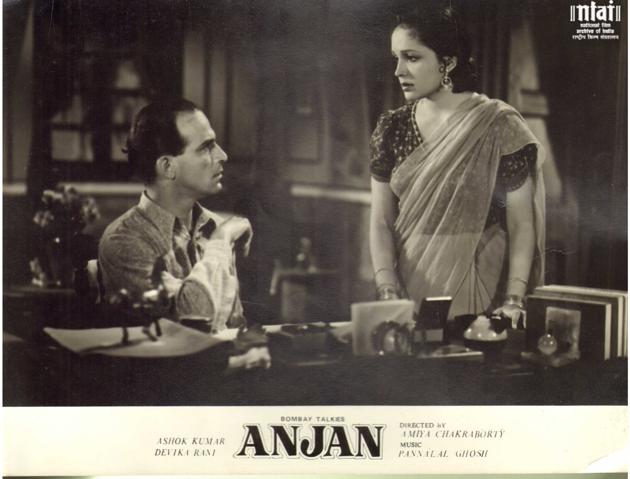
She infamously ran away with her co-star, Najm-ul-Hassan, prompting the studio to replace him with a newcomer named Kumudlal Ganguly, better known as Ashok Kumar. A few years later, she gave it all up for a secluded life with her second husband, a Russian painter.
Many believe she has no secrets left. They probably haven’t met Kishwar Desai. The author’s upcoming book, 10 years in the making, draws on lesser-known material (largely Rani’s cache of correspondence) to paint a new, unexpected image of the star who passed away in 1994.
Most histories of the period have been written by men, Desai points out. “Women’s perspectives are usually left out. What I found was a woman who had, at every level, lived a complex life, but was no prima donna,” Desai says. “She was an intelligent, down-to-earth businesswoman with an eye for talent, and a survivor.”
Some of those new details make their way into her play, Devika Rani Goddess of the Silver Screen! which is touring the country. Quick episodic scenes follow Rani as a wide-eyed teen, falling for Rai (16 years older), setting up the pioneering studio in Bombay, Rai’s infidelities, Rani’s later relationships and the backstage drama as she helmed nine films.
{{/usCountry}}Some of those new details make their way into her play, Devika Rani Goddess of the Silver Screen! which is touring the country. Quick episodic scenes follow Rani as a wide-eyed teen, falling for Rai (16 years older), setting up the pioneering studio in Bombay, Rai’s infidelities, Rani’s later relationships and the backstage drama as she helmed nine films.
{{/usCountry}}One scene depicts a low point in the couple’s relationship – ending with Rai striking Rani, and her ending up on the floor. “It shocked me when I learned about it,” Desai says. “To the world, she’s a gorgeous China doll, but her writings say she refused to cry. It showed me what she chose to make of her circumstances.”
The play also shows Rani as a woman of grit. She deals with the revelation that her husband fathered a child with a German woman just as they’d started to fall in love. She sells her jewellery to finance Bombay Talkies. She subsists on soup to keep her figure. One instance, of her assisting an actress in terminating an unplanned pregnancy, is from the letters, Desai says. “It’s horrific. But she’s pragmatic about it.”
And throughout, Desai acknowledges the complex power that Rai and Rani held over each other. “He was attractive and persuasive,” she says. “And of course he loved her. Which cuckolded man would chase his wife from Bombay to Calcutta and still hand over complete control of their company to her?”
The play depicts Rani as a woman who knew her mind. One who fell in love all over again and gave up Bombay Talkies to start over after Rai’s death in 1940. She didn’t bow out. She wasn’t forced out. “I wanted to show that leaving was her choice.”