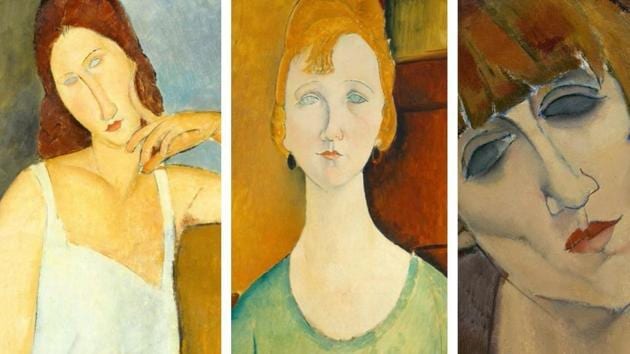
A lot of us dream about bringing that rare masterpiece to our home or workplace. But are you sure what you are investing your money in, is original? Recently, when 20 of the 21 paintings attributed to the iconic painter Amedeo Modigliani, displayed at the Ducal Palace in Genoa, Italy, in 2017, were revealed to be fakes, it sent art aficionados into a shock, and had ticket holders asking for a refund. Recently, consumer advocates have demanded refunds for ticket holders of the show devoted to Modigliani.
In India, where it’s difficult to chide the penchant for the (MF) Husain’s and the (SH) Raza’s, the story isn’t very different. Artist and art curator Alka Raghuvanshi blasts the Modigliani art exhibit. “As a curator, I’m very surprised. It’s strange that the curators didn’t do their homework, and this happened abroad — where everyone calls themselves a curator,” she voices her bafflement, and explains why this was surprising: “The artist has only 300 works. There should be some familiarity with them. It makes no sense. The curator ought to be questioned about it.”
Raghuvanshi also recounts her own experiences with fakes in India. “A curator who was working with a renowned Indian artist, now dead, introduced many works into the market which to me were of questionable provenance. That artist never had so many works, sitting in a studio ever,” she says. “Once, when SH Raza walked into an exhibition of his works organised by his nephew at an art gallery in the Capital, he said all of the artworks were fakes. It was ridiculous to see the artist come all the way from Paris to open a show, and say this,” she says, fuming.
Artist Samar Singh Jodha quotes Spanish surrealist painter Salvador Dali: “Those who do not want to imitate a thing, don’t produce nothing,” and adds, “Yes, this practice runs strong in exhibitions featuring works of artists who are no more. I have seen more [works of] Husain in Indian drawing rooms than in actual catalogues or publications of his work. In today’s world, imitation itself has become an art form. There are fakes, there are copies, there are original copies of originals, and there are art criminals living off art and there are artists who are living off criminals.” Jodha also explains how art forgery functions: “Each year we hear at least one major scandal, and it gets buried with the next one. There are agents who can hire unemployed artists and commission them to create most outstanding fakes and make millions. I think art forgeries have become the new art form in the business. The appetite for art and new money will always have a market for this.”
Artists say despite spotting fakes of their own works at shows, they are forced to keep quiet, owing to threats and pressure from lobbies. “Money is the best honey. It’s very difficult to stop fake paintings from entering the market because the kind of return you can get from a fake painting is unbelievable. Show me any business where you invest 30,000, and make lakhs in return! Just choose painters who are no more so that nobody gets to know,” explains artist Sanjay Bhattacharyya, as he narrates a personal experience from 2006: “I stopped a fake of Bikash Bhattacharjee at a premium auction at a Delhi hotel. The last bid, before I intervened, had been for 33 lakhs! That painting could have easily fetched ₹40-45 lakhs, and it wasn’t even a copy of Bikash’s painting, but just a work by some young artist, which was printed even on the catalogue. [After that] I made a hundred enemies and my friends from the community stopped talking to me. I left Delhi for four months, and started photography.”
{{/usCountry}}Artists say despite spotting fakes of their own works at shows, they are forced to keep quiet, owing to threats and pressure from lobbies. “Money is the best honey. It’s very difficult to stop fake paintings from entering the market because the kind of return you can get from a fake painting is unbelievable. Show me any business where you invest 30,000, and make lakhs in return! Just choose painters who are no more so that nobody gets to know,” explains artist Sanjay Bhattacharyya, as he narrates a personal experience from 2006: “I stopped a fake of Bikash Bhattacharjee at a premium auction at a Delhi hotel. The last bid, before I intervened, had been for 33 lakhs! That painting could have easily fetched ₹40-45 lakhs, and it wasn’t even a copy of Bikash’s painting, but just a work by some young artist, which was printed even on the catalogue. [After that] I made a hundred enemies and my friends from the community stopped talking to me. I left Delhi for four months, and started photography.”
{{/usCountry}}Follow @htlifeandstyle for more