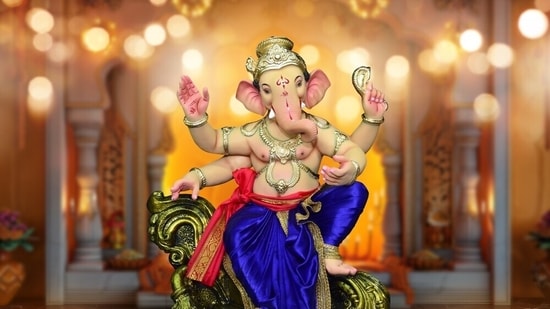
The Hindu festival honours Lord Ganesha, who is traditionally worshipped as the deity linked with wisdom, prosperity and the removal of obstacles. Ganesh Chaturthi falls on the fourth lunar day, or Chaturthi tithi, of the bright half of the Hindu month of Bhadrapada.
If you live in the US, remember that the exact tithi and puja timings depend on your city.
When is Ganesh Chaturthi 2026?
Ganesh Chaturthi will be observed on **September 14** this year. According to Drik Panchang , the Chaturthi tithi is from 9:36 p.m. on September 13 to 10:14 p.m. on September 14. The Madhyahna Ganesha Puja Muhurat is 11:36 a.m. to 2:06 p.m. on September 14.
The timing changes across the US, so you should check the Panchang for your own city before beginning the puja.
What time should you perform Ganesh Puja?
Traditionally, the main Ganesh Puja is performed during Madhyahna, or the midday period.
{{/usCountry}}Traditionally, the main Ganesh Puja is performed during Madhyahna, or the midday period.
{{/usCountry}}Drik Panchang explains that this timing is linked to the traditional belief that Lord Ganesha was born during Madhyahna Kala. It therefore considers the midday period the preferred time for Ganapati worship on Chaturthi.
Do you need to fast on Ganesh Chaturthi?
Fasting is part of the festival for many devotees, but the exact practice can differ between families and regions.
Some people keep a full fast, while others follow a lighter vrat. The important point for a journalist is not to present one method as the only correct one. If you plan to fast, follow your family's tradition or the guidance of the temple or community where you worship. Some traditions break the fast after the day's main puja and offerings.
Also Read September New Moon 2026: When to see it in the US and what the Moon's energy means in astrology
What is the astrological significance?
Ganesh Chaturthi has a clear place in the Hindu lunar calendar. It falls during Shukla Paksha, the waxing phase of the Moon, in Bhadrapada. Drik Panchang also notes that the festival is associated with the birth anniversary of Lord Ganesha.
Vedic astrology and Panchang practices give special importance to the tithi and the Madhyahna period for the day's worship.
Why should you avoid looking at the Moon?
Drik Panchang lists a period during which devotees are advised to avoid seeing the Moon because of the traditional belief in Mithya Dosha, or the possibility of false blame or accusation. The belief comes from the story of Lord Krishna and the Syamantaka jewel.
This is a religious tradition, not a scientific claim.
For US devotees, the Moon-sighting avoidance period also changes according to location. In New York, Drik Panchang gives 10:30 a.m. to 8:26 p.m. on September 14.