Jyoti Mandlekar is unable to sleep properly. She keeps looking at the photo of her 51-year-old father Santosh who died in a train tragedy in Harda on August 4. He was coming from Khandwa to Harda in Kamayani Express to stay with her for a few days.
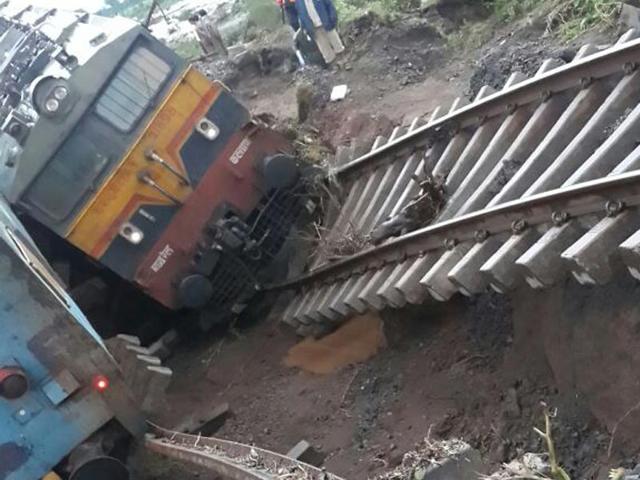
In one of the worst train mishaps in the history of Madhya Pradesh, which was described by a railway board member as ‘the freakiest of the freak’, as many as 29 people have been reported killed so far and 16 missing. Santosh happens to be one of the missing persons.
Two trains - Janata Express and Kamayani Express - had met with the accident within a span of 10 minutes on August 4 night after flash floods eroded the base of the railway track at Mandla village between Bhirangi and Khirkia railway stations.
“My father was coming to my place to stay with me for a few days. But he never came. He was just 22-km away from me when several bogies of the train fell into the flood water. We have been searching for him since then. We ourselves tried three times to search for his body at the accident site and downstream but to no avail. I daily visit the railway station to know whether they (the railway officials) have any information or any new body has been found,” Jyoti told HT over phone.
Like Jyoti, there are families of 15 other missing passengers, who still have no clue about what happened to their loved ones. Many of them have lost hope and just want a closure now. They want the bodies so that last rites could be performed.
{{/usCountry}}Like Jyoti, there are families of 15 other missing passengers, who still have no clue about what happened to their loved ones. Many of them have lost hope and just want a closure now. They want the bodies so that last rites could be performed.
{{/usCountry}}“Sixteen passengers are still missing. Till now, we have found 31 bodies downstream. However, two of the bodies happened to be of those who were locals and were not involved in the mishap,” said Harda superintendent of police Prem Babu Sharma.
Kanchedi Ahirwar from Hoshangabad’s Pipariya, whose son and daughter-in-law are missing, doesn’t know what to do now.
“I have been running here and there. How can people vanish like this? Why can’t government find them,” asked Kanchedi, who works in a brick kiln.
Harda collector Rajneesh Shrivastava said, “I have spoken to the vice chairman of Narmada Valley Development Authority (NVDA) for providing a few boats for extending our search to the backwaters of the Indira Sagar dam. We have apprehension that bodies of many missing passengers might have been washed away to the backwaters of the dam.”