E-Paper



Bhang preserving Mahakal Jyotirlingam from erosion, says ASI report
A report of an expert committee of archaeologists says large quantities of floral and dairy offerings on the jyotirlingam attracted bacterial action, which produces mild acidic by-products.

 Prefer HTon Google


The report of an expert committee of archaeologists, who studied Ujjain’s Mahakal Jyotirlingam last month,
has revealed that the use of bhang (cannabis) in the offerings at the temple could be protecting the jyotirlingam from erosion.
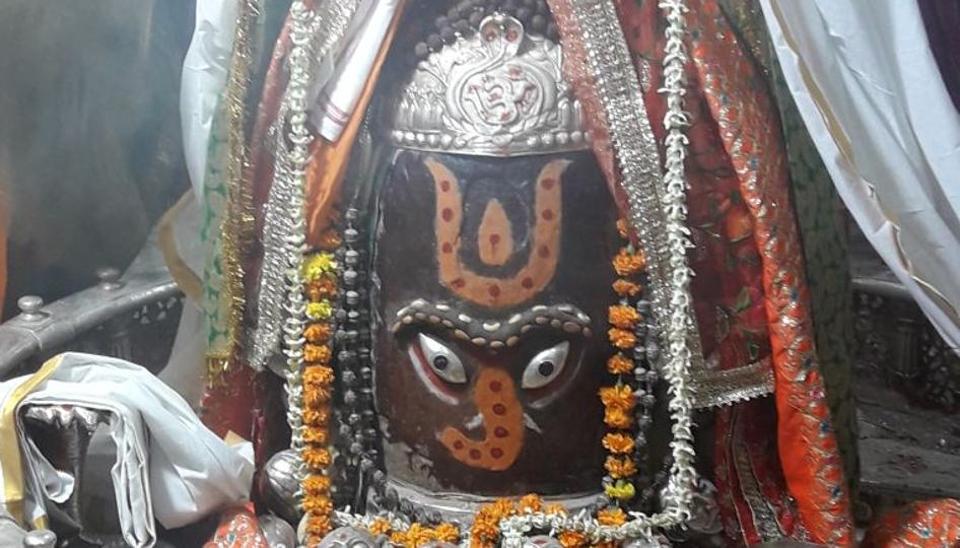
The committee of two experts from the Archeological Survey of India (ASI) explained in its report that most of the offerings — water, milk, flowers, bhasm — were eroding the sandstone jyotirlingam as they aided bacterial and fungal action precipitated by the high humidity inside the sanctum sanctorum.
Hindustan Times has a copy of the report.
The report said that large quantities of floral and dairy offerings on the jyotirlingam attracted bacterial action, which produces mild acidic by-products.
These acidic products “react with the metal ions of the sandstone in the jyotirlingam and very easily cause disintegration of the substrate (of the lingam) through leaching of the cementing material”.
The buds and leaves of cannabis are ground into paste to prepare bhang, which is then offered to the jyotirlingam.
According to the report, the bhang paste generally contains certain chemicals (alkaloids and phenolic compounds, Cannabidiol and deleta-9-tetrahydrocannabinol) that control biodegradation as they have anti-bacterial and anti-fungal properties.
Subash Pandey, former head of the environmental sciences department at the Government Post Graduate College, Bhopal, said this means that the chemicals in bhang check the growth of bacteria and fungus that flourish on milk and floral products.
“Bacterial action produces chemical by-products that could damage the surface of the jyotirlingam. But bhang checks that and helps save the jyotirlingam from deterioration,” he added.
Pradeep Guru, priest at the Mahakaleshwar temple and member of the Mahakaleshwar Temple Management Committee said that ‘bhang’ has been traditionally used on the jyotirlingam for centuries.
“The bhang used here is of very high quality with no adulteration. During the ‘shringaar’ ritual, about one-and-a-half kilogram of bhang is used,” he added.
The expert committee was constituted on the directions of the Supreme Court after Indore-based Sarika Guru moved the apex court in January this year, seeking a ban on the ‘panchamrit shringar’ and ‘bhasam aarti’ of the jyotirlingam, which were leading to its erosion.
Guru said she petitioned the Supreme Court as she wanted a restriction on rituals that were harming the sacred jyotirlingam.
The committee visited the shrine last month and carried out a detailed study and analysis on the jyotirlingam.
One of the committee members said the report had been sent to the additional solicitor general of India.