The Madhya Pradesh government has initiated the process for developing a second National Fossil Park in the state at Dhangaon in Mandla district, officials aware of the matter said. The move comes over a decade after a fossil of a palm plant with fruit that is found in Madagascar (Indian Ocean) was among fossils discovered in Mandla.
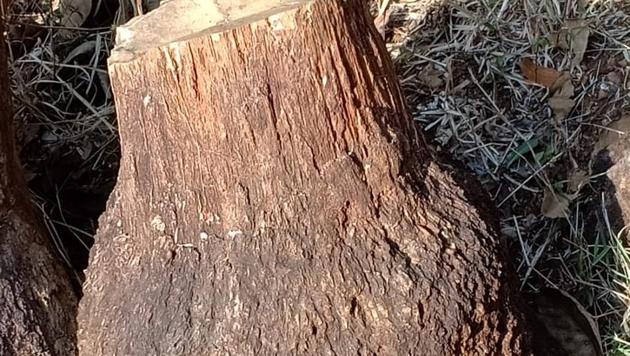
Residents, geologists, paleobotanists, and environmentalists have been urging the government to protect the 40-65 million-year-old fossils of 15 genera of 10 plant families found.
A team of Mandla district administration, the state forest department, and paleobotanists inspected the area last month.
Mandla collector Harshika Singh said the team confirmed plants like Hyphaenocarpon (palm) with fruit are not found in India before the state government approved a proposal to develop the fossil park in Dhangaon. Singh added the fossils found in Dhangaon are older than those found at Ghughwa National Fossil Park in Dindori district.
D K Kapgate, a retired professor studying fossils of plants in Madhya Pradesh, said India was a part of a supercontinent called Gondwanaland that included South America, Africa, Madagascar, Antarctica, and Australia about 180 million years ago. “The tectonic plates started shifting and then breaking up of land started. The Indian plate broke away from that of Madagascar about 60-50 million years ago and collided with that of Eurasia. The fossils of plants belonging to that period were first found in Ghughwa in the late 1970s and now these have been found in Dhangaon.”
Kapgate said Dhangaon needs to be developed separately as the experts have not only found stems, leaves, and roots but also fruits intact with the palm tree which is something new.
{{/usCountry}}Kapgate said Dhangaon needs to be developed separately as the experts have not only found stems, leaves, and roots but also fruits intact with the palm tree which is something new.
{{/usCountry}}Bandana Samant, a geology professor at Nagpur University who has carried out a study at Dhangaon, said the area has amazing preservation of vegetation which is even older than 60-64 million years. “These trees are mainly found near the sea on the eastern coast of South Africa, Madagascar, and Australia. After breaking away from Gondwanaland, the Indian subcontinent moved from the south equator to its present position--north of the equator. The discovery of these fossil plants is a very important geological event on the Indian subcontinent as it is a window to study weather conditions and vegetation which used to exist more than 60 million years ago.”
Samant said most of the fossils in Ghughwa were collected from different sites. “But in Dhangaon, we found whole fossil forest and sediments of that era. The state government should have taken a decision on developing fossil park many years ago because fossils of trunks, seeds, fruits, and leaves are treasures for India.”
Prashant Srivastava, a teacher in Mandla with an interest in paleobotany, said he discovered many fossils of plants on a hill in Dhangaon in 2006. “I took pictures and studied them. I shared the pictures with experts and they told me that these are fossils of Hyphaenocarpon [palm] of Madagascar, Garcinia, Sterculia [chest nuts], Sonneratia, Madagascar polyalthia, Heynea [Mahagony], Drypetes, Artocarpus communis [bread fruit], Eucalyptus and others.”
Srivastava said Madhya Pradesh is rich in plant fossils and yet the forest department was paying much attention to them.
Chief forest conservator (Jabalpur division) Ram Das Mahala said they cross-checked the claims first about the fossils with help of experts. “Now, since we are sure of the presence of fossils there, we have initiated the process to develop the area as a fossil park.”
Mahala said the park will be developed in two phases. “In the first phase, we are focusing on protecting about 35-hectare land with a ban on the movement of locals in the area... fencing would be done. In the next phase, the Eco-Tourism Board will invite a team of experts to identify every fossil to preserve it. The documentation will be done properly so that we could set up a museum later.”
The National Fossil Park in Ghughwa was earlier developed in 1983. Dhangaon is located about 100 km away.
Ghughwa has rare fossils of leaves and trees that existed anywhere between 40 million and 150 million years ago when India was part of Gondwanaland.