
 E-Paper



Ana Paula Maia: “The world is degenerate and violent”
The author of On Earth as It Is Beneath on the world of her International Booker-longlisted novel that’s both brutal and realistic

 Prefer HTon Google


In an interview with PEN Transmissions on your novel Of Cattle and Men, you spoke about seducing readers to continue with a story. Given that there’s gore and violence in On Earth as It Is Beneath too, please tell us about getting readers to absorb the literary world even as they see a connection with the real one.
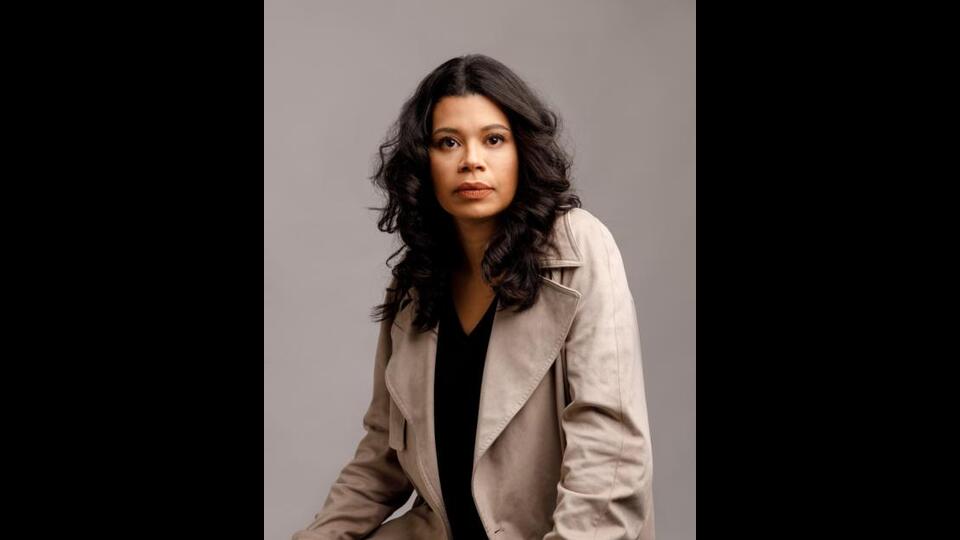
Of Cattle and Men and On Earth as It Is Beneath are books that are similar in their approach. I had explored the theme of the confinement of animals in Of Cattle and Men, and moved on to the confinement of human beings in On Earth as It Is Beneath. There is a parallel to some extent between the two stories, and Bronco Gil features in both books.
The world is degenerate and violent. We are still driven by basic instincts. Horror can never be sublimated in my stories, for it is their foundation. What seduces and captivates are the characters, and how they take you by the hand and draw you into that world, that space. It is the character who leads, who guides the reader just as Virgil guides Dante through the circles of hell.
Bronco Gil is another addition to the cast of characters you’ve written earlier: men who’re out to execute a job because they know they don’t have a choice. Is this choiceless-ness systemic in that it’s inflicted on them without their knowledge? They are too young to understand the travails of a system that manages to operate because of them.
Bronco Gil, along with other characters who appear in my other books, is wide awake. They know that we live in a rat-trap of a system, that whilst we are here, we will have to fulfil roles, do other people’s dirty work and carry out tasks that we cannot always choose not to do. This world crushes everyone. My writing is harsh and direct. Pessimistic at times, yet it contains an element, the key to enduring it all: brotherly love. That bond we forge with one another, based on mutual trust regardless of the difficulties, where you know that person will be there to help you through the darkest nights of your life.
We get backstories of two principal characters in your book — the warden and the prisoner — and not others. Were you looking to explore binary extremes: one person becoming prey while preying on others for too long while the other managing emotions they believed they were incapable of?
These extremes in the narrative illustrate the characters’ downfall; every action provokes a reaction, and this is inevitable. Drawing a parallel with the world we live in: sometimes we are the hunted, sometimes the hunter.
Does time have a role to play here? Its slowness makes its elasticity feel apparent in the face of hopelessness. Talk about time being one of the layers of the novel, given that it’s also instrumental when it comes to the delivery of justice?
As for time and justice, well, I’ll keep this short—time passes slowly for those who need justice, whilst the time we have to live and move on with our lives passes quickly.
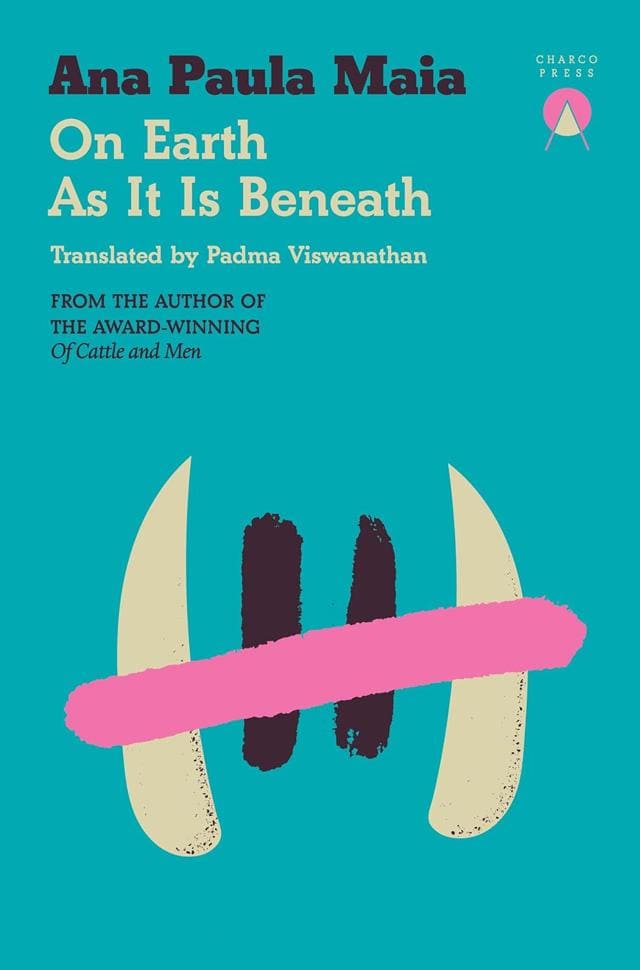
Was the “electronic tag” a metaphor you explored to critique societal conditioning? I found parallels to systemic oppression: how heteropatriarchy makes individuals feel that their gender expression mustn’t extend beyond limits decided by society, which is a false story well-accepted, much like misinformation in the age of social media.
You’ve touched on a crucial aspect of this story: the electronic tag, or as I originally called it in the book, the electronic ankle bracelet. It is a figure of speech, a metaphorical element for the present day, and I believe it is also applicable to times gone by. Every narrative created, every manipulation of ideas aimed at steering a mass of people in the desired direction, is fundamentally a representation of this electronic element. Social media is, without a doubt, the electronic ankle bracelet of today’s world.
The land where the Penal Colony is constructed was earlier the place where enslaved people were held captive and executed. Are parts of the novel based on some real-life events?
The book is a work of fiction. The whole story is a work of fiction. But what’s absurd about it all is that, despite being fiction, it feels so real.
On Earth as It Is Beneath is a feminist text that sees the cruelty men inflict on each other. Is toxic masculinity consuming men of their potential to be themselves, beyond their gendered selves?
It is a difficult issue to analyse. I look at the world around me and try to cast my gaze and impressions as far as possible. I realise that, generally speaking, we face very similar issues all over the world. I am not generalising, but simply observing. I believe that brotherly relationships are best for all of us. Ultimately, even amidst savagery, in my books, there is this feeling that if we support one another regardless of gender or race, we can overcome the bad days.
Saurabh Sharma is a Delhi-based writer and freelance journalist. They can be found on Instagram/X: @writerly_life.


