
 E-Paper



HT Picks; New Reads
On the reading list this week is a book of recipes from the princely state of Rampur, an account of a vast swathe of India that greatly influences the nation’s politics, culture, and identity, and a volume on harnessing the power of data

 Prefer HTon Google


Aromas of the treasures of history
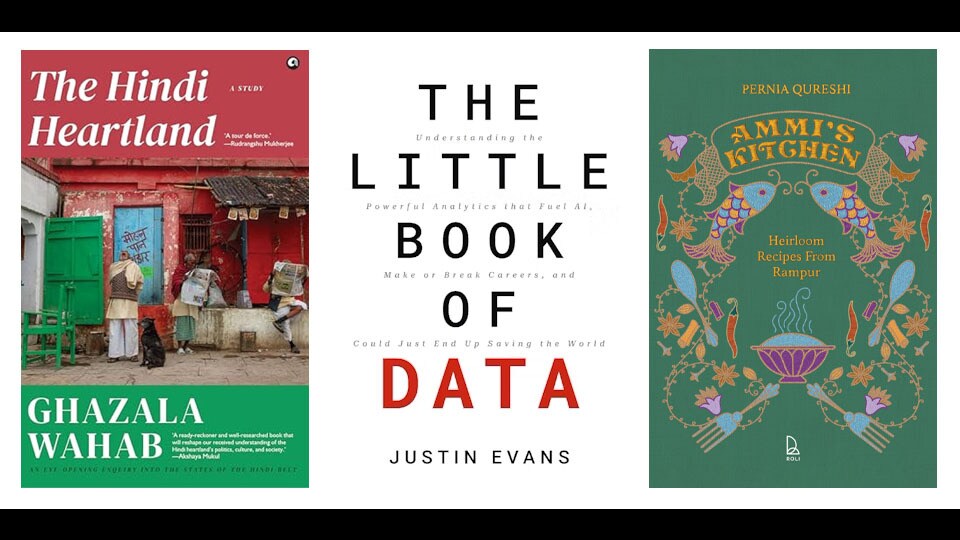
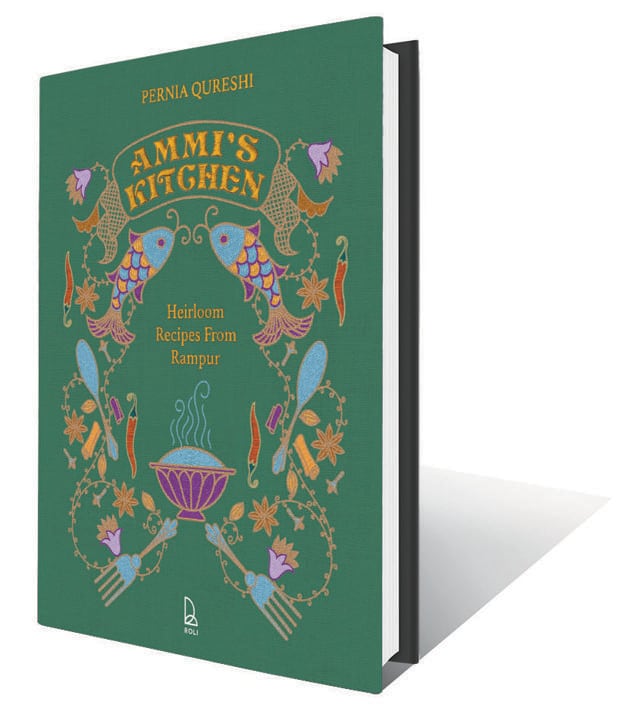
Ammi’s Kitchen: Heirloom Recipes from Rampur is a tribute to all grandmothers who have passed on the legacy of classic traditional family recipes. Pernia Qureshi’s grandmother, Mussharaf-ul-Nissa Begum, originally from Chandausi in the United Provinces, was married at a young age into the princely state of Rampur. With the influence of her home town, now combined with the newfound exposure to Rampur’s more modern and eclectic cuisine, she created a food language that was uniquely her own.
This book is a collection of recipes she mastered over the years, which still carry the aromas of the treasures of history.*
Through native eyes
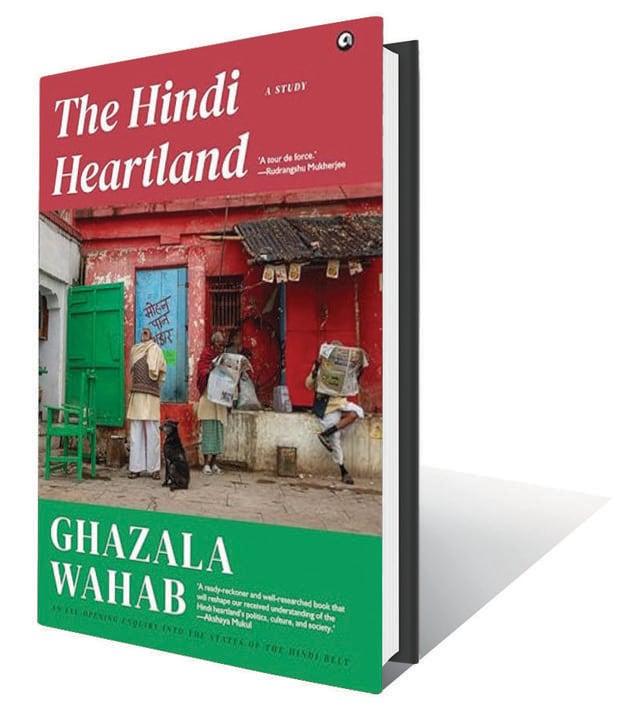
The Hindi heartland, comprising Bihar, Chhattisgarh, Jharkhand, Madhya Pradesh, Rajasthan, Uttarakhand, and Uttar Pradesh, covers nearly 38 per cent of India’s total area and is home to over 40 per cent of India’s population. It provides the country with over 40 per cent of its parliamentarians and determines the contours of national politics (out of the 15 prime ministers India has had since 1947, eight have been from the Hindi belt). Yet, despite its political significance, it is among the most impoverished regions in the country. It consumes the bulk of the country’s resources, but lags behind other states on various economic and welfare indices. It is plagued by violence, illiteracy, unemployment, corruption, poor life expectancy, and numerous other ills.
Centuries of war, conquests, invasions, political movements, and religious unrest have made the heartland a place of immense paradox. Despite its extraordinary and timeless religious heritage — some of the country’s most revered spiritual leaders were born here and it is home to innumerable shrines and places of pilgrimage — it has also witnessed some of the worst communal riots in the country and has been troubled by long-running, divisive sectarian politics. Many of India’s founders, who gave the country its secular identity, hailed from the heartland, but so too did those who have spread religious discord.
Given its disproportionate influence on the nation’s politics, culture, and identity, it is surprising that there has never been an authoritative history and account of the region until now. Based on meticulous research and interviews with key stakeholders, award-winning journalist and writer Ghazala Wahab, a native of the region, gives us a magisterial account of the Hindi heartland.*
The problem solver of our time
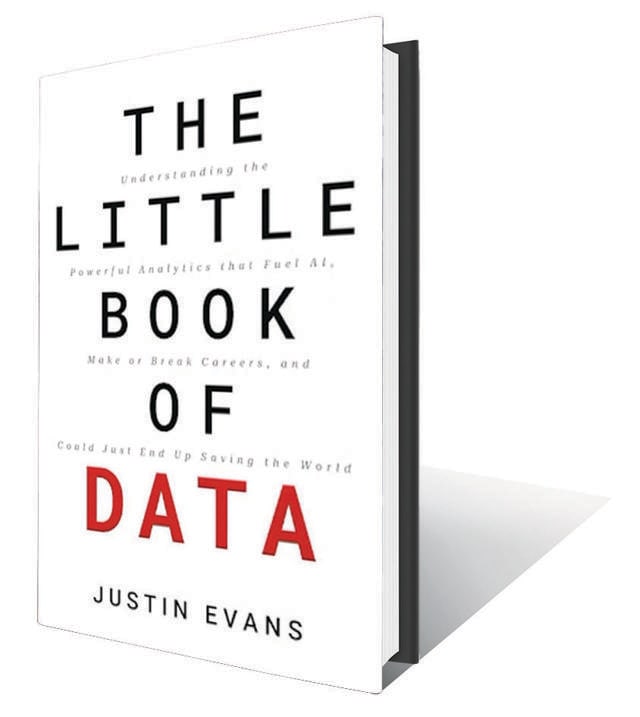
Data is not about number crunching. It’s about ideas. And when used properly (read: ethically), it is the problem solver of our time.
Yet many savvy people seem to be in data denial: they don’t think they need to understand data, or it’s too complicated, or worse, using it is somehow unethical. Yet as data and AI (just an accelerated way to put data to work) move to the centre of professional and civic life, every professional and citizen needs to harness this power.
In The Little Book of Data, each chapter illustrates one of the core principles of solving problems with data by featuring an expert who has solved a big problem with data — from the entrepreneur creating a “loneliness score” to the epidemiologist trying to save lives by finding disease “hotspots.”
The stories are told in a fast-moving, vivid, sometimes comic style, and cover a wide frame of reference from adtech to climate tech, the bubonic plague, tiny submarines, genomics, railroads, bond ratings, and meat grading
Along the way Evans injects lessons from his own career journey and offers practical thought-starters for readers to apply to their own organizations.*
*All copy from book flap.


