A culinary biography of Mumbai
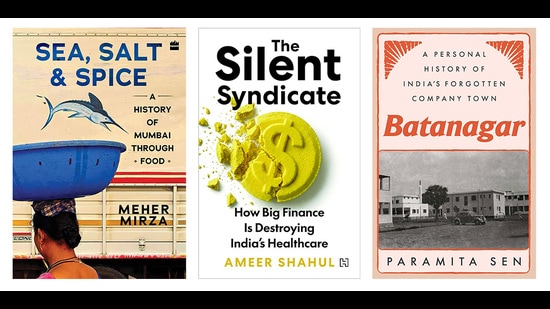
Sea, Salt and Spice is a definitive culinary biography of Mumbai – a city shaped as much appetite as by tides and trade. Long before it became shorthand for ambition, excess and overcrowded trains, Bombay was a porous island city, its kitchens stocked by fishermen, merchants, settlers and empire.
With curiosity and flair, Meher Mirza traces this history through what was cooked, preserved, traded and eaten: from Koli hearths and Peshwa courts to Portuguese enclaves, colonial ports and the restless streets of the late twentieth century. Moving nimbly across centuries, she shows how geography, climate, gender, religion, caste and commerce worked their way into everyday meals.
Richly illustrated with maps, photographs and archival texts, Sea, Salt and Spice blends scholarship with storytelling, wit with insight. This is not a guide to what to eat or where to eat it, but a spirited biography of a city – one that finally gives Mumbai, and its food, their due.*
Who is really running India’s healthcare system?
India’s healthcare system is being bought piece by piece – hospitals, pharma companies, insurance players, diagnostic labs. The buyers are not Indian. And their bottom line is not your health. In The Silent Syndicate, award-winning investigative journalist Ameer Shahul exposes how the behemoths of global finance have staged a silent takeover of India’s most vital sector.
This book answers questions about why healthcare in India costs what it does. Urgent, meticulously researched and impossible to ignore, The Silent Syndicate is essential reading for anyone who has wondered who is really running India’s healthcare system – and why.*
{{/usCountry}}This book answers questions about why healthcare in India costs what it does. Urgent, meticulously researched and impossible to ignore, The Silent Syndicate is essential reading for anyone who has wondered who is really running India’s healthcare system – and why.*
{{/usCountry}}The town that Tomas built
In the tiny Czech town of Zlín, Tomáš Baťa grew his family’s modest shoe shop into a veritable empire, founded on local craft, modern technology and a globalized perspective. In the 1930s, he turned his attention to India. This move was welcomed by leaders of business and the freedom struggle as a step towards building a self-sufficient, independent nation. Thus, the foundation stone of one of India’s earliest company towns, Batanagar, was laid in 1934 near Kolkata. Over the following decades, the town grew into a bastion of innovative thinking, cosmopolitanism and community. Former resident Paramita Sen paints a vivid picture of her childhood in this idyllic town in the 1970s and ’80s, while also examining the larger context of the march of Indian history. She traces the impact of key moments on Batanagar – such as the Bengal Famine of 1943, the end of colonial rule in 1947, the rise of the Naxalbari movement in the 1960s and more. The town and its ethos captured the imagination of luminaries like Nehru and Tagore and was at the centre of some of Bata’s landmark innovations, such as the iconic hawai chappal, which endeared the brand to its Indian consumers, who comprise its largest market to this day. Like other Bata company towns around the world – Batadorp (Netherlands), Batapur (Pakistan) and Batatuba (Brazil) – Batanagar’s unique legacy has been all but lost to posterity in the throes of disrepair and redevelopment over the decades. Batanagar shines a light on this pioneering Czech company and its iconic Indian company town.*
*All copy from book flap.