
 E-Paper



In Tolkien’s footsteps: The English landscapes that inspired Middle-earth
On Tolkien Reading Day, a look at the varied landscapes of Lancashire and Oxford that helped shape that of The Lord of the Rings

 Prefer HTon Google


Tolkien Reading Day, celebrated on March 25 each year, marks a dramatic moment in modern literature. In JRR Tolkien’s The Lord of the Rings, it is the day when the One Ring is finally destroyed in the fires of Mount Doom, bringing an end to Sauron’s shadow over Middle-earth. The moment is one of relief, renewal and hope. “The Shadow has departed,” Tolkien writes, “and the Third Age of the world is ended.”
For fans, the day offers an excuse to return to the sweeping landscapes of Middle-earth: the rolling hills of the Shire, the caves of Helm’s Deep, and mysterious forests overrun by ancient trees. But the remarkable thing about Tolkien’s imagined world is that it didn’t emerge from nowhere; much of it grew quietly from the English countryside that shaped his life.
Born in 1892 in Bloemfontein in present-day South Africa, Tolkien arrived in England as a small child and grew up amid the fields and streams around Birmingham. Those early landscapes left a permanent impression. Years later he would recall the area around Sarehole as a “kind of lost paradise” of ponds, mills, and meadows, a memory that echoes in the Shire, the peaceful homeland of hobbits.
But Tolkien was not simply a novelist spinning fantasies; he was a scholar of language. As professor of Anglo-Saxon at the University of Oxford, he spent decades studying the ancient roots of English words and myths. Language fascinated him so deeply that it shaped his storytelling. “The stories were made rather to provide a world for the languages,” he once wrote, “than the reverse.”
That linguistic passion birthed an entire mythology. Beginning with The Hobbit in 1937 and expanding into the epic trilogy of The Lord of the Rings (published between 1954 and 1955), Tolkien created a prehistoric realm he called Middle-earth, an imagined past populated by hobbits, elves, dwarves and men. The books would go on to sell millions of copies worldwide and reshape modern fantasy literature.
Tolkien believed writers were “sub-creators”, shaping secondary worlds that felt internally real. And the realism of Middle-earth owes much to places he walked, studied, and loved. As he famously observed in the foreword to The Lord of the Rings: “An author cannot of course remain wholly unaffected by his experience.”
So, on Tolkien Reading Day, readers can do something delightful: step out of the pages and into the landscapes that may have helped inspire them. Across England, there are many places where the real world begins to look uncannily like Middle-earth.
The Tolkien Trail, Lancashire: Walking through the Shire
In the bucolic countryside of the Ribble Valley in northern England, the Tolkien Trail, a seven-mile walk, winds through fields, woods, and rivers that seem purpose-built for hobbits.
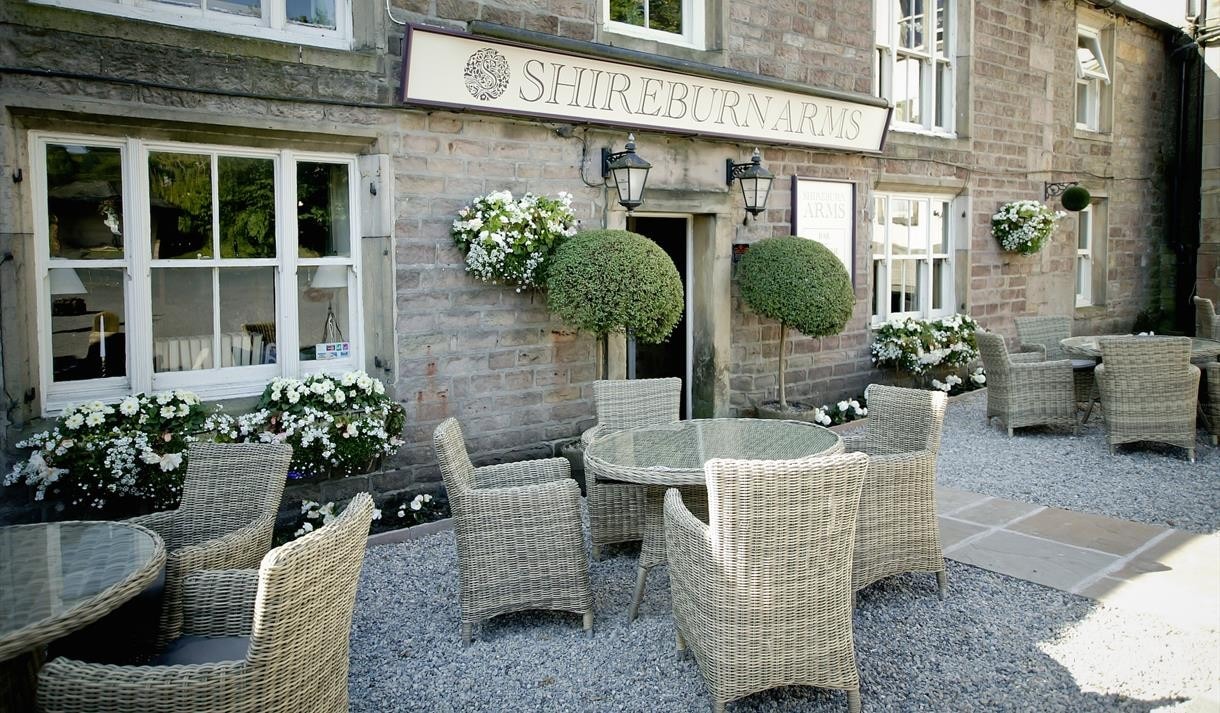
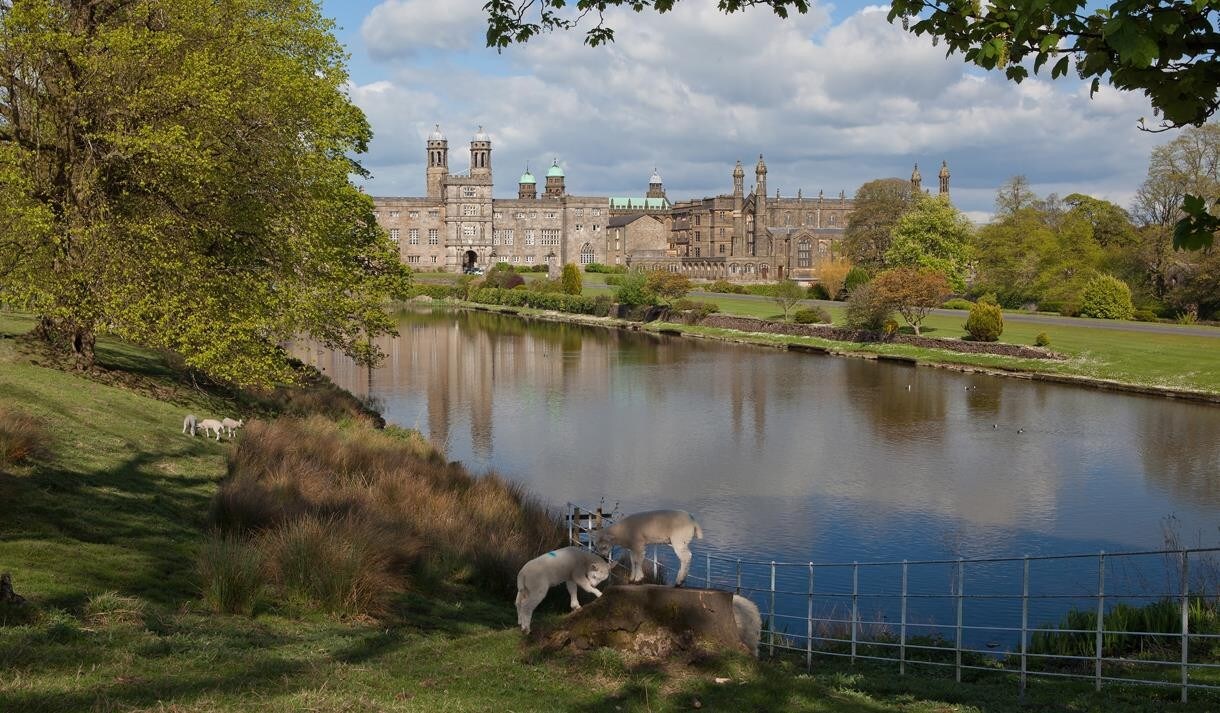
The route begins in the village of Hurst Green, where Tolkien often visited while his son studied at nearby Stonyhurst College during the early 1940s. Today, walkers set off from the historic Shireburn Arms, a pub where Tolkien is believed to have spent time.
The landscape here will feel strikingly familiar to readers of The Lord of the Rings. The path meanders past stone bridges, farms, and the slow-moving waters of the River Hodder. In the distance, Pendle Hill looms over the valley like a watchful sentinel.
Along the route lies Cromwell’s Bridge, a narrow packhorse bridge dating to the 16th century. Nearby once stood the Hacking Ferry, a wooden barge used to cross the River Ribble. Fans often see echoes here of the Bucklebury Ferry scene in The Fellowship of the Ring, when Frodo and his companions flee across the Brandywine.
The trail also passes churches and manor houses that carry echoes of Tolkien’s world. At St Mary’s Church, an eye-shaped carving on the tower has sometimes been compared, perhaps fancifully, to the watchful Eye of Sauron.
Whether or not these parallels were deliberate, the pastoral beauty of the Ribble Valley captures something essential about Tolkien’s vision of rural England. “In a hole in the ground there lived a hobbit,” begins The Hobbit. Walking the Tolkien Trail, one can almost imagine that hole appearing beneath a grassy hill.
Cheddar Gorge, Somerset: Into the Glittering Caves
Not all of Tolkien’s inspirations were gentle countryside scenes. Some were far more dramatic.
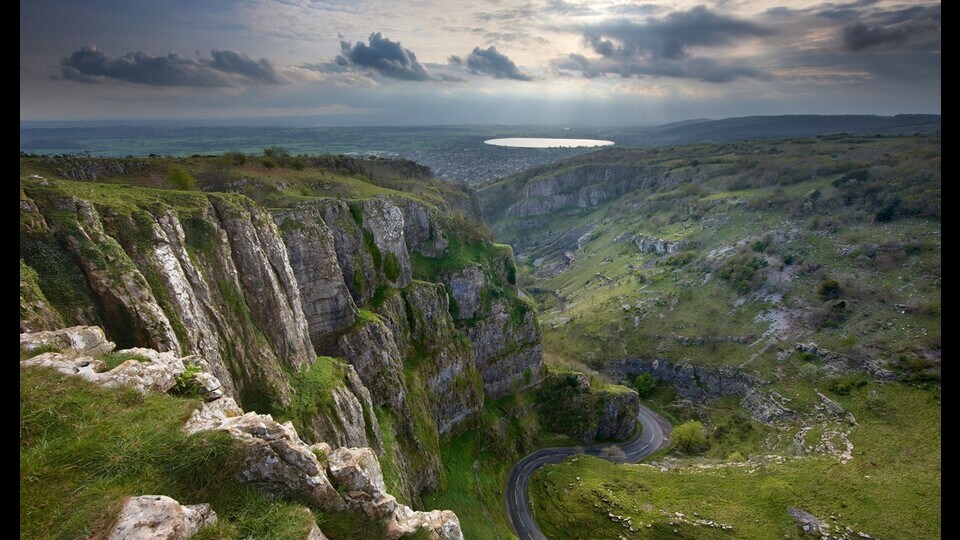
In 1916, shortly after marrying Edith Bratt, Tolkien honeymooned in the village of Clevedon in Somerset. During their stay, the couple visited one of Britain’s most spectacular natural landscapes: Cheddar Gorge.
The gorge is a limestone valley carved through the Mendip Hills, its cliffs punctured by caves rich in stalactites. It includes Gough’s Cave, a cavern where columns of rock shimmer in shades of amber, white and rose.
Decades later, Tolkien confirmed the connection in a letter: the caves of Cheddar Gorge had inspired the Glittering Caves of Helm’s Deep in The Lord of the Rings.
In the novel, the dwarf Gimli leads Legolas into the caverns and marvels at their beauty. Tolkien describes “columns of white and saffron and dawn-rose … fluted and twisted into dreamlike forms”. The description reads uncannily like a traveller’s note from Cheddar itself.
Standing inside Gough’s Cave today, it is easy to see why the landscape lingered in Tolkien’s imagination. The cave chambers, vast and ancient, are rich in mineral formations that seem to glint as they catch the light.
If the Shire shows Tolkien’s love of the countryside, Cheddar Gorge showcases his interest in older, hidden worlds beneath the surface.
Stow-on-the-Wold, Gloucestershire: A doorway to Middle-earth
The honey-coloured villages of the Cotswolds look as though they belong in a storybook, with one doorway, in particular, long intriguing Tolkien fans.
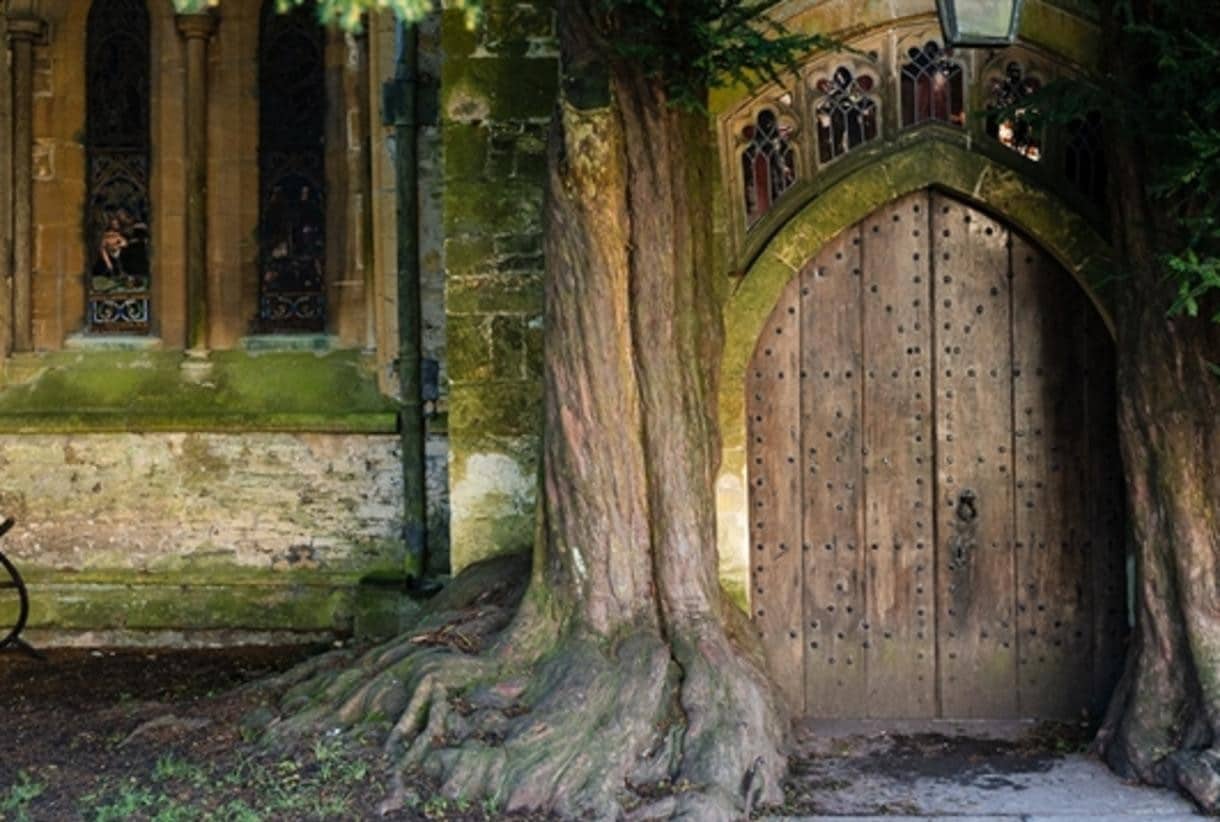
The market town of Stow-on-the-Wold is home to the medieval St Edward’s Church famous for its north door. The doorway is framed by two enormous yew trees whose twisted trunks appear to grow directly into the stone walls. The result seems like a book illustration: a small wooden door set beneath a pointed arch, all guarded by ancient trees curving inward like living sentinels.
Many fans believe this doorway may have inspired Tolkien’s illustration of the Doors of Durin, the hidden entrance to the dwarf city of Khazad-dûm in The Fellowship of the Ring. In Tolkien’s drawing, a stone arch is framed by stylised trees and topped by a lamp, details that bear an eerie resemblance to the church entrance.
Whether coincidence or inspiration, the atmosphere certainly fits Tolkien’s world. He frequently visited the Cotswolds landscape, with its rolling hills, medieval villages and quiet lanes, while teaching at Oxford.
It also reflects the spiritual undertones that run through his writing. Standing before the door of St Edward’s Church, framed by centuries-old yews, it is easy to imagine Gandalf say the secret word that opens the gates: “Speak, friend, and enter.”
Oxford: Where Middle-earth took shape
If Tolkien’s landscapes came from the countryside, his mythology took shape in the ancient academic streets of Oxford. Tolkien spent most of his professional life at the University of Oxford. The city’s libraries, colleges, and pubs formed the intellectual backdrop to the creation of Middle-earth.
Many Tolkien landmarks can still be explored. At Merton College, a stone table in the gardens is said to have inspired the setting of Elrond’s council in The Fellowship of the Ring. In that scene, representatives of many races gather to decide the fate of the One Ring.
Elsewhere in the city, the Ashmolean Museum holds medieval “posy rings” engraved with hidden inscriptions, objects some believe helped inspire the idea of a ring with words written inside it.
But perhaps the most atmospheric Tolkien location is the pub where stories were shared aloud. At The Eagle and Child, Tolkien met regularly with fellow writers, including CS Lewis, as part of a literary group known as the Inklings. Chapters of The Lord of the Rings were read aloud and refined over pints and lively debate.
Oxford’s narrow streets, cloisters and libraries might seem worlds away from the battlefields and forests of Middle-earth. Yet the city nurtured the imagination that produced them. As Tolkien wrote in The Fellowship of the Ring, “Still round the corner there may wait, A new road or a secret gate.”
Birmingham: Where Tolkien’s world began
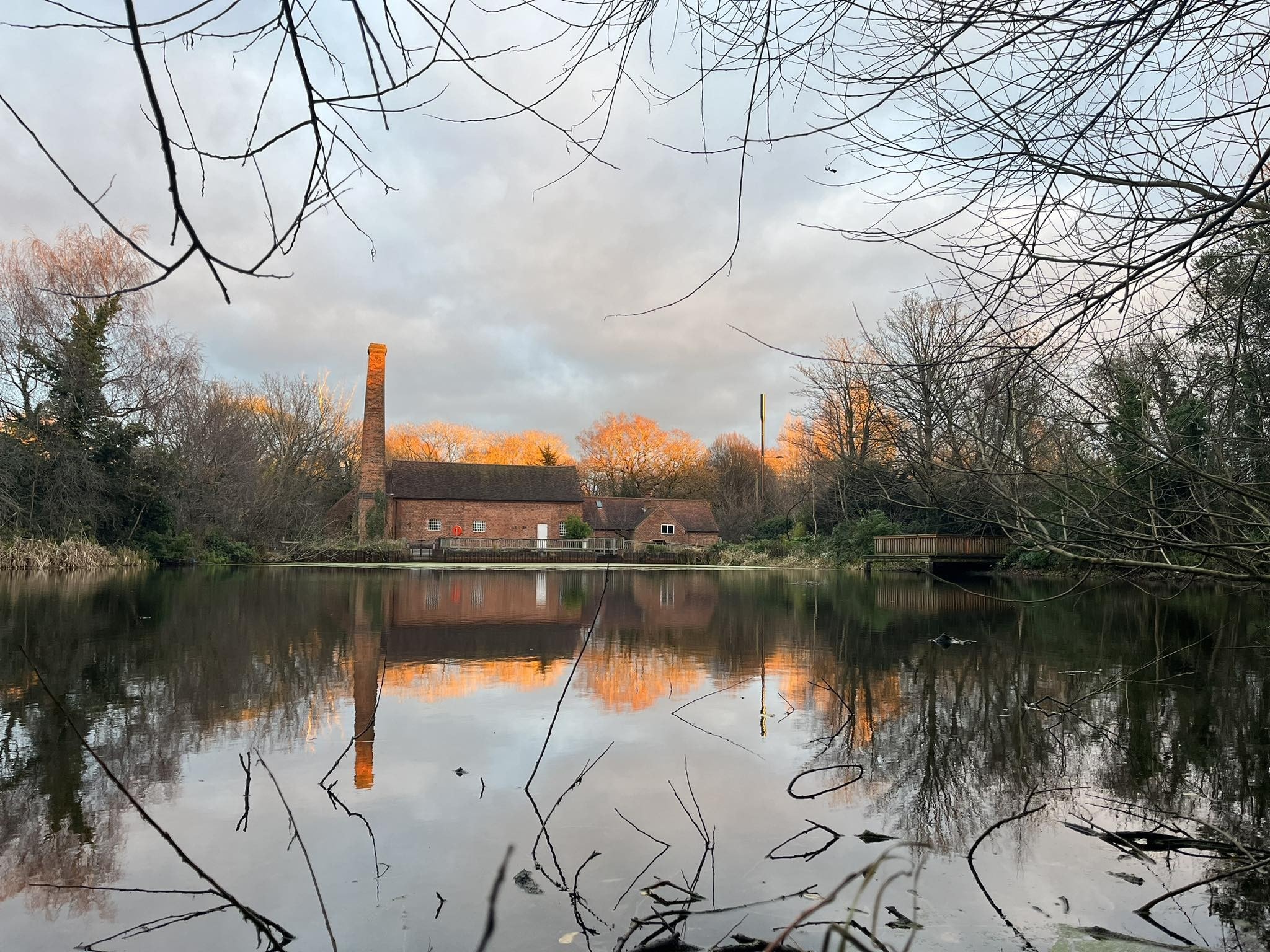
Long before Oxford and Middle-earth, Tolkien’s imagination took root in Birmingham. The young Tolkien spent much of his childhood in the rural hamlet of Sarehole, now part of the modern city. At the time, it was a quiet landscape. At the heart of this childhood world stood Sarehole Mill, a watermill beside a pond where Tolkien and his brother spent hours exploring. The mill is widely believed to have inspired the “great mill” mentioned in The Hobbit, where Bilbo Baggins runs past as adventures begin to unfold.
Nearby lies Moseley Bog, a dense woodland that may have influenced the mysterious Old Forest of The Lord of the Rings. Tolkien’s description feels uncannily fitting: “The trees do not like strangers. They watch you.”
Birmingham also offered darker inspirations. The industrial landscape of the nearby Black Country, with its smoke, furnaces and foundries, may have shaped Tolkien’s vision of Mordor, the bleak realm of Sauron. Perrott’s Folly and the Edgbaston Waterworks Tower are also often cited as possible inspirations for the Two Towers of Gondor.
The contrast between rural beauty and industrial destruction became one of the central themes of Tolkien’s work. The Shire stands for harmony with nature; Mordor for the devastation of unchecked industry.
In many ways, that tension began here, in the landscapes of his childhood. And perhaps it explains why Tolkien’s stories continue to resonate.
After all, as Bilbo reminds us in The Hobbit: “The road goes ever on and on.”
Teja Lele is an independent editor and writes on books, travel and lifestyle.


