
 E-Paper



Scientifically Speaking: The killer hiding in plain sight
For more than a century, botanists collected an alpine flower with dead insects still attached. A new study has finally shown that the plant was eating them.

 Prefer HTon Google


Researchers examined all 45 preserved flowering specimens of Saxifraga candelabrum held at the Kunming Institute of Botany, collected between 1888 and 2016. On 43 of them, insects are still stuck to the plant. Generations of botanists collected these specimens and preserved them. The insects were visible evidence of something unusual that no one had fully explained.
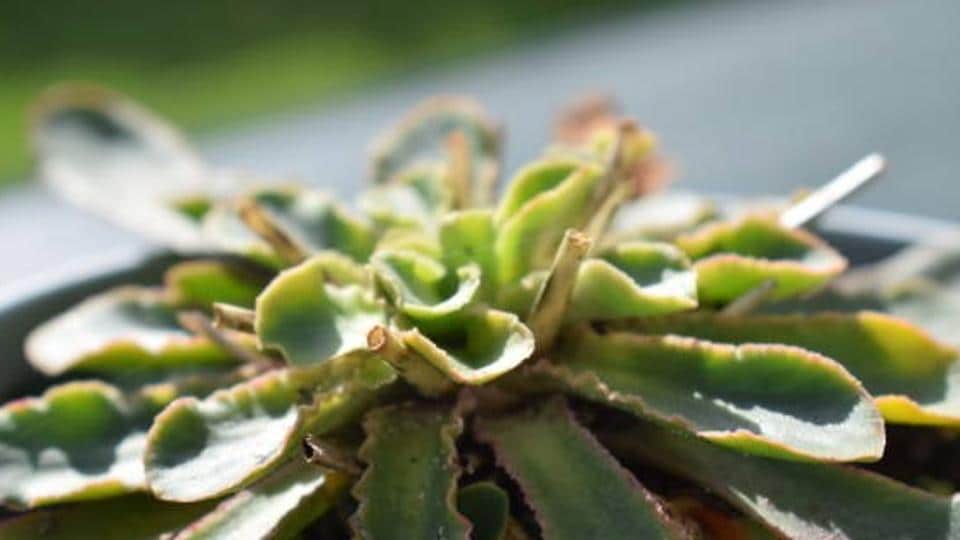
A paper published this week in Nature Communications solves this mystery. The plant, which grows in nutrient-poor rock crevices in the mountains of Yunnan and Sichuan in southwestern China, is carnivorous. Its tiny reddish sticky hairs trap small insects. A digestive enzyme is active in the hairs, and nutrients from their bodies pass into the plant.
Charles Darwin spent years studying carnivorous plants and published Insectivorous Plants in 1875, describing experiments on sundews and other species that could capture and digest animal prey. He was intrigued by two European saxifrages whose sticky hairs resembled those of known carnivorous plants and tried feeding them himself. Was he on to something? His experiments were inconclusive. Neither of those two species is the one examined in the new work, which studied a Chinese relative, so the status of the plants Darwin handled remains unsettled.
Also Read: Scientifically Speaking: Fake scientific research on the rise, says study
The researchers began with what could be observed in the field. Mature plants carried an average of 71 trapped insects, mostly tiny non-biting midges. Plants with more and longer flowering branches tended to catch more. Herbarium specimens showed that this was no recent or local phenomenon. Insects remained attached to plants collected over more than a century. It’s safe to conclude that trapping them is a normal part of the plant’s life.
The plant also appears to lure its victims. In field experiments, researchers covered flowers in ways that allowed insects to see them while blocking their smell, or to smell them while obscuring them from view. Insect visitation was higher when scent cues were available than when odor was blocked. The researchers found several floral scent molecules. A small midge approaching what appears to be an ordinary flower may be approaching a trap.
That creates an interesting problem because, like other flowering plants, the insect-eater also needs insects for pollination. The insects caught on sticky hairs were mostly small midges, while larger flies and bees visited the flowers and usually escaped. The authors think that this reduces a potential problem. Small, largely ineffective pollinators are trapped, while larger pollinators escape. Large insects may simply be strong enough to pull themselves free while smaller ones remain stuck.
Showing that the plant actually eats insects required more evidence. The researchers tested its sticky hairs for phosphatase, an enzyme used by many carnivorous plants to release nutrients from prey. The hairs showed clear enzyme activity. A closely related species tested under the same conditions did not.
Researchers placed fruit flies enriched with a traceable form of nitrogen onto the sticky hairs and then measured where it went. Two weeks later, labelled nitrogen had entered the tissues of the plant. The same thing happened in a sundew, a familiar carnivorous plant, but not in two non-carnivorous species tested alongside it.
Researchers found the greatest enrichment with labelled nitrogen in the flowers, followed by leaves higher on the stem, with the least in leaves near the base. The plant flowers only once before it dies, so nutrients obtained from insects appear to be directed toward its single reproductive effort. In the nutrient-poor alpine soils where it grows, insects can therefore provide an additional source of nitrogen.
Carnivory has evolved independently many times in flowering plants, producing the sticky leaves of sundews, the pitchers of pitcher plants, and the snap traps of Venus flytraps to solve one problem: how to obtain nutrients where they are scarce.
Also Read: Scientifically Speaking: Do early winners become winning adults?
We tend to identify carnivorous plants by spectacular adaptations- a Venus flytrap snapping shut or a pitcher plant drowning an insect in a chamber filled with digestive fluid. This plant catches small insects on fine sticky hairs and draws nutrients from their bodies.
How many more such carnivorous plants remain to be discovered?
The Indian Himalayan region recorded 64 species of this particular plant type. India also has extensive historical plant collections. The Botanical Survey of India alone maintains roughly three million herbarium specimens. A search for other inconspicuous carnivorous plants could begin with old collections followed by field work in the mountains.
Anirban Mahapatra is a microbiologist, author, and science leader. His work spans microbes, medicine, AI, and the institutions that shape science. His most recent book is When the Drugs Don’t Work. The views expressed are personal


