...
...
Next Story

Interview: Ishita Moitra - “Women are now writing every kind of film and show”

The screenwriter of Rocky Aur Rani ki Prem Kahani talks about the great changes in contemporary film sets, the need to protect young writers, and her journey

Published on: Sep 14, 2023, 00:40:57 IST
By
Prefer HTon Google
Advertisement

How and when did you start writing?
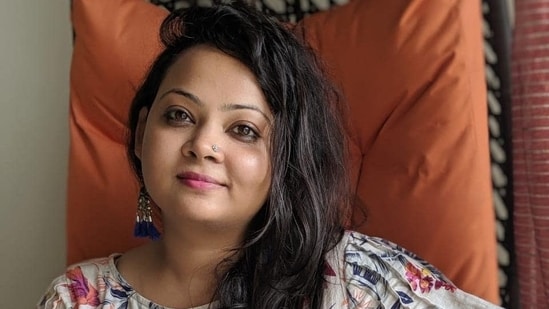
PREMIUMScreenwriter Ishita Moitra (Courtesy the subject)
Screenwriter Ishita Moitra (Courtesy the subject)

My dad was in the army and every two years, I went to a different school, in a different city. I have lived across the length and breadth of this country. I think it was when I was in the 3rd standard that I started writing. I remember winning an essay writing competition in school and other writing-related competitions, and then when I won it at another school and then at another school,

Vidya Balan in and as Shakuntala Devi (Film still)

So, I just knew that this was something I was interested in. But I was good at studies and all the people who were good at studies used to take Science. My parents, in fact, told me that I should take Humanities – it was the opposite of what usually happens to people – but like a fool, I took Science because all my friends were taking it. In 11th and 12th, I took PCBC (Physic, Chemistry, Biology, Computers), which sounds more like a swear word than a vocation. Eventually, I realized what I had to do and did my journalism honours from Delhi University and Mass Communications from Jamia MCRC. So, yes, I knew that I wanted to write. However, I wasn’t sure about the kind of writing I wanted to do, so I interned at Asian Age and at India Today while I was studying journalism. Then, I interned at Outlook, which, back in the day, I loved a lot. There, I realized that I wanted to write newspaper features. That’s where I met Namrata Joshi, who was the editor then. She urged me to consider films as a profession and join Jamia Milia to study films. Namrata used to take me to film festivals and introduced me to world cinema, including the work of Godard. I took the Jamia MCRC exam, which was very tough to crack, and happened to get admission there. So, between the ages of 18 to 21, things got crystallized. One thing led to another and at 22, I moved to Mumbai. I knew that I was either going to write films or write about films – one of the two. I had decided that much by then.

Did you have to struggle a lot as an outsider coming to Mumbai and trying to find work?

A film festival called CineFan used to be held in Delhi. They had a talent campus where they would invite students to send in their short films and they’d choose someone from there. I won the talent campus and got an opportunity to attend the festival. There, I met people from the Bombay film industry – Rajat Kapoor and Abbas Tyrewala there. In fact, even Christopher Nolan had conducted a session there. It was a very good experience for students. So, when I came to Mumbai, I was confident. I had come for just 15 days and within those 15 days, I got a job at Nadiadwala Grandson. It just happened. On the same day, I met a girl, whom I knew from Delhi, who was looking for a flatmate. So, in one day, I got a job as well as a house to stay. I took it as a sign from the universe and decided not to look back. I never took my MA final exam – a decision I still regret. But at that time, I thought if all this was happening to me, why should I go back to Delhi, take an exam and then come back to do the same thing? I just wanted my life in Mumbai to begin and I thought it had begun by then.

I didn’t know too many people in the city and I was still learning the ropes. My first film was called Kambakkht Ishq. I was the junior-most writer on it – there were many writers – and I had no idea what I was doing. But it was a great learning experience as it was a big-budget film and I realized how a big production works. Although I had very little contribution to the film, the production house was really amazing in the sense that they took everyone on the team to Los Angeles for months. Everybody stayed at the same hotel. Nadiadwala is really amazing in that way.

After that, I started finding my path. I went to Yashraj Television, where I wrote the TV show Khote Sikkey. From there, I got to Y-Films and worked on the film Mere Dad Ki Maruti. I think that was the time I found my voice. For the first time, I got to write something that I really, really enjoyed writing and something that was totally up my alley. I did dialogues for Mere Dad Ki Maruti. That film changed my life in more ways than one. One was obviously the creative satisfaction I got while working on the project. I also started getting many calls after that film, so professionally it was a huge milestone in my life. And number two, I met my husband, Neeraj Udhwani, on that film. I was the dialogue writer and he was the one who did the story and the screenplay. Both of us had the same red Maruti cars while we were working on a film called Mere Dad Ki Maruti. I made a stupid joke to him. I said, “We had car-ma.” And guess what, it came true! After that project, things got better and bigger. It was a much smoother decade post the release of that film.

Ishita Moitra is credited with writing the dialogues for Half Girlfriend (Film poster)

You have done both screenplay and dialogue on some projects and then there are some on which you did just the dialogue. Does it require a special kind of skill to write dialogue in Hindi cinema considering the fact that there is no such thing as an exclusive dialogue writer anywhere else in the world?

We’ve had specific dialogue writers in India for a long time now. I think it has to do with our oral traditions. Our epics, for instance, had been passed on orally. All our jatras and folk theatre have a strong element of the oral tradition. In our daily lives too there is a lot of dialoguebazi. Even in our political speeches, there are punches that are very particular to India. I think as a country, we enjoy the spoken word a lot. Our theatre has a lot more dialogue, with many long monologues, than the theatre of other countries. All that has permeated into our cinema. While screenplay writing requires a very rational and analytical mind, dialogue writing requires spontaneity. The best dialogues that I have written, in my opinion, are the ones that I wrote within no time, one after the other. If you think too much before writing dialogue, it will sound constructed. People don’t think about what they have to say next for 30 minutes and then say it. They speak spontaneously, and I think, good dialogue on the screen has to be spontaneous as well. Dialogue has to be as real as possible.

Yes, there are writers who specialize in dialogues but at the same time, there are people who do all three – story, screenplay and dialogue. Even Salim-Javed used to do all three and their screenplays used to have great scenes and amazing dialogue. I think, if you are writing dialogues for your own screenplay, it could be slightly easier because you know the characters very well as you have written and created them yourself. Most dialogue writers would prefer that though it is not a necessity.

How is the screenwriter placed in the film industry today in terms of money, respect and creative power?

I think it depends on the production house that the writer is working with. The situation is not uniform across the industry. A-list production houses pay writers well. I think OTT has changed the scenario for the better. TV pays writers well. In fact, TV has always paid writers very well as there, you get paid per episode, every day. So you’d find TV writers to be way richer than film writers. In OTT, writers get paid pretty well. Having said that, there are so many smaller producers who will ask you to write an entire screenplay for just 5 lakh rupees or something like that. And there are so many people in India who are just looking for an opportunity so some of them end up taking up such projects. We don’t have a Basic Minimum Contract system in India, which says that a writer cannot be employed below a certain minimum wage. And since we don’t have that, there are people who are ready to work for as little as they get because, for a new writer in the city, the opportunity counts more than money. There are market forces that will exploit writers, particularly new writers. Once you get established, these things don’t happen. But new writers do get exploited. The Writers’ Association is full of complaints with the settlement committee.

What could established writers do to make this a fairer playing field for all writers?

I think the Writers’ Association is working very hard to make things fairer. They are pushing for the Basic Minimum Contract. They have been negotiating hard with all the Producers’ Guilds to put that in place. They are trying to do this in a Trade Union to Trade Union way. But the challenge is that everybody has to get on board for it to happen.

The thing is that I can’t really put the blame on a new writer who is roaming around Mumbai and looking for an opportunity. I can’t tell them that they should not work below a certain amount. They are the ones who are powerless so it’s not about the writers, it’s about the market. The market has to change, not the writer.

How does the gender of a writer affect their work in the film industry?

When I first came in, gender used to matter a lot more because, at that point, there weren’t too many screenwriters that were women. Back then, I didn’t see too many top films written by women except Fanaa and My Name is Khan, which were written by Shibani Bathija. There were very few women who were working as writers in the industry. Every year, all the big films used to be written by male writers. That is not the case any longer. It hasn’t been the case for, say, the last 12 years or so. I have literally seen the transition because when I came in, a lot of women writers were entering the industry and now there are many, many more. Now, most Writers’ Rooms have a gender ratio of 50-50. It’s about representation and now when there are so many women writers, it’s not about gender any longer because your gender is not the only thing that is your identity then. Now a woman is not a woman writer. She is just a writer. Women are now writing every genre and every kind of film and show. It’s pretty positive. That’s one thing I have seen change and I’m very happy about it. Not just writers, but even in the crew, even in the people on the sets, there are several women now in every department of filmmaking.

Ranvir Singh and Alia Bhatt in Rocky Aur Rani Ki Prem Kahani (Film still)

Tell me about writing the dialogue and co-writing the screenplay for Rock Aur Rani Ki Prem Kahani?

The film was Karan’s (Johar) idea. I happened to be working on another project for Dharma and I was a Delhi-Bong who happened to speak both Punjabi and Bengali. The film was set in Delhi and it had the Chatterjees and the Randhawas. Somen Mishra, who is the head of development at Dharma and also a co-producer on this film, introduced me to Karan. It was again a case of the universe putting me in the right place at the right time. This is clearly the most important project I have ever worked on. It was like a dream, you know. I was growing up in all these small towns, in army cantonments, and I was in school when I watched the likes of Kuch Kuch Hota Hai and Kabhi Khushi Kabhi Gham. I’ve always enjoyed watching mainstream Hindi cinema. It is my first love. I remember coming back from school and watching Hindi films on Set Max. When people used to ask me in Delhi, “Where do you see yourself in 10 years?”, I used to laugh and say, “Oh, I’ll be writing for Karan.” And when it really happened, it was really like living a dream.

Karan is a very chilled-out person and there were always lots of discussions and I never had to think before offering my point of view. He is actually very funny and witty so there were a lot of laughs and reminiscing of numerous old Hindi songs. It was a breeze. Also, the project started in late 2020, during the pandemic, so the world outside was challenging and this was really the positivity that I needed. At that time, we did not even know if people would ever go back to the theatres or if they would get used to watching everything on OTT. Things were changing. But it was eventually just about doing what we loved doing and we did it. I genuinely love the Karan Johar brand of cinema which makes me feel good every time I watch it. I can literally watch K3G from anywhere to anywhere and enjoy it. The idea was that if what we were doing was bringing us happiness, it would bring happiness to those who watched the film as well. That was the faith with which we wrote the film. I think Karan mentioned in many interviews that he was really anxious before the release. All of us were very anxious about how it would be received. Thankfully, we got a lot of love. We weren’t sure if it would attract the kind of response it did. That was really the best part – the kind of reactions the film opened to was just mesmerizing. I have seen it in the theatres a few times and after the first couple of times, I wasn’t just watching the film but also watching people to see when they were smiling and crying. The experience of a wholesome Hindi film used to be exactly this back in the day. It’s been a while since we’ve seen something like that so I am really, really happy things went the way they did.

You have written Four More Shots Please – a show that has been fairly popular with a certain kind of audience. What was it like to work on it across three seasons?

Devika (Bhagat) and I have written all three seasons. She has written the screenplay and I have written the dialogues. Four More Shots Please is a project where everything just aligns, and you find the perfect fit in terms of everything for yourself. There are women who are producers; each season is directed by a female director, and there are many women behind the camera alongside the star cast, which is led by four women. That brings a certain gaze into the story, and we could talk about topics that a group of girls would chat about on a given day. A lot of it is about how girls feel. It is a very real emotion – not just superficial. We wanted to capture that in this show. There are many woman-woman conversations that exist in the show. Also, it wasn’t something that had been done in India. It was one of the first shows that Amazon Prime India had greenlit, and it has done pretty well for them. It’s one of those shows that whenever a new season drops, there’s a tsunami of messages in our DMs about how people love it. And you know what? It’s not watched just by women; it’s watched by many men as well. It all started in 2016, the early days of OTT, so we didn’t know back then what to expect but the idea was to push the envelope and explore what we could do with a subject like this. If you look at it, the tone of the show is not very serious although what the characters are going through are challenges of life. We have tried to keep it humorous and entertaining.

When you look back at your career, is there a film you shouldn’t have written or should have written differently?

Yes, there are some. But, you know, I feel like, had I not written those projects, I may not have met some of the people I met on those projects who led me to much better things. I don’t know how it would be if I were to remove that from my life. Every experience teaches you something and there are always good things in everything. The Buddhists say, “There is good in bad and there is bad in good.” Eventually, you find out the good in everything. I think I am very happy with where I am today. I just know that whatever I have done, I have given it my everything. I did what I did on some such projects because those were the choices that were available to me at that time.

What’s your best work?

It’s definitely Rocky Aur Rani Ki Prem Kahani.

“The film was Karan’s (Johar) idea. I happened to be working on another project for Dharma and I was a Delhi-Bong who happened to speak both Punjabi and Bengali. The film was set in Delhi and it had the Chatterjees and the Randhawas. Somen Mishra, who is the head of development at Dharma and also a co-producer on this film, introduced me to Karan. It was again a case of the universe putting me in the right place at the right time.” (Film still)

Which films, shows and filmmakers have influenced you?

Many. This is going to be a long list. I think I am a very influenced person.

In India, I’d say the film Mughal-e-Azam. I have seen it many times for its dialogue. I think every line coming from every character is so well-written that it sounds like music. Then, of course, I love Salim-Javed who have influenced every single screenwriter in India. I am a very mainstream person that way. I love Gulzar -- I just love the way he has written dialogue. There is something so conversational about his dialogue that I love that quality about his work. I think I generally sway towards saying things in a comedy, slice-of-life way. So, I like films that tend to do that. And for that, I genuinely enjoyed films such as Mili and Anand. These are superhit films and the issues they deal with are very serious but the way they have written those is something I really appreciate. So, when to punch up the drama and when to keep it real are things that really interest me. Then, when I was growing up, of course, films such as Kuch Kuch Hota Hai and Dilwale Dulhaniya Le Jayenge were favourites. Even Dil Chahta Hai is very special to me because I had never heard characters speak like that before Dil Chahta Hai. I also really loved Vicky Donor. I love Juhi Chaturvedi’s work in Vicky Donor.

Outside of India, I like Fleabag a lot. I love Phoebe Waller-Bridge and whatever she does. Even what she did with Killing Eve is amazing. I really like Aaron Sorkin, of course, and Tina Fey. I also really love Shonda Rhimes. She has written Grey’s Anatomy, Scandal, Bridgerton and several other shows. When I see something written by Shonda, you don’t have to tell me that it’s written by her. I can tell that she has written it. Then, there is Richard Curtis whose work I like. Honestly, the list would just go on.

What would success look like to you in the next 10-15 years?

Now I am a mother. I have a daughter who is a year and a half old. The way I look at the world has changed. I was making her listen to the song “What Jhumka” and I was telling her, “When you grow up, we will watch this film together that Mamma has written.” I want to do stuff that my daughter will be proud of or at least would like to watch. That has become one of the most important things that I want to do. I want to keep getting opportunities to do good work and continue to be in a position to choose what I want to work on. I want to enjoy the process and hopefully leave some legacy behind. I hope to be able to find an identity as a writer, my own signature style that people will like and remember.

Mihir Chitre is the author of two books of poetry, ‘School of Age’ and ‘Hyphenated’. He is the brain behind the advertising campaigns ‘#LaughAtDeath’ and ‘#HarBhashaEqual’ and has made the short film ‘Hello Brick Road’.

How and when did you start writing?

PREMIUMScreenwriter Ishita Moitra (Courtesy the subject)
Screenwriter Ishita Moitra (Courtesy the subject)

My dad was in the army and every two years, I went to a different school, in a different city. I have lived across the length and breadth of this country. I think it was when I was in the 3rd standard that I started writing. I remember winning an essay writing competition in school and other writing-related competitions, and then when I won it at another school and then at another school, I realized that I might be good at it.

Another thing that happened is that since were moving around, I picked up many languages at a young age. Since my family is Bengali, we speak Bengali at home. My father was in the Jaat regiment so I understand Haryanvi very well. He was posted in Punjab at one time so I not only understand and speak Punjabi but also read and write it. In fact, I can read and write the Gurmukhi script as well. I was very passionate about Hindi poetry as a student, so I know Hindi very well too. As a student, I used to fare equally well in English and Hindi. Essentially, I’ve always loved languages and I always hated mathematics – though eventually, I went on to work on a film called Shakuntala Devi, whose protagonist is a math wizard!

Vidya Balan in and as Shakuntala Devi (Film still)

So, I just knew that this was something I was interested in. But I was good at studies and all the people who were good at studies used to take Science. My parents, in fact, told me that I should take Humanities – it was the opposite of what usually happens to people – but like a fool, I took Science because all my friends were taking it. In 11th and 12th, I took PCBC (Physic, Chemistry, Biology, Computers), which sounds more like a swear word than a vocation. Eventually, I realized what I had to do and did my journalism honours from Delhi University and Mass Communications from Jamia MCRC. So, yes, I knew that I wanted to write. However, I wasn’t sure about the kind of writing I wanted to do, so I interned at Asian Age and at India Today while I was studying journalism. Then, I interned at Outlook, which, back in the day, I loved a lot. There, I realized that I wanted to write newspaper features. That’s where I met Namrata Joshi, who was the editor then. She urged me to consider films as a profession and join Jamia Milia to study films. Namrata used to take me to film festivals and introduced me to world cinema, including the work of Godard. I took the Jamia MCRC exam, which was very tough to crack, and happened to get admission there. So, between the ages of 18 to 21, things got crystallized. One thing led to another and at 22, I moved to Mumbai. I knew that I was either going to write films or write about films – one of the two. I had decided that much by then.

Did you have to struggle a lot as an outsider coming to Mumbai and trying to find work?

A film festival called CineFan used to be held in Delhi. They had a talent campus where they would invite students to send in their short films and they’d choose someone from there. I won the talent campus and got an opportunity to attend the festival. There, I met people from the Bombay film industry – Rajat Kapoor and Abbas Tyrewala there. In fact, even Christopher Nolan had conducted a session there. It was a very good experience for students. So, when I came to Mumbai, I was confident. I had come for just 15 days and within those 15 days, I got a job at Nadiadwala Grandson. It just happened. On the same day, I met a girl, whom I knew from Delhi, who was looking for a flatmate. So, in one day, I got a job as well as a house to stay. I took it as a sign from the universe and decided not to look back. I never took my MA final exam – a decision I still regret. But at that time, I thought if all this was happening to me, why should I go back to Delhi, take an exam and then come back to do the same thing? I just wanted my life in Mumbai to begin and I thought it had begun by then.

I didn’t know too many people in the city and I was still learning the ropes. My first film was called Kambakkht Ishq. I was the junior-most writer on it – there were many writers – and I had no idea what I was doing. But it was a great learning experience as it was a big-budget film and I realized how a big production works. Although I had very little contribution to the film, the production house was really amazing in the sense that they took everyone on the team to Los Angeles for months. Everybody stayed at the same hotel. Nadiadwala is really amazing in that way.

After that, I started finding my path. I went to Yashraj Television, where I wrote the TV show Khote Sikkey. From there, I got to Y-Films and worked on the film Mere Dad Ki Maruti. I think that was the time I found my voice. For the first time, I got to write something that I really, really enjoyed writing and something that was totally up my alley. I did dialogues for Mere Dad Ki Maruti. That film changed my life in more ways than one. One was obviously the creative satisfaction I got while working on the project. I also started getting many calls after that film, so professionally it was a huge milestone in my life. And number two, I met my husband, Neeraj Udhwani, on that film. I was the dialogue writer and he was the one who did the story and the screenplay. Both of us had the same red Maruti cars while we were working on a film called Mere Dad Ki Maruti. I made a stupid joke to him. I said, “We had car-ma.” And guess what, it came true! After that project, things got better and bigger. It was a much smoother decade post the release of that film.

Ishita Moitra is credited with writing the dialogues for Half Girlfriend (Film poster)

You have done both screenplay and dialogue on some projects and then there are some on which you did just the dialogue. Does it require a special kind of skill to write dialogue in Hindi cinema considering the fact that there is no such thing as an exclusive dialogue writer anywhere else in the world?

We’ve had specific dialogue writers in India for a long time now. I think it has to do with our oral traditions. Our epics, for instance, had been passed on orally. All our jatras and folk theatre have a strong element of the oral tradition. In our daily lives too there is a lot of dialoguebazi. Even in our political speeches, there are punches that are very particular to India. I think as a country, we enjoy the spoken word a lot. Our theatre has a lot more dialogue, with many long monologues, than the theatre of other countries. All that has permeated into our cinema. While screenplay writing requires a very rational and analytical mind, dialogue writing requires spontaneity. The best dialogues that I have written, in my opinion, are the ones that I wrote within no time, one after the other. If you think too much before writing dialogue, it will sound constructed. People don’t think about what they have to say next for 30 minutes and then say it. They speak spontaneously, and I think, good dialogue on the screen has to be spontaneous as well. Dialogue has to be as real as possible.

Yes, there are writers who specialize in dialogues but at the same time, there are people who do all three – story, screenplay and dialogue. Even Salim-Javed used to do all three and their screenplays used to have great scenes and amazing dialogue. I think, if you are writing dialogues for your own screenplay, it could be slightly easier because you know the characters very well as you have written and created them yourself. Most dialogue writers would prefer that though it is not a necessity.

How is the screenwriter placed in the film industry today in terms of money, respect and creative power?

I think it depends on the production house that the writer is working with. The situation is not uniform across the industry. A-list production houses pay writers well. I think OTT has changed the scenario for the better. TV pays writers well. In fact, TV has always paid writers very well as there, you get paid per episode, every day. So you’d find TV writers to be way richer than film writers. In OTT, writers get paid pretty well. Having said that, there are so many smaller producers who will ask you to write an entire screenplay for just 5 lakh rupees or something like that. And there are so many people in India who are just looking for an opportunity so some of them end up taking up such projects. We don’t have a Basic Minimum Contract system in India, which says that a writer cannot be employed below a certain minimum wage. And since we don’t have that, there are people who are ready to work for as little as they get because, for a new writer in the city, the opportunity counts more than money. There are market forces that will exploit writers, particularly new writers. Once you get established, these things don’t happen. But new writers do get exploited. The Writers’ Association is full of complaints with the settlement committee.

What could established writers do to make this a fairer playing field for all writers?

I think the Writers’ Association is working very hard to make things fairer. They are pushing for the Basic Minimum Contract. They have been negotiating hard with all the Producers’ Guilds to put that in place. They are trying to do this in a Trade Union to Trade Union way. But the challenge is that everybody has to get on board for it to happen.

The thing is that I can’t really put the blame on a new writer who is roaming around Mumbai and looking for an opportunity. I can’t tell them that they should not work below a certain amount. They are the ones who are powerless so it’s not about the writers, it’s about the market. The market has to change, not the writer.

How does the gender of a writer affect their work in the film industry?

When I first came in, gender used to matter a lot more because, at that point, there weren’t too many screenwriters that were women. Back then, I didn’t see too many top films written by women except Fanaa and My Name is Khan, which were written by Shibani Bathija. There were very few women who were working as writers in the industry. Every year, all the big films used to be written by male writers. That is not the case any longer. It hasn’t been the case for, say, the last 12 years or so. I have literally seen the transition because when I came in, a lot of women writers were entering the industry and now there are many, many more. Now, most Writers’ Rooms have a gender ratio of 50-50. It’s about representation and now when there are so many women writers, it’s not about gender any longer because your gender is not the only thing that is your identity then. Now a woman is not a woman writer. She is just a writer. Women are now writing every genre and every kind of film and show. It’s pretty positive. That’s one thing I have seen change and I’m very happy about it. Not just writers, but even in the crew, even in the people on the sets, there are several women now in every department of filmmaking.

Ranvir Singh and Alia Bhatt in Rocky Aur Rani Ki Prem Kahani (Film still)

Tell me about writing the dialogue and co-writing the screenplay for Rock Aur Rani Ki Prem Kahani?

The film was Karan’s (Johar) idea. I happened to be working on another project for Dharma and I was a Delhi-Bong who happened to speak both Punjabi and Bengali. The film was set in Delhi and it had the Chatterjees and the Randhawas. Somen Mishra, who is the head of development at Dharma and also a co-producer on this film, introduced me to Karan. It was again a case of the universe putting me in the right place at the right time. This is clearly the most important project I have ever worked on. It was like a dream, you know. I was growing up in all these small towns, in army cantonments, and I was in school when I watched the likes of Kuch Kuch Hota Hai and Kabhi Khushi Kabhi Gham. I’ve always enjoyed watching mainstream Hindi cinema. It is my first love. I remember coming back from school and watching Hindi films on Set Max. When people used to ask me in Delhi, “Where do you see yourself in 10 years?”, I used to laugh and say, “Oh, I’ll be writing for Karan.” And when it really happened, it was really like living a dream.

Karan is a very chilled-out person and there were always lots of discussions and I never had to think before offering my point of view. He is actually very funny and witty so there were a lot of laughs and reminiscing of numerous old Hindi songs. It was a breeze. Also, the project started in late 2020, during the pandemic, so the world outside was challenging and this was really the positivity that I needed. At that time, we did not even know if people would ever go back to the theatres or if they would get used to watching everything on OTT. Things were changing. But it was eventually just about doing what we loved doing and we did it. I genuinely love the Karan Johar brand of cinema which makes me feel good every time I watch it. I can literally watch K3G from anywhere to anywhere and enjoy it. The idea was that if what we were doing was bringing us happiness, it would bring happiness to those who watched the film as well. That was the faith with which we wrote the film. I think Karan mentioned in many interviews that he was really anxious before the release. All of us were very anxious about how it would be received. Thankfully, we got a lot of love. We weren’t sure if it would attract the kind of response it did. That was really the best part – the kind of reactions the film opened to was just mesmerizing. I have seen it in the theatres a few times and after the first couple of times, I wasn’t just watching the film but also watching people to see when they were smiling and crying. The experience of a wholesome Hindi film used to be exactly this back in the day. It’s been a while since we’ve seen something like that so I am really, really happy things went the way they did.

You have written Four More Shots Please – a show that has been fairly popular with a certain kind of audience. What was it like to work on it across three seasons?

Devika (Bhagat) and I have written all three seasons. She has written the screenplay and I have written the dialogues. Four More Shots Please is a project where everything just aligns, and you find the perfect fit in terms of everything for yourself. There are women who are producers; each season is directed by a female director, and there are many women behind the camera alongside the star cast, which is led by four women. That brings a certain gaze into the story, and we could talk about topics that a group of girls would chat about on a given day. A lot of it is about how girls feel. It is a very real emotion – not just superficial. We wanted to capture that in this show. There are many woman-woman conversations that exist in the show. Also, it wasn’t something that had been done in India. It was one of the first shows that Amazon Prime India had greenlit, and it has done pretty well for them. It’s one of those shows that whenever a new season drops, there’s a tsunami of messages in our DMs about how people love it. And you know what? It’s not watched just by women; it’s watched by many men as well. It all started in 2016, the early days of OTT, so we didn’t know back then what to expect but the idea was to push the envelope and explore what we could do with a subject like this. If you look at it, the tone of the show is not very serious although what the characters are going through are challenges of life. We have tried to keep it humorous and entertaining.

When you look back at your career, is there a film you shouldn’t have written or should have written differently?

Yes, there are some. But, you know, I feel like, had I not written those projects, I may not have met some of the people I met on those projects who led me to much better things. I don’t know how it would be if I were to remove that from my life. Every experience teaches you something and there are always good things in everything. The Buddhists say, “There is good in bad and there is bad in good.” Eventually, you find out the good in everything. I think I am very happy with where I am today. I just know that whatever I have done, I have given it my everything. I did what I did on some such projects because those were the choices that were available to me at that time.

What’s your best work?

It’s definitely Rocky Aur Rani Ki Prem Kahani.

“The film was Karan’s (Johar) idea. I happened to be working on another project for Dharma and I was a Delhi-Bong who happened to speak both Punjabi and Bengali. The film was set in Delhi and it had the Chatterjees and the Randhawas. Somen Mishra, who is the head of development at Dharma and also a co-producer on this film, introduced me to Karan. It was again a case of the universe putting me in the right place at the right time.” (Film still)

Which films, shows and filmmakers have influenced you?

Many. This is going to be a long list. I think I am a very influenced person.

In India, I’d say the film Mughal-e-Azam. I have seen it many times for its dialogue. I think every line coming from every character is so well-written that it sounds like music. Then, of course, I love Salim-Javed who have influenced every single screenwriter in India. I am a very mainstream person that way. I love Gulzar -- I just love the way he has written dialogue. There is something so conversational about his dialogue that I love that quality about his work. I think I generally sway towards saying things in a comedy, slice-of-life way. So, I like films that tend to do that. And for that, I genuinely enjoyed films such as Mili and Anand. These are superhit films and the issues they deal with are very serious but the way they have written those is something I really appreciate. So, when to punch up the drama and when to keep it real are things that really interest me. Then, when I was growing up, of course, films such as Kuch Kuch Hota Hai and Dilwale Dulhaniya Le Jayenge were favourites. Even Dil Chahta Hai is very special to me because I had never heard characters speak like that before Dil Chahta Hai. I also really loved Vicky Donor. I love Juhi Chaturvedi’s work in Vicky Donor.

Outside of India, I like Fleabag a lot. I love Phoebe Waller-Bridge and whatever she does. Even what she did with Killing Eve is amazing. I really like Aaron Sorkin, of course, and Tina Fey. I also really love Shonda Rhimes. She has written Grey’s Anatomy, Scandal, Bridgerton and several other shows. When I see something written by Shonda, you don’t have to tell me that it’s written by her. I can tell that she has written it. Then, there is Richard Curtis whose work I like. Honestly, the list would just go on.

What would success look like to you in the next 10-15 years?

Now I am a mother. I have a daughter who is a year and a half old. The way I look at the world has changed. I was making her listen to the song “What Jhumka” and I was telling her, “When you grow up, we will watch this film together that Mamma has written.” I want to do stuff that my daughter will be proud of or at least would like to watch. That has become one of the most important things that I want to do. I want to keep getting opportunities to do good work and continue to be in a position to choose what I want to work on. I want to enjoy the process and hopefully leave some legacy behind. I hope to be able to find an identity as a writer, my own signature style that people will like and remember.

Mihir Chitre is the author of two books of poetry, ‘School of Age’ and ‘Hyphenated’. He is the brain behind the advertising campaigns ‘#LaughAtDeath’ and ‘#HarBhashaEqual’ and has made the short film ‘Hello Brick Road’.

All Access.
One Subscription.

Get 360° coverage—from daily headlines
to 100 year archives.

E-Paper
Full
Archives
Full Access to
HT App & Website
Games
 
Explore the latest Books News, author interviews, book reviews, literary events and new releases. Discover recommendations, reading lists and updates from the world of literature on Hindustan Times.
SHARE THIS ARTICLE ON
Hindustantimes wants to start sending you push notifications. Click allow to subscribe