
 E-Paper



Interview: Lyricist Puneet Sharma: “A good lyricist needs to be a good smuggler”
The writer of several popular series with song writing credits in Sanju, among other films and creator of the viral anti-CAA protest poem Tum Kaun Ho Bey, Puneet Sharma talks about poetry, lyric and screen writing, and his inspirations and influences

 Prefer HTon Google


How did a young boy who swore by the street food of Indore move to Mumbai?
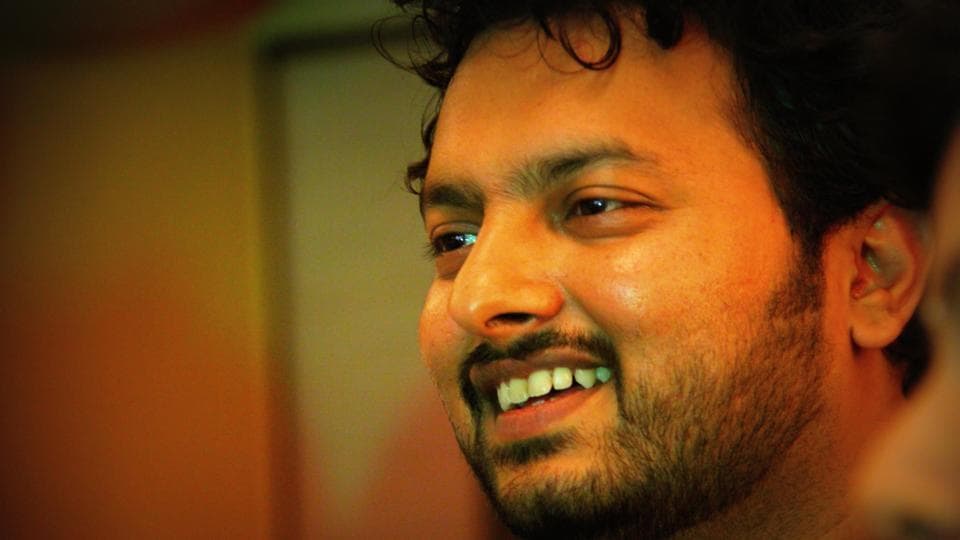
I truly believed that after I went to Mumbai, two of my biggest challenges would be to get the work I desired and the food I desired. How the rest of my day pans out, even today, is largely dependent on how breakfast tastes. The thing is the food in Indore spoils you. There aren’t many places to visit or things to do there. So the food stalls and the restaurants are the local tourism. At breakfast, we think about what we will have for lunch and at lunch we think about dinner. Food is our circle of life. However, I found a way to continue with that in Mumbai. When I got here, I stayed as a paying guest with a senior from a theatre group who was also from Indore. I had to pay beyond my means at the time but that’s when I learnt to cook. After that, I could keep eating what I want to in this city.
Tum Kaun Ho Bey? became one of the major poems of the anti-CAA protests. Let’s talk about writing as a political exercise.
When I left college and joined theatre I realised how writing was related to politics. That’s also when I realised that politics was not just electoral politics. In fact, electoral politics is a small part. Politics is present everywhere in the world, even at those places where talking about it is the death of romance, according to some. This poem was written several months before it went viral. In fact, it was even available on the internet before it went viral. But, as an anxious person, I think I can see danger from far away. Maybe that’s why it takes time for society to relate to my ideas. For a long time, I have been bothered about the fact that some people were questioning my love for my country. I have a direct relationship with my country. That’s what I have grown up with and I can’t understand another relationship being planted between us. It’s like the love for my mother. Unlike other “ideal children” I might not touch her feet every day. I don’t like showing my love off. I like to hug her instead. My mother has never asked me touch her feet but my relatives have taunted me about not doing so. I felt like they were saying that if I didn’t express my love in the ways that they have prescribed, then it isn’t true. That’s when I thought, “Who is anyone else to interfere between my mother and I; my country and I? Who are they tell to me?” That’s when I wrote Tum Kaun Ho Bey? (Who are you, man?) I wrote Tum pehle jahil nahi ho jo kehte ho ke cheekhke pyaar karo (You aren’t the first idiot who says that love has to be screamed out). Many people believe that showing off to the world at large is the only way to love. Some of them are hypocrites. Still, it’s their choice. All I ask is that they not impose their choices and ways on me.
There’s an innate lyricism in your poetry. Did that help you to become a successful lyricist?
When I started writing, I didn’t have anyone around me who could tell me about poetry. My family and friends and the colony where I grew up have nothing to do with literature. My exposure to poetry was limited to my school textbooks. The only other medium which unconsciously drew me to poetry was Hindi film music. A good thing was that my father and his elder brother were both fond of old Hindi film music. They’d remember not only the singer’s name but also the music director’s and the lyricist’s and told me stories of Shailendra and Sahir. Consciously and subconsciously, I started looking at Hindi film songs as poetry. Progressive poetry arrived in my life much later. Until it did, Hindi film music was my only poetry school. Maybe that’s the reason for the lyricism in my poetry.
Do you approach writing poetry and lyrics differently?
Songs and poetry are not very different forms. But what separates film lyrics is that what you say in them is not entirely your poetic expression. You need to keep the story of the film in mind too, which is not the poet’s own story. You need to keep in mind the characters and the milieu. You are at their service. You need to take inputs and feedback from the music director and the director of the film as well. Then you need to make the producer happy, then the actor and then the music company. After all this, what comes out might still be poetry but it’s not entirely your poetry. Even if it is poetry, it is a product of this mammoth collaboration process. Just like any aspect of a film is impossible without collaboration. Amidst all this, your poetry or your own expression needs to be subtly hidden and carried onto the lyrics like a smuggler smuggles his goods. That’s why I think a good lyricist needs to be a good smuggler.
Which is the best song you have written according to you?
I truly think that many of my unreleased songs are the best ones I have written. In this industry, people have a special talent to differentiate between a song and a poem, and as soon as they recognize or spot a poem, they reject it. There are very few people who would let it remain a poem and there are very few writers that people are afraid of saying these things to. To search for one such good assignment, a lyricist has to reject many bad ones, which is a privilege in itself.
Let’s move to the screenwriter in you. How did that journey begin?
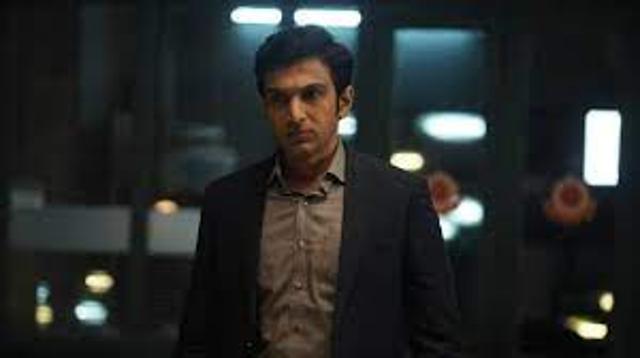
I was interested in scripts for a long, long time. Especially since the time I started watching mainstream Bollywood films back in college. I found those stories interesting because I thought it was a space where the imagination is respected. The first film story I ever wrote was for Spider Man 3 after I watched the first two parts! Sci-fi was my favourite genre. And that’s where it all began! Then I wrote plays and film concepts. I was writing everything I could. But just as I spent three years to become a professional lyric writer after I learnt to write songs, I spent three-four years honing my craft before making scriptwriting my career. One of the biggest reasons I wanted to move from lyric to scriptwriting was because I had begun to observe that lyrics were slowly moving away from the centrestage in Hindi cinema. Unless you’re a top lyricist, chances are rare that you will get a variety of songs. Scriptwriting offered me the freedom to choose my subject. I came to the film industry because I wanted to have my say. That’s why I chose the path of screenwriting. I believe that screenwriting and the craft of poetry are closely related. In both, there’s a special rhythmic flow of images that’s governed by the genre.
The Great Indian Murder was a success. How was the experience of co-writing it with Vijay Maurya?
I’m privileged that I got a chance to work with Vijay (Maurya) bhai and Tishu (Tigmanshu Dhulia) bhai. Both are way more experienced writers than I am and both gave me a lot of confidence and allowed me the space to express myself. I could use this confidence not just in that series but also in the ones I worked on afterwards. From Vijay Maurya I learnt to be unrestrained, unbridled in my writing. Since he is an actor as well, his dialogues translate very naturally onto paper. And who can forget the lines written by Tishu bhai? By now it’s a well-known cliché that every small town kid grows up watching Hasil. But it’s a giant truth that those who love Tishu bhai’s work will continue to swear by it for generations to come.
What would you have done differently about Dhamaka from a writing point of view?
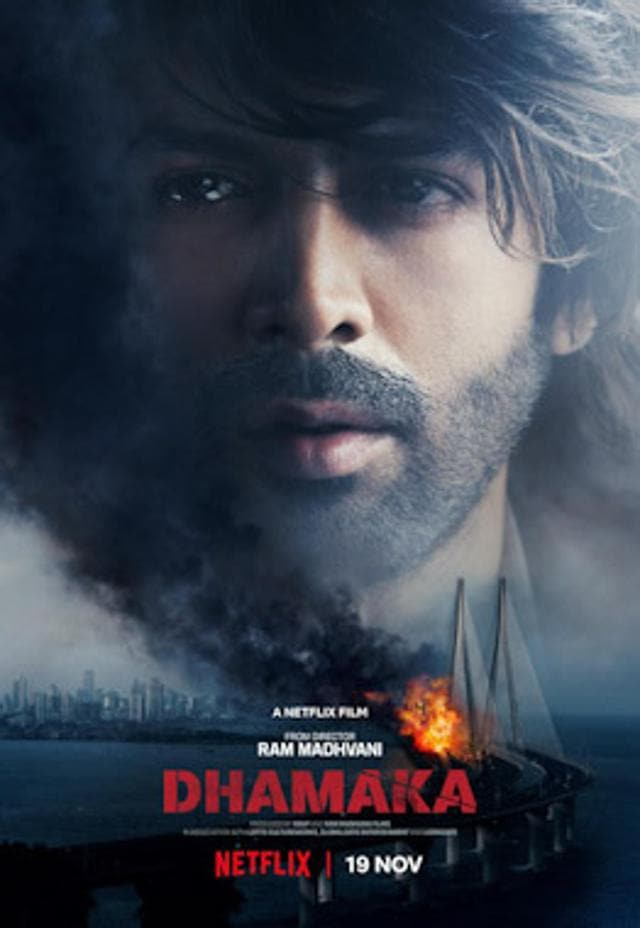
Hazaron khwahishen aisi ki har khwahish pe dum nikle. Bahut nikle mere armaan magar phir bhi ki kam nikle.
Dhamaka was a remake of a Korean film. Do remakes give you the same thrill as writing an original script?
Earlier, I used to look at this very differently. Now my perspective about this is the same as the one I have about adapting books into films. You have a particular source material using which you have to write a story, which should not look like a copy. Your story should have its own voice. If you follow this approach then every adaptation seems necessary. Yes, if one uses it just to cash on something famous then it makes no sense at all.
Who are your favourite poets, writers and lyricists?
The first lyricist that comes to mind and the one closest to me is Shailendra sahab. I learnt simplicity of thought from him. I learnt how lyrics could be translated into urban folk; how ideological commitment can be so easily put up as satire. From Sahir sahab, I learnt direct conflict and that whether it is the politics of love or of society, your commitment cannot change with your need. From Majrooh (Sultanpuri) sahab, I learnt how to write so well to a tune that the audience is kept guessing whether the tune was composed first or the song written before that.
Among the poets, the first name would be of Gajanan Madhav Muktibodh. He broke everything inside me, which needed to be broken. It took me five-six years to understand him and since then, whenever I feel the need to understand myself again, his poems are what I go back to. Then come Dhumil, Pasg, Kedarnath Singh, Vinod Kumar Shukla, Nagarjun, Shiv Kumar Batalvi, Faiz, Kabir, Nirala, Ghalib, Mir. The list is pretty long. Among prose writers, Harishankar Parsai was the writer who pulled me out of an abyss. He told me the most bitter truth in the most exciting manner. He was also the writer who introduced me to Muktibodh. I can add many more names to this list as well but Harishankar Parsai is like the sun for me behind whom all other names rest like stars.
Do you think that commercial writing, especially in Bollywood, is necessarily a compromise of creativity?
In all work concerned with the market, creativity walks according to the market. The market can make creativity soar in order to gain profit or make it sink if it thinks that is more beneficial to do so. The market looks at creativity like it looks at any other product. It has turned art into “content”. This term may be new but the concept is not. Just like consumption encourages or discourages a product in the market, it does the same in the business of cinema as well. If the majority encourages cheap and easy products, who will fund deep and complex art? As Ibsen said, “Minority is rarely right but majority is always wrong.”
How important is mass appeal and appreciation for the writer in you?
As I said, I am in the film industry to have my say and to be heard. So I’d definitely like it if what I want to say reaches as many people as possible. But for me to reach as many people as possible, I won’t start saying and writing things I don’t believe in. I think until such time as I am consciously aware of the difference between these two things, my wish to reach as many people as possible is valid.
When was the last time you wrote something which did not involve money what was it?
I don’t think I can answer this question considering my poetry because in this country, even if I want it, poetry will never attract money. I wouldn’t involve the songs that I have written for my theatre friends in this answer as well. Alas! There was a time when I used to do a lot of work which did not involve money but the needs of life took prominence and that kind of work reduced. My most recent work which I did without money was writing a song for an army battalion.
Which films and filmmakers influenced you in your early days?
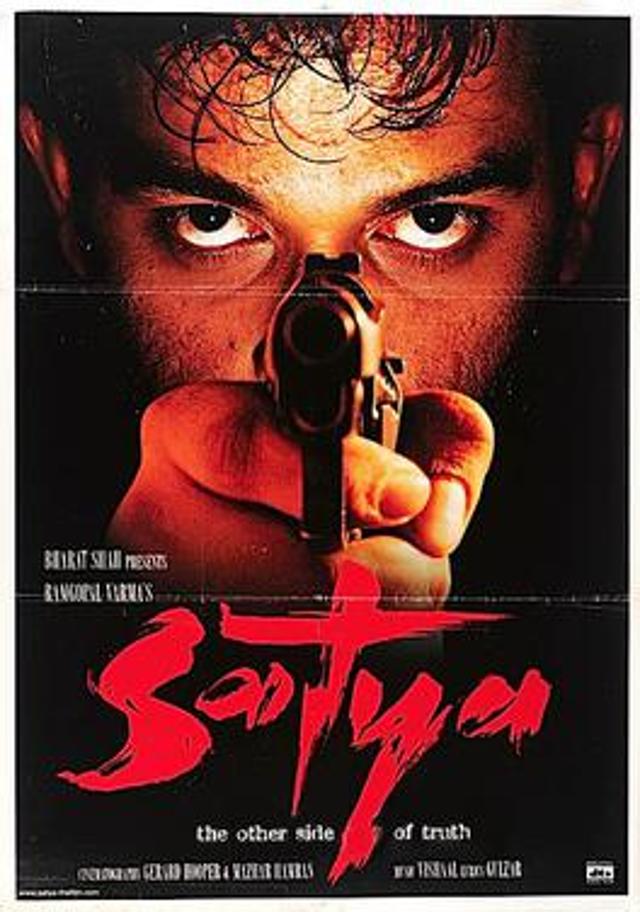
Satya affected me a lot; I started looking at films differently. Then, there was a Russian war film called Come and See. That one touched me as deeply as no other film ever has. Then, a Santosh Sivan film, a children’s film called Halo; Singing in the Rain. The list of directors is long. Maybe that will tell you the kind of work I enjoy - Sriram Raghavan, Ritwik Ghatak, Hrishikesh Mukherji, Scorsese, Hitchcock, Kieślowski, Edgar Wright, Andrei Tarkovsky, Baz Luhrmann, Miyazaki, Satoshi Kon.
If you get ₹100 crore credited to your account tomorrow, what would you write, if you’d write at all?
Musicals. Only and only Musicals.
Mihir Chitre is the author of two books of poetry, ‘School of Age’ and ‘Hyphenated’. He is the brain behind the advertising campaigns ‘#LaughAtDeath’ and ‘#HarBhashaEqual’ and has made the short film ‘Hello Brick Road’.


