
 E-Paper



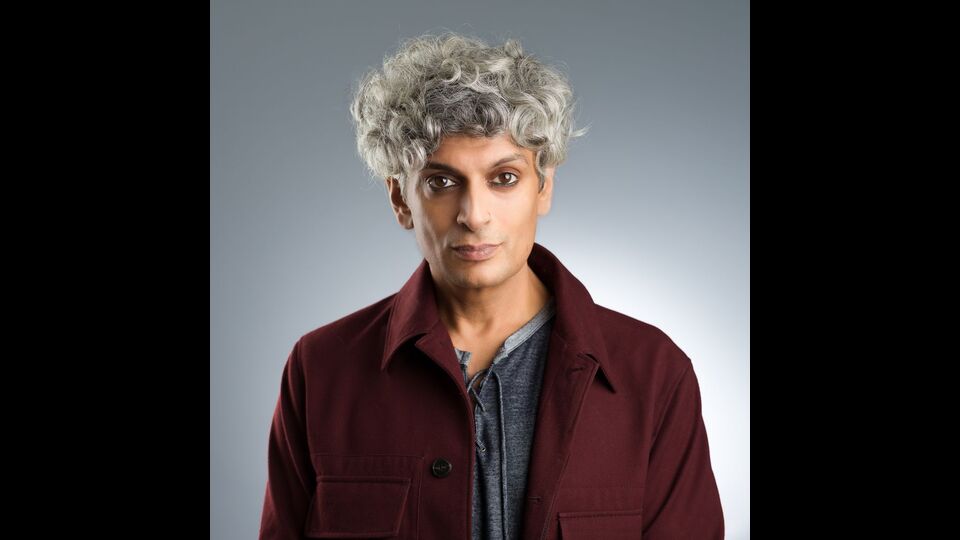
Kazim Ali: “I see myself like Tiresias, changing every few years”
Ali spoke about yoga in Palestine, his latest books, Sukun: New and Selected Poems and Indian Winter, and his connection to Hyderabad

 Prefer HTon Google


What exciting projects are you currently focused on?
I’m finishing a non-fiction book about teaching yoga in the Palestinian West Bank and contemplative practices in Palestine. The ongoing war has made it hard to focus, as activism takes priority, but I’m committed to telling this important story. I’m also working on new poems dealing with grief after my mom’s passing, along with smaller articles. Additionally, I’m compiling a new collection of my essays on poetry for Wesleyan University Press, my first in nearly 10 years. The release date is uncertain, but it will happen.

Every writer has a secret writing-force. What’s yours?
Yeah, I think language is how I write, for how I experience the world. People who dance have to dance every day in order to continue dancing. And visual artists have to get up every day and go to the studio. I just live in language. I work across genres — poetry, memoir, criticism — each different but all a pleasure. Writing never feels like work to me.
The title poem Sukun feels hypnotic — like a spell. What’s your relationship with sound?
The body and sound share a kinetic relationship. I grew up listening to English, Farsi, Urdu and other languages. The long lines in my book without punctuation are like water waves crashing into the shore. The sentences flow; slowing down the readers experience of the poem. It’s about letting go of the conscious mind and connecting directly with sound and space around us.
I’ve noticed your changing your look over time. Is this part of your artistic transformation?
I see myself like Tiresias, changing every few years — even switching genders. I don’t know what’s next, maybe something simpler — like a cat, a farmer, or even a rock. Life’s unpredictable.

Where do you see yourself in Indian poetry in English?
Indian poetry in English became compelling, post-decolonization, blending modernism with unique voices. Kamala Das and Eunice de Souza stand out for their raw honesty, shaping the true power of Indian English poetry. Contemporary Indian poets vary from formal to looser styles, and I find myself somewhere in between. I’ve published mostly internationally and online, with limited print presence in India, partly because I don’t live there. I’d like to see more engagement with my work in India.
READ MORE: Review: On the Brink of Belief edited by Kazim Ali
Well, you are popular in Hyderabad.
I’m emotionally connected to Hyderabad — my mom was born and raised here, and I spent important childhood moments in the city. Hyderabad is a unique crossroads of history, languages, and cultures, with its distinct Urdu and Telugu literary traditions. It’s a hub of innovation and forward-thinking. I know the city well and love its friendly, kind-hearted people. Unlike other cities, Hyderabad feels like home to me.
Jhilam Chattaraj is an academic, poet and author.


