
 E-Paper



Lucy Caldwell: “There’s no such thing as an ordinary life”
On her latest book, ‘Openings’, the short story as a form, diasporic writing, and why she believes that life actually happens in the ordinary mundane moments

 Prefer HTon Google


Please tell us about the narratives that make up Openings? Were there any thematic strands that bring the collection together?
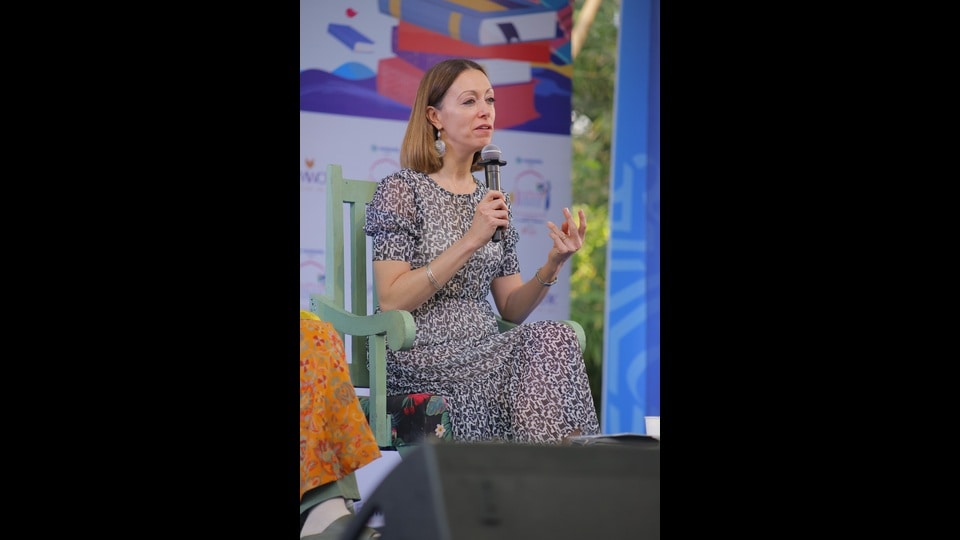
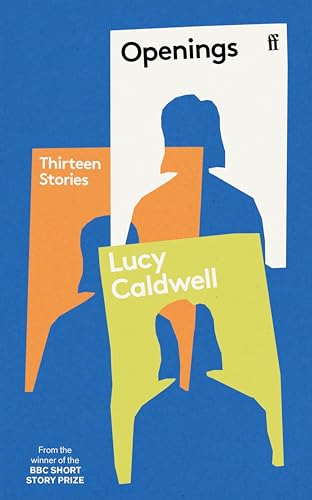
That’s a really good question. And interestingly, my first collection, Multitudes, was very much Belfast girlhood and young womanhood. My second collection, Intimacies, was motherhood. And when it came to writing the stories in Openings, I found I had greater technical abilities. I had greater range. There’s one story set in Berlin; there’s one story set in Morocco; there’s one story set in the London Blitz. And I was thinking, “What is it that ties these stories together?” Because I could feel it. I could sense it. But I didn’t know consciously. When I finished the collection and put the stories together, I realised that the title story held the key. And the title story is Openings. I think what binds the stories together is the idea of how we stay open to life. I’ve turned 40 now. And I’m the mother to two young children. And I’m asking all those questions about how to bring up children in the world. In the stories I was exploring how easy it is to shut down, or to become brittle, or to become ground down by experience, or to become closed or defensive. And the stories are about how to stay open to the wonder of the world, and of people, and of curiosity, and learning new things. That would be the thematic note, I think, that all the stories are asking in different ways.
In some stories of Openings, and more so in Multitudes, you use the rarely opted for second-person narratorial voice. What does that aesthetic choice, in your opinion, do in terms of tonality for the story?
Another brilliant question, yes. Yeah, the second-person, funnily, it’s a form that I dislike most, because I think when it’s used badly, it really doesn’t work. I’m a playwright, and I write naturally in the first-person present tense. I like to ventriloquise my characters. But I reached a point where the first-person was no longer working for me, because my characters, in that moment, maybe they didn’t have enough self-awareness to tell their own story well. Or when I was writing about tough subjects, like maybe teen suicide or depression, the characters didn’t like themselves enough to be good company. And also, if a story is told first-person past tense, it becomes a summary of experience. It’s something that has been overcome, and we’re getting the product of that experience rather than the experience itself. I found that if I wrote in the second-person, the way that I came to see it wasn’t necessarily asking the reader to play a role. It was asking the reader to be witness to a psychodrama that’s happening inside the character, between maybe the voice in the character’s head and themselves, or between a higher part of them and themselves, or a future part of them and themselves. Your question was about tone, and that was so perfect, because what I found with the second-person is that you get a tone of intimacy, of tenderness, of compassion, that first-person is too brittle. Third-person is too knowing, too omniscient. But second-person, you get this lovely sense of a quiet compassion. You get very, very close to your characters, and that’s exactly what I was going for with that.
Do you see short fiction as particularly placed to literarily represent fragmented contemporary existences in the aftermath of a global pandemic, as we struggle with the climate crisis and late-stage capitalism?
Your questions are absolutely brilliant. How I do see it is, if I’m writing a novel, it’s going to take me maybe two or three years. You know, a novel you need to write every single day, and you need to work away at it, and then it’s edited, and then it’s published. A short story, on the other hand, you can capture a moment, like Fresco style, it can be rapid response. I have a story in Openings that’s called Unter den Linden, and I wrote it because I arrived in Berlin, my first time in Berlin, on the day that news broke of Russia’s invasion of Ukraine. My plane landed, first thing we saw when we switched on our phones was that Russia had invaded Ukraine. We were in East Berlin, and already people were standing with placards saying, ‘670 kilometres to Freiburg’, ‘660 to the new European front’. And there’s something that, you know, if I want to write a novel about geopolitics I have to do my research, I have to plot in different subplots, I have to do all this kind of stuff. With a short story, maybe like a poem, you can capture something. When I was writing my stories of girlhood and young womanhood, I saw them as Cubist paintings. You know, none of the characters have names in Multitudes or Intimacies, and I like the idea that even though biographical details might change, someone might have one brother, two sisters, only child, children, no children, you’re getting a sort of fragmented Cubist portrait of something. So I think the short story can do that, but I think crucially for me, it can capture an intensity of experience and respond to something quite directly in a way that a novel, you know experimental novelists like Ali Smith in the UK tried this. She has her Seasonal Quartet, where she tried to write as close to the moment of events as possible, and her publisher, Hamish Hamilton, worked hard to try to speed up the publishing process and get it out there fast. But even so, there’s a time lag because you physically cannot write 60,000 words very quickly, or at least 60,000 good words, but you can write 1,500 words or 2,000 words quite quickly. So I think that’s interesting.
What short fiction offers in the context of diaspora Anglophone writing is also so interesting with the English language getting almost de-territorialized.
I love this. There’s something about the nature of diaspora experience that you can feel that you don’t fully belong in either place. It’s easy to see that as a negative, when actually I think it can be a strength to be both/and. And in a very personal sense, I come from Northern Ireland, from Belfast, from a mother who’s English but from an Irish Catholic family, a father who’s from a Protestant tradition. So, I was brought up with a sense of... It’s called literally a mixed marriage in Belfast, Protestant, Catholic, belonging to neither, you know, neither religion. And it took me a long time to see that as a strength rather than a diminishment, rather than a lack of identity.
There’s something about the nature of the 21st century and globalised life that so many of us live a diaspora life and we are caught between places. You know, even to take Ireland as an example, maybe a few generations ago, you might leave and you would never come back. You would touch the stone that looked out over the Atlantic and you would leave for America or for Australia or for Canada and you would never come back. And then, you know, bring it forward a generation or so, you might come back once with the dollars in your pocket, you know, and distribute them. And then bring it forward a bit more, you come home for weddings and funerals. And then bring it right up to the present, you can come home a couple of times a year on long-haul flights. And so we have this sense of being able to get back home and being caught between place that I always used to think was a lack until I realised that actually a lot of my fiction is about what it means to be caught between place and for home to be something you never quite leave and to be somewhere that you could always go back to and be very near and present. And I think that by writing that particular experience, that’s actually an experience of diaspora living that belongs to so many people, you know, Indian-Irish, Indian-Americans, British-Nigerians, whatever, there’s that sense of the place you come from being almost accessible again, being never quite left.
But do you feel that the short story doesn’t always invite the critical appreciation afforded to the novel, though?
I think the short story is harder. Yes, exactly. The novel is a much more accommodating form.
And a novel, even just in the reader’s experience, a novel is capacious. It accommodates you at your pace. If your commute is delayed by an hour, you can just read on. You can read it in the bath. You can read a paragraph before bed and fall asleep and the next night flip back a few pages and pick up where you left off. A novel is generous like that.
A short story is pure and intense and needs to be encountered on its own terms in its entirety, which makes it quite hard for a reader. A short story, as well, I think, demands the reader’s attention, demands the reader to co-create it, to bring much of themselves to the story in a way that a novel can do but doesn’t necessarily do. So, I think the short story is a purer, harder form for readers. And maybe this is why people are wary of it or fearful of it or why it doesn’t sell as well commercially. It’s not as easy. But for me, it’s the greater form, certainly the harder form to do well.
In your writing, there is a sense that the ordinary mundane moments are where life actually happens.
Absolutely. There’s something that the great Irish writer Edna O’Brien says of Chekhov, and she says, ‘He can make even the desultory dramatic’. I love that. In the hands of a good storyteller, anything can be a story. I quite often write stories of women and young women and mothers, partly because I think those stories are untold or undertold, but I think all of us live our lives at a domestic level. I love the fact that you can meet someone, maybe they can become your friend, maybe they can become your lover, and still, they will have inaccessible depths that you may never know. You may never know the burdens they’re carrying or the battles that they’re fighting. I believe that there’s no such thing as an ordinary life. I think all lives are extraordinary and all people have stories and sadnesses and despairs and longings and yearnings. That kind of magic of humanity is something that I’ve never seen as less than miraculous.
There’s a refusal also to translate certain local Irish expressions in your work for, like, a global readership. Did that happen organically or was it a political choice?
I think a bit of both. In the last 20 years, editorial fashions have changed. It used to be that if you were writing in English, say, but using Hindi words or Tamil words, they might be italicised. That has stopped. What I like is if I’m reading an Indian author and there are words that are unfamiliar to me, I can work them out. I can stop and Google them if it really bothers me. But for the most part, I think it adds a sense of colour and texture and depth and rhythm. When I’m writing in words that my characters are speaking, of course, a Hindi-speaking or a Tamil-speaking audience isn’t going to know necessarily what, gulder means or dreich means, some of these gorgeous Ulster Scots words. But they can either Google them, we all have our phones in our pockets, or they can just let the feeling inflect their understanding of a text. Because I think when we’re reading a story, we have to understand it logically, but we also have to understand it like poetry, in the sense of the textures and the rhythms and the colours of the words. So I think there are different levels of understanding. It’s a cliché but I think it’s through the particular that we get to the universal. And if I wrote in a bland English designed to be accessible to anyone in the world, it would capture no one.
What are you working on next?
Another book of short stories. I’m adapting a story from Openings called BiBi into a feature film. I’m writing the script myself at the moment, which is a new departure for me, which is interesting. And I’m just finishing another collection of short stories.
Simar Bhasin is an independent journalist.


