
 E-Paper



Marcus du Sautoy: “Shakespeare was also a number nerd”
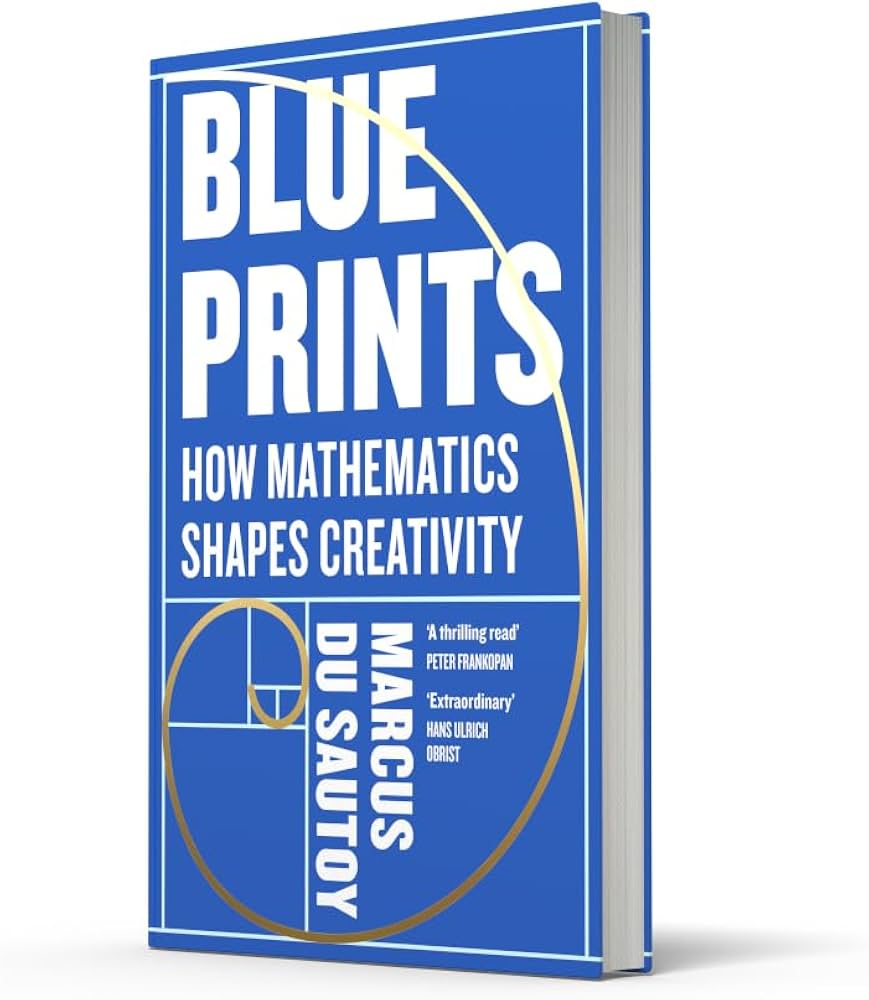
The author of Blueprints: How Mathematics Shapes Creativity on celebrating the connections and the overlap between the realms of mathematics, creative art and nature

 Prefer HTon Google


You’ve said that if your book were a blueprint, it would be a triangle consisting of the creative arts, mathematics and nature. Please elaborate.
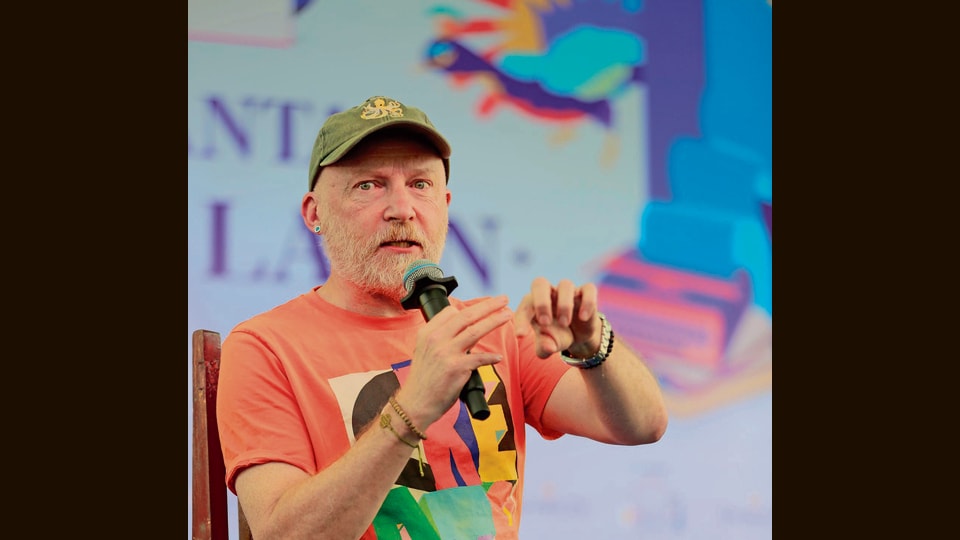
The word which is really key to all of this is the idea of structures. Artists love using different structures to frame their work, but I would define mathematics almost as the study of structure. It’s not about division or multiplication; it’s really the interesting structures. Of course, nature uses structures to create everything we see around us. So, my feeling is all these patterns, these structures are things that we find in all three of those worlds, which is why I felt that the book really is celebrating the connections and the overlap between these realms of mathematics, creative art and nature.
In your book you state that mathematicians are storytellers.
Yes.
How is emotion inevitably bound with how mathematicians approach their craft?
Creativity in mathematics comes from the choices we make of the things that we want to study, explore, discover and then share with our other mathematicians. One of the important elements of the things that we find exciting is the idea of surprise. So, you know, a story that you know how it’s going to end is boring and you won’t read it. But if you’re not quite sure how the story is going to develop and then there’s a strange twist and then an interesting ending. So, for me, that is also key to the mathematics that I love talking about. You might take two very different looking things and then the story of the mathematics will show you, my gosh, these are actually the two sides of the same equation. They’re almost the same.
It’s almost like in a story where you’ve got two characters and you show how these characters, one from India, maybe one from London, how their lives might interweave and connect. That’s very similar to the sort of mathematics that I love; I love discovering those kinds of strange connections.
You assert that artists, creators and writers tap into the same structures that you recognize as a mathematician. How do you prove this?
The book is the stories of the many artists that I’ve either collaborated with or whose work I’ve enjoyed. It’s surprised me so often that when they say this is really how this thing works and I’ll say, but that’s a bit of mathematics and they’ll go, really? So I think I wanted to celebrate that in the book – you think that these two worlds are almost like chalk and cheese, so opposite.
Yet, often I’ll talk to a composer and they will explain how their piece is put together. And I’ll say, but that’s using ideas of symmetry or Fibonacci numbers or golden ratio. Sometimes even the artists are surprised (because) they do it for the aesthetic value of the thing. And then they’re surprised when they discover that I recognize that as a piece of mathematics. The book is telling lots of stories of the way these two worlds meet.
I was interested about the bit about Shakespeare and prime numbers.
Isn’t that amazing? A poet is always interested in symmetry or patterns or number. Shakespeare, of course, did enjoy the patterns that rhythm can make. In the West, poetry that comes in even numbers feels almost like a dance because you can walk to it. So, to use these odd numbers, these prime numbers as a way to disrupt, I think was really fascinating.
Shakespeare’s time was a time when mathematicians, poets and artists were all talking together. You see a lot of interest in science in his plays. So, for example, the later plays, the scientists –Galileo, Copernicus – that the sun was at the centre of the solar system. Cymbeline, his play actually is almost like a metaphor for that idea of the sun being at the centre. So, he was certainly interested in scientific ideas and mathematical ones as well.
Please elaborate on Shakespeare disrupting the iambic pentameter at particular moments.
So, the most famous line of Shakespeare, ‘To be, or not to be, that is the question’ is 11 syllables. I think Shakespeare is doing this very deliberately, that iambic pentameter has a kind of almost soporific feel to it. Then, he wants to make sure that you notice this speech is the most important speech of the play. Hamlet is considering suicide and is worried about what might happen after if he kills himself. So that 11 is a disruptor to make you actually sit up and take note of what’s going on. And there’s a wonderful allegorical poem that Shakespeare wrote towards the end of his life, which is called The Phoenix and the Turtle. And it’s a really strange poem. And a lot of people have had trouble understanding the significance of it. But if you read it, you see that, again, there’s a lot of prime numbers and actually even references to mathematics and Euclid. So that poem is very intriguing for almost being a celebration for Shakespeare of the power of number in poetry.
During your research, what was that one discovery that elicited the most emotion out of you as a mathematician?
I think it probably was the Shakespeare. I performed Shakespeare plays as a student but I never realized that this idea of number was so important to him. And I learned it because I talked to the English tutor in my college in Oxford. He’s a Shakespeare expert, Will Poole. I asked him because I’d been asked to give a talk about Shakespeare and mathematics and I knew nothing about it. So, for me, that was the really surprising discovery – to find somebody as literary as Shakespeare, the greatest wordsmith of all time was also a number nerd as well.
What do you wish for non-mathematicians to take away from your book in terms of understanding how their everyday reality is shaped by both symmetry and structure?
Obviously mathematicians and artists will enjoy this book. But I really want it to resonate with people who are nervous about mathematics but then see that, oh, but the music I love has mathematical ideas in it or the visual art I enjoy or the architecture I enjoy being inside – that actually mathematical ideas are being used to create those. I want people to realize that mathematics isn’t in a separate silo; it is actually the language that runs throughout many things that we love and don’t realize are mathematical.
At the Jaipur Literature Festival, you stated that ‘the more symmetrical the flower, the sweeter the nectar’. Please talk about this relationship between nature and symmetry, and also about the Fibonacci sequence?
There are so many different bits of mathematics happening in the natural world and symmetry is one of them. Symmetry very often is quite hard to make, because if you try and draw something symmetrical, like a flower, for it to be precise is quite, quite difficult. If nature can do it, if a flower can make itself symmetrical, it’s a sign of very good DNA, very good environmental conditions. So very often, the symmetry is giving you a message that there’s strength there.
But the Fibonacci numbers is something slightly different. That’s about (how) nature wants simple ways to grow things. We see a lot of complexity around us but if there’s a simple rule which is take the things you made before, put those together to get the next one… And then, fractals is another good example of structures in nature, where often a fractal that has a simple rule will create something hugely complex. So, nature is using these rules to create the world we see around us. That’s why I think humans respond very positively to things in nature. That’s why, a creative artist, if they can understand the code behind the way nature grows something and use that in their own, say, music and people recognise that they are in the presence of nature through this piece of music, then they respond positively to that piece of art.
You are optimistic about AI and the future of books. What, in your opinion, is the biggest misconception when it comes to AI?
I think people endow it with too much agency and believe it is almost like another species, which is a threat to us. This is fuelled by Hollywood, where it’s always a dystopian image. We need to pull back and recognise this as a new tool. We’ve always progressed by adding new tools to our toolkit. The camera didn’t destroy visual art, it enhanced it because there was a new way to do things. The key is to understand this has the potential to help us to do new things.
I’ve been working with a company here in India who are using AI to do these graphic novels of some classics – they’ve got one of Macbeth, Virginia Woolf, Kafka. People have been very nervous that, oh, my gosh, this is AI putting illustrators out of business. And at the end of the session at JLF on graphic novels, Payal, who’s the person I work with, made the very good point that, no, we still need humans who are using these tools. The AI is being used by the artist to create these worlds.
The AI on its own wouldn’t be able to produce the worlds that are in these books. You’ve got to think of this -- Leonardo couldn’t do his painting without paints, a paintbrush and a canvas. These are physical tools. And then the artist brings these together to make the amazing canvases. The misconception is that the thing is doing the work for the artist. No, it’s a tool that the artist can use to do things which potentially they couldn’t have done in the past. Architecture studios were using a lot of technology before AI ever came along. And nobody questions that. So why are you then objecting to AI being a new piece of technology to use to create interesting new worlds that we’ve never seen before?
Some of the cynicism stems from the as yet unknown environmental costs of this sort of technology.
I think this is a little bit of a red herring. I think it’s people who are wanting to put down AI using the energy debate to say, oh, look at this. ‘We can’t do AI or we can’t do block chain because it’s hurting the environment’. If you look at every time you scroll on Instagram and another image comes up, the energy costs of that are equally costly. Yet nobody is criticising that. There needs to be a much more rational engagement.
If the question is, where is your energy coming from? If it is coming from coal, then, yeah, this is a bad idea and we need to keep that coal in the ground. Provided the energy is coming from a renewable source, there’s no issue. The sun will give us as much energy as we need to do whatever we want. And it’s about breaking the stranglehold that the carbon industry has on energy generation. That’s the debate, not the fact that AI is energy hungry.
What are you working on next? Would you ever consider writing a novel based on the discoveries you make in this book? I know you’ve already attempted a Pollock imitation.
Yeah, I have. I think the theatre is where I feel more at home. So, I think rather than a novel… I’ve done two plays already. I could well see myself telling more stories through the theatre.
I’m working on a new book about why scientists love hiking in the mountains. I’ve actually found an amazing journey that Albert Einstein and Marie Curie did together with their families for five days in the Alps. I did the hike myself this summer and it’s going to be the backbone of the book. I’m going to talk about why I think actually hiking in the mountains is a wonderful metaphor for how we do science. We see a distant peak and then we want to find some way to get to it. That’s how we do science.
Simar Bhasin is a literary critic and research scholar who lives in Delhi.


