Your new novel, Maryam & Son, is about a woman in her mid-40s who is grappling with the disappearance of her son who is suspected of joining ISIS. But it’s not about radicalisation or ISIS or war. It’s a portrait of this woman as a mother, as a widow, as a sister and, later as a lover. Tell me about the kernel of this novel.
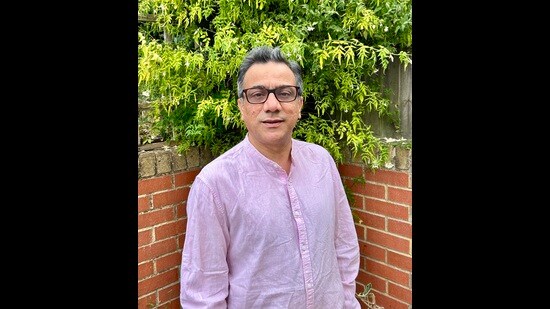
I didn’t want to do a radicalisation story or how people go on that
Your new novel, Maryam & Son, is about a woman in her mid-40s who is grappling with the disappearance of her son who is suspected of joining ISIS. But it’s not about radicalisation or ISIS or war. It’s a portrait of this woman as a mother, as a widow, as a sister and, later as a lover. Tell me about the kernel of this novel.
I didn’t want to do a radicalisation story or how people go on that dangerous, terrible path, not because it was an ideological, political choice but because it was about Maryam from the very start. It was always about this woman.
There was a time in 2015, 14, 16, when a lot of people from the West went on that path. They would be found in places like camps in Syria or Iraq or on the way... There were people caught in the middle or who didn’t even know what they were doing. They just got caught in the sweep of things. Or some of them actually thought they’re going to a nice place, 17-year-old kids. We have the famous case of Shamima Begum here in Britain, a young girl and obviously painted all kinds of things, but she was a teenager.
I’m a parent and at some point I began to think what happens to, not the parental unit, but to the person, to a woman who is much more than a mom or a sister, who is many of those things at the same time and is her own person. What happens to her life but also to her sense of being? That’s when I began to think of this woman who lives in East London, is mildly funny and outspoken in some ways.
I don’t normally say the voice came to me but I had an inkling of how this person would speak. It was not fully formed for me. But I had some sense of, this is how she’s going to be walking and carrying herself and this is how she dresses and how she speaks. That is where actually the novel happened. I had that part down at some point many years ago and I went with it.
Obviously, the temptation is to chart this boy’s journey. Oh, he got indoctrinated. But it’s been done, many times. And to be honest, I wasn’t interested. I wanted to explore what happens inside the house. This boy is gone. What happens to this woman? How does she react? How does she deal with it? but also what happens to her relationships, one with her immediate family, with her siblings, with her mum, with her immediate neighbourhood and by extension with the country, with the society she’s very much a part of. Of course, she then begins to question all these associations because they are put into question.
I read the novel as a kind of slow-burn romance from the beginning. The dynamic between Maryam and Julian, the family liaison officer, is problematic. Was it always going to pan out this way?
I grappled with it a lot. I had various ideas about it. How far they might go? What kind of relationship this would be? One thing I was sure of was that it was fascinating to examine the power between the two people because they come from different backgrounds and so then, you immediately get into the question of class. Of course, there’s gender, but there’s class and there’s power.
For a male novelist, it’s not easy writing women. But then at the same time, if you’re too careful, you will not do justice. So, I took my time.
I’m so glad you said that there’s a romantic element. I’m really pleased. The romantic life of a terror suspect’s mom hasn’t been done before, so I wanted to see what happens. Now there are these two people. There’s difference of age and class and most importantly, the equation of power. How does that affect and change their relationship and how does each view that idea? Maryam has a clear understanding of it by the end. He also has an understanding. He genuinely likes her, but he can’t be entirely immune to temptations that maybe there is a possible use of this relationship now for his professional ends.... He’s tempted by the idea that he’s got close to this woman and maybe he gets some information which will help him solve the case, which is good for his career. And she obviously looks at this guy who has power — and perhaps she reads too much into it, maybe he doesn’t have all that kind of power, but for her, he does have a lot of power — and maybe she sees this as a way to find her son.
READ MORE: Review – Maryam & Son by Mirza Waheed
You’re a Kashmiri writer and I couldn’t help but read it from that lens. How much of your growing up in the Valley slips into the novel? It could have been set in Kashmir. Is that something you considered at all?
No, I didn’t think of this novel in Kashmir at all. But, as you said, there are parallels of that story — of the disappeared boy, the disappeared son... I’m sure you know this very well, the disappeared husband, or the disappeared boyfriend, in Kashmir is a long running story.
You have a lot of women in Kashmir who were left behind in many cases, as it happens in such theatres of modern conflict, war, whatever we call it, it’s not up to them. The decision has been made by the male figure. The woman, often, is not part of that decision making. So that adds a layer of complexity. But at the same time there is that bond of love and belonging and connection.
I have known of stories in Kashmir where women’s lives have been defined by the man gone. And maybe that helped me in the sense that it made me then want to portray a character who ultimately defies that logic that ‘from now onwards, my life is going to be defined this way, as the mother of, or wife of, or daughter of, so and so.’ Maryam doesn’t want to be that person even when she knows that that’s how the world is going to see her. She kind of fights that.
But, of course, it is where I grew up. I can’t say it doesn’t influence someone. It does. But I’ve also lived here the longest. This is the longest I have lived anywhere. My children were born here. They’re British. I am all kinds of things, I’m a Muslim. I’m an immigrant. I’m brown. Of course, you know, what’s happening in Britain these days. There is a fresh movement against immigrant life...
But I didn’t want to go into over examinations of that kind. I wanted to stay with Maryam. And I started to stay with her and her sisters and her mum and then this character, Julian, gave me an opportunity to look at class and brown people’s idea of themselves in the West.
At one point, she questions her own because for the longest time she’s never questioned it. She’s always assured of who she is. She’s never been the kind of immigrant who is trying too hard to please. She’s always sure of her place. She’s never thought of herself as anything but British. The question has never risen.
There’s that throwaway line where she wonders “whether she would belong more if she’d been born in England. But she’d missed that boat by three years.”
Yeah, but it’s the atmosphere around her that puts that thought into her head because of suspicion. In the novel I try to look at what suspicion does. And I was fascinated by when surveillance happens, when you know you’re watched and you’re suspected, how do you begin to see yourself? There’s a self-surveillance of the kind where you’re now watching everything that you think and then second guessing yourself and questioning yourself. I think that was a good terrain for me.
What is your writing process?
I sometimes write in long hand in these journals, which is helpful in a sense because by the time you bring it down into your laptop or PC, there’s a little bit of revision that happens.
My main activity is this, I think a lot. So, I walk. I know it’s kind of a cliché, a writer walking. But I love walking. I walk a lot and a lot of thinking happens in that, and sometimes it actually works, you solve it by walking.
I have a little office. The whole idea is literally you have to sit down. No writing can happen if you’re not sitting down there. So if you sit down sometimes things happen, and they start getting better. I print bits and pieces and then when a draft is done, I have to have a bound print, try to make it in the shape of a book. Then you go at it with your pen. So, I have about five of those.
Sometimes it’s painful. But sometimes there are days of when I think the thing we live for is when a scene works or when a sentence falls into place and it gives you joy. And that’s what you live for.
Saudamini Jain is an independent journalist. She lives in New Delhi.
One Subscription.
Get 360° coverage—from daily headlines
to 100 year archives.
Archives
HT App & Website