
 E-Paper



Past Lives, Three of Us & 96: Film and Undying Love
A look at three films that attempt to understand the simultaneous existence of many versions of an individual and the possibility of loving those different versions

 Prefer HTon Google


Though, in the end, Past Lives didn’t win an Oscar, just being nominated ensured that it has been greatly admired. From the moment I finished watching it for the first time, I knew I wanted to write about it. It is so well-crafted that it made me want to understand the nuance behind other similar works. Over the last three years, I’ve watched Past Lives (directed by Celine Song), Three of Us (directed by Avinash Arun) and 96 (directed by Prem Kumar) as soon as they were released. Something holds these three films by a thread, and at first, I couldn’t quite place what it was. I managed to squeeze in interrupted rewatches of all three films in the midst of my ongoing semester — between classes, on the way to choir practice, or right before bed. This fractured nature of my watching made sense to me: these are films about fragmented relationships filled with long gaps, silences, unsaid things. Non-linearity runs through these narratives and the relationships they seek to depict: each time I resumed watching them, I’d have to be refamiliarised with the characters and their emotions. Somewhat similar to how the romantic interests of all three films float in and out of each other’s lives, I let these films subconsciously fill in the gaps of my own life.
What does it take to make a movie about undying love? The whole crux of this emotion, and of this experience is that it’s impossible to verbalise. To take up this sentiment, and then build a film around that, is an attempt to make art, attach meaning and visuals to complicated and painful stories. The process of growing up and mourning the loss of old relationships, and the people we used to be, is exceedingly fragile and consistently requires a sacrifice. These three subtle, and deeply sincere representations of these feelings, raise questions of alternate lives and what ifs, leaving viewers aching for an inaccessible happy ending.
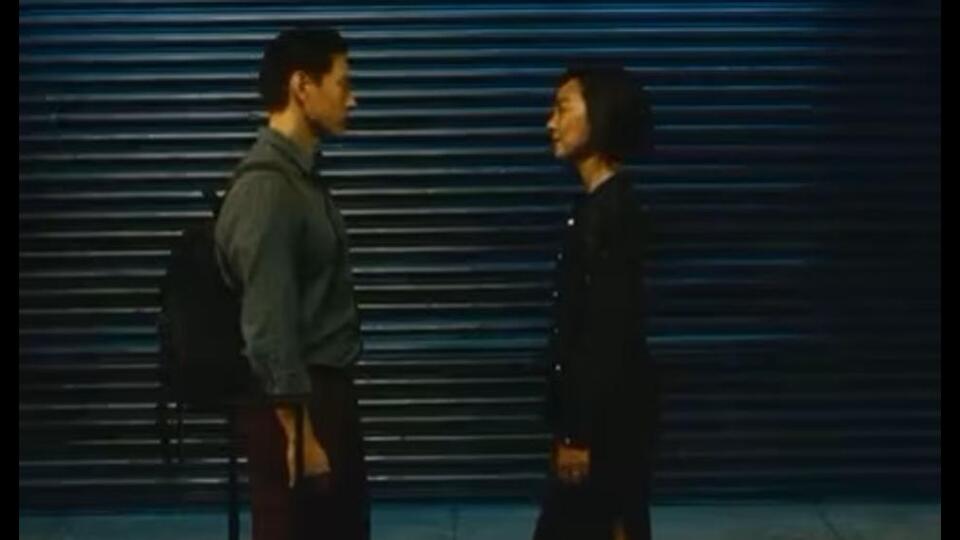
The premise of Past Lives revolves around Na Young and Hae Sung, two childhood neighbours from South Korea, who develop a soft, innocent affection for each other. Young’s family soon immigrates to Canada, and their relationship is left unfinished, until they finally meet in person 12 years later when Na Young visits New York, where Sung now works as a writer under her Western name, Nora. The plot follows them rediscovering each other, as they slip into versions of their former selves, and wonder what could have been if things had turned out differently.
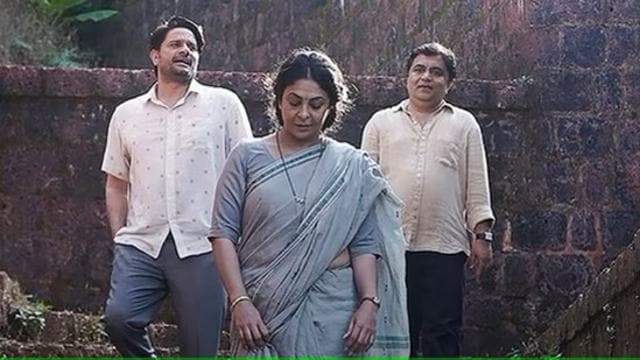
Three of Us starts off with a couple in Mumbai, Shailaja and Dipankar, who visit the Konkan coastline in an attempt to rebuild Shailaja’s memory, which is fading due to early onset Azhzeimer’s. We accompany her on her journey as she is reminded of the girl she used to be when she lived in Vengurla, and the places and people she used to love.
96 takes place within the context of a high school reunion in Tamil Nadu, and paints a portrait of teenage sweethearts Janu and Ram, both of whom constantly acknowledge that they are special to one another, but never really gather the courage to verbalise the extent of their love for each other.
While I do think of these films as entertainment, I also think of them more as mediums of expression. As someone who is constantly struggling with balancing the person I used to be with the person I am, and is almost always coming to terms with growing older, I couldn’t help but be intrigued by this kind of vivid writing; the kind that allows a constant revisiting of the past. The thought of someone perceiving the version of me that exists today, while also having access to younger, frailer versions of me is terrifying. But, as consumers of these films, we have a lot of insight into both, the people these characters used to be when they were younger, and the people they are now. Recurring thematic switches between the past and the present unite these three films; in all three, the storyteller uses lenses into the past as a function of vulnerability and softness. Celine Song is slow with the way she establishes an elusive tension between her two main characters, and deliberate in the way she creates distinct spaces that carry viewers through the intensity of the familiarity and fondness being experienced. The quaint childhood neighbourhood in Seoul possesses an ethereal quality, aligning perfectly with Hae Sung’s innocent yet genuine approach to love. Conversely, Nora’s practicality and ambition resonate with the bustling lifestyle of New York City, a setting where her childhood friend feels out of place. Even its cinematography shines particularly bright in the latter half, presenting NYC as a vividly-detailed backdrop that complements the inner conflicts of the main characters with poignant precision.
Although Avinash Arun’s writing does not possess direct and intentional jumps to the past, it finds a way to pervade through the story regardless. Shailaja’s demeanour changes significantly when they set foot in Vengurla — she revisits teachers from her school, attends a yearly carnival, and catches up with old friends. All of these events serve as points of contact towards a younger, sweeter, cheekier, “Shailu”, as she is often referred to. She even stops by at a Bharatanatyam class she used to go to, a scene so well written that it made me cry. Shailaja quietly observes her teacher’s students dancing, and joins them to perform parts of a piece that she is able to recount from muscle memory. She forgets it halfway and helplessly retreats to the back of the room. She is heartbroken by the betrayal of her memory, and is forced to come face to face with an illness that hinders her from doing things older versions of her enjoyed.

The camera cuts into the past in 96 are especially painful — so much of the relationship shared between the protagonists, both from when they were younger, and when they meet years later, is focused on the unsaid. Vijay Sethupathi and Trisha deliver standout performances as the main characters, infusing the screen with subtlety and a profound sense of unease, stemming from the idea of reigniting emotions that date back over two decades. Janu often wears a gentle smile in the presence of her childhood love, conveying warmth, empathy, and a nervous mixture of conflicting desires. In contrast, Ram stays solemn, reflecting his unwavering certainty about his emotions. As they confront the harsh realities of their situation, both protagonists reveal breathtaking vulnerability, capturing one of cinema’s most delicate portrayals of romantic idealism.
READ MORE BYTHE SAME WRITER: To be saved by bell hooks
The question of silence in cinematic writing is also one commonly explored by all three films. When delving into the concept of silence, we find ourselves urged to associate it solely with a lack or absence of speech, sound, or written words. This urge stems from a particular world view that demands the consideration and placement of silence within a descriptive framework centered around deficiency and absence. There is so much scope for storytelling in silence, and the “nothingness” of silence is challenged by these narratives, where it is imbued with different kinds of meaning. Ram, the protagonist of 96, finds his love for Janu so unbearable, that he faints when she feels his heartbeat with her palm. This scene is particularly interesting because he says so little throughout it. Janu keeps taunting him to talk, but he remains silent despite her many attempts. I read this kind of silence as a response to the unbearable nature of his feelings towards her, and the director’s choice to depict that through the act of losing consciousness is noteworthy.
In Three of Us, although the connection between Shailaja and Pradeep is undying, their respective partners Dipankar and Sarika are written with a unique elegance that allows them to accept the fact that their partners were strongly drawn to each other in the past. Dipankar, Shailaja’s husband, embodies a certain quietness throughout their stay in Vengurla, where he shifts to the back seat in their shared life as a couple. He feels a dissonance with his wife, who, he thinks, has kept aspects of her past hidden away in the corners of her memory. This is a past that Pradeep was a part of. Despite this, Dipankar tries his best to make space for her to re-examine scraps of her former self, and much of his effort is communicated by weighty, lingering silences.
Arthur, Nora’s husband in Past Lives says, “You dream in a language I can’t understand. It’s like this whole place inside you I can’t go.” Silence, here, works two ways — language acts as a barrier for both Arthur and Hae Sung, since Arthur is familiar with the American version of Nora, while Sung understands her Korean self.
A tweet made its rounds on the Internet recently: “I wish we could’ve met as kids. You would’ve loved a softer me.” I wanted to send it to many friends, and in an effort to communicate that my love for them runs so deep, that I would reach into my past and create space for them if I could. It reminds me of a certain great loneliness and profound isolation we feel upon losing easy access to the universe of our childhood: people, neighbourhoods, music. And so, to me, there will always be something special about films that seek to understand the humanity of loving many versions of someone.
Neeraja Srinivasan is a student of Literature and Creative Writing at Ashoka University. She enjoys good books and comfort food.


