
 E-Paper



Report: Kerala Literature Festival, 2026
Of safe harbours and stardust in Kozhikode:From Nobel laureates and Booker winners to one of the most experienced spacewalkers in the world, this year’s KLF pulled out all the stops

 Prefer HTon Google


At the ninth edition of the Kerala Literature Festival in Kozhikode, India’s first UNESCO ‘City of Literature’, there was much excitement around the presence of astronaut Sunita Williams. She didn’t have a book out but highlighted something that remains a concern of all of literature: what do we mean by home, and what does it mean to belong? “From up above, the view makes you question what people are fighting for,” she said at a press conference.
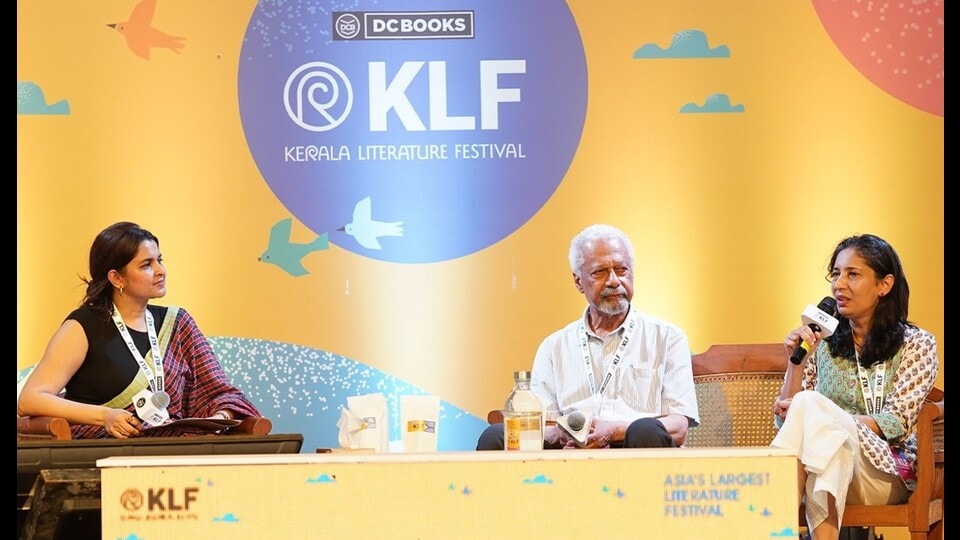

Large billboards on the road running along the festival’s beach venue did scream out other names: Nobel laureates, Booker winners, and bestselling authors too. Arriving as this reporter did from that other literary mela, the Jaipur Literature Festival, what stood out about KLF was not just the warmth of the coast but also the level of reader engagement and critical thinking. Visitors to this event never shy away from asking questions of the authors, which is why it’s always a joy to return, even for jaded hacks. Unlike at book events in the National Capital Region, the elderly here seemed disinterested in informing all and sundry of whom they dined with the night before and more engaged with asking questions on caste and identity. This may or may not be an indicator of their liberality but it is exhilarating nevertheless. Whether openly identifying as queer while asking questions to Suvir Saran, who was in conversation with Sharmila Sen on his book Tell My Mother I Like Boys, or checking with Jimmy Wales, founder of Wikipedia, about ‘safe harbours’ and the authenticity of the information on the portal, readers in Kozhikode effortlessly continue to steal the limelight from panellists.
This year’s guest nation was Germany, and select conversations were staged to emphasise the country’s interest in revisiting its past and signal its openness to literary collaborations. Alongside, The Queer Muslim Project’s Language Is a Queer Thing — Poetry Showcase, highlighted queer voices with Sara Haque, Megha Harish, and Gayathiri Kamalakanthan reading out their verses. There were workshops on AI and lithography and a parallel Children’s Kerala Literature Festival.

The interactions were an interesting mix. In her session with Rishikesh KB, Namita Devidayal, author, Tangerine: How to Read the Upanishads Without Giving Up Coffee, talked about being interested in spirituality in its modern avatar, one that allowed her to follow age-old wisdom without giving up stimulants, including the occasional glass of wine.
During the packed session titled The Art of Making Readers Feel, which had Durjoy Dutta in conversation with Karthik Venkatesh, the popular author was surprisingly open about his vulnerabilities. He spoke about once believing that regurgitating the same stories would keep his fanbase intact only to realise he had blundered. Wryly he also stated that, at this point, publishers would even take a book of blank pages with his name on it as sales were guaranteed.
Translations may not fly off the shelves like a Durjoy Dutta novel does but perhaps they are getting there. Certainly, they often do engage deeply with grassroots issues as is the case with Pratibha Ray’s novel Uttarmarga (1988) on the freedom struggles of peasants and Adivasis. At KLF with Kanak Hota, who translated the novel from the original Odia as Uttarmarga: Where Freedom Reigns, she pointed out that the rural population’s contribution to the national movement is now rarely mentioned. “For a writer to highlight such issues, they must bleed in the soil that they want to write about,” Ray, a Jnanpith awardee, said, adding that besides translating from Indian languages to English, there was a great need for more translations between Indian languages. She said that a new readership will now grow familiar with her work through Malayalam translations being brought out by DC Books, co-promoters of the festival. Crowds also thronged sessions in Malayalam featuring writers like M Mukundan, Benyamin, VJ James, and KR Meera, all of whose work has reached a wider audience through translations.
The Zoom session with Salman Rushdie, which had the winner of the Booker of Bookers in conversation with publisher Manasi Subramaniam, was expectedly interesting. “People search for the autobiography in an author’s work. The idea that a work of fiction isn’t a disguised work of the author’s life is lost on people,” he said, adding that writing is difficult enough without having to wonder about the media reception. Now, he states, he is just concerned about being “sane for a start” amid all the noise.
Not having psychopaths intent on causing him bodily harm, Nobel Prize winner Abdul Razak Gurnah was happily present in the flesh and, with Booker-winning Kiran Desai, was part of a session titled Exiles & Echoes moderated by Anindita Ghose, editor of The Only City, a new anthology on Bombay. While the two authors are very different in style and focus, they agreed that the personal is certainly political. “One writes out of homesickness,” Gurnah said while Desai stated that “a novel works like a museum” of sorts. There were some comic moments too with the laureate. Irked by a question from an audience member, he asked the person to deliver a seminar on postcoloniality.

Another questioning audience member fared better during the session titled Criminalising Dissent: Who Gets Locked Up for Speaking Out? featuring actor Prakash Raj in conversation with Josy Joseph, author, The Silent Coup: A History of India’s Deep State. “The world owes an apology to Tamil Sri Lankans. The gathering of the mothers, sisters and daughters at the martyrs’ graveyard today, even annually, is the power of dissent,” Joseph said in response.
Other interesting sessions included the one on Ghatam; Song of the Clay Pot featuring the author Sumana Chandrashekar and her publisher at Speaking Tiger, Renuka Chatterjee, and the discussion on Sarnath Banerjee’s Absolute Jafar.
Are We the Last Human Generation? had Amrita Mahale, author of Real Life, and Austrian author Anna-Elisabeth Mayer in conversation with moderator Shameer Babu on the anxiety around AI.
In sum, as always, KLF hosted plenty of thought-provoking sessions with genuine literary stars. And then, of course, the one person in the world who has been adrift among actual heavenly bodies gave the event a sprinkling of unbeatable stardust.
Saurabh Sharma is a Delhi-based writer and freelance journalist. They can be found on Instagram/X: @writerly_life.


