
 E-Paper



Report: Neev Literature Festival
Talks, workshops, storytelling, masterclasses curated for children were part of the festival that has now become a highly-anticipated event on children’s books

 Prefer HTon Google


The Neev Literature Festival has established itself as one of the most eagerly awaited events on the literary calendar as far as children’s books are concerned. Hosted by the Neev Academy, an international school in Bengaluru’s Yemalur neighbourhood, on September 20 and 21, 2025, it offered an appetizing platter of talks, workshops, storytelling sessions, masterclasses and panel discussions curated for children and adults. The theme this year was ‘Stories Make Us Human’.
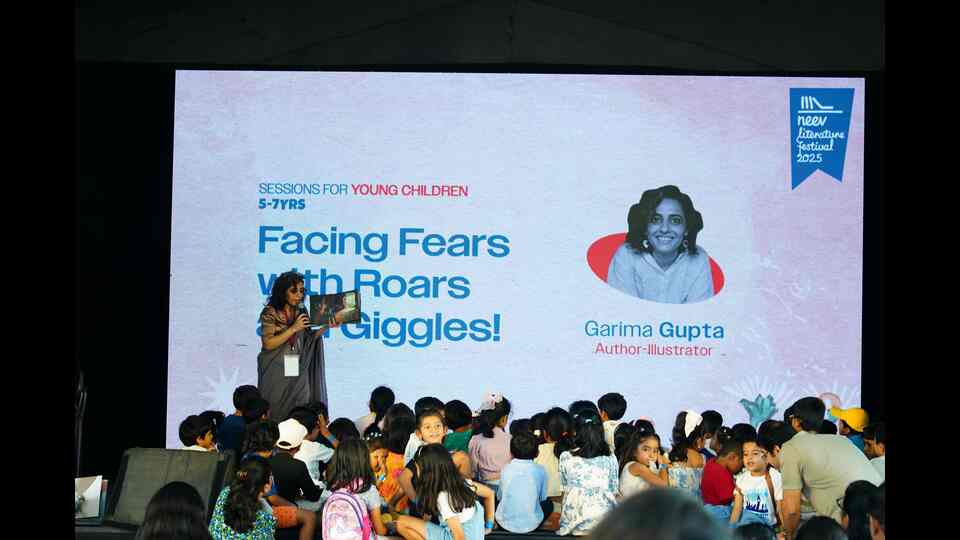
It was a good idea to plan programmes for teachers and parents rather than treating them only as chaperones for children, or as people with purchasing power in relation to books. Dalbir Kaur Madan, founder of the Delhi-based OneUp Library, spoke about how hard it can be for a child “to find pleasure in reading” and about the need to be patient while pursuing their agenda to inculcate the reading habit. She said, “Singing, dancing, and playing football are all skills that require time. Similarly, we need to recognize that reading is a skill, and becoming a reader takes time.”
Joanna Cárdenas, Associate Publisher at the US-based Kokila Books, emphasized that parents who want their children to read enthusiastically, consistently and widely must “model the behaviour that they expect” by reducing screen time and reading books at home. She believes that it is difficult for children to make time for reading when their lives are overscheduled.
The festival offered some precious reflections on the craft of writing for children. British author Sam Leith, who wrote The Haunted Wood: A History of Childhood Reading, said that children’s books are often written by adults “writing from a wound”. He added, “I don’t want to convey the impression that they are all deeply troubled souls but authors often draw on their own childhoods and form ideas about what children need to be told and what they must be protected from.”
Emily Drabble, Head of Children’s Books Promotion and Prizes at BookTrust, the largest children’s reading charity in the UK, confessed that teachers are overworked and do not have enough time to read, so they often end up recommending books from their own childhood.
Uma Krishnaswami, who grew up in Delhi and now lives in British Columbia, Canada, pointed out that “children live in the same world as adults do, and not an idealized one even if we might like to pretend to”. As the author of Chachaji’s Cup, a book that tells the story of a family split by the Partition of 1947, and Threads of Peace: How Mohandas Gandhi and Martin Luther King Jr. Changed the World, she is convinced that “children can sense the various pressures running through families”. Speaking of her writing process, she said that “real writing happens during revision, in the process of stepping away from a draft and coming back to it with fresh eyes”.
UK-based author Anthony McGowan spoke about the profound influence of literary classics on his novels for young adults. His book The Knife that Killed Me, for instance, is a retelling of Homer’s Iliad, whereas his Henry Tumour is based on the Shakespearean play Henry IV, Part 1.
Concerns about representation were articulated in multiple sessions. Goa-based Venita Coelho, who wrote the books Dead as a Dodo and Washer of the Dead, mourned the sorry state of the library collections that she saw while visiting over 80 schools across India. She said, “It was depressing to see rows and rows of Enid Blyton books rather than books by contemporary Indian authors. It seems that Indian parents and teachers have Victorian and middle class sensibilities when it comes to the question of what is worth reading. They are gatekeepers of what kids read.”
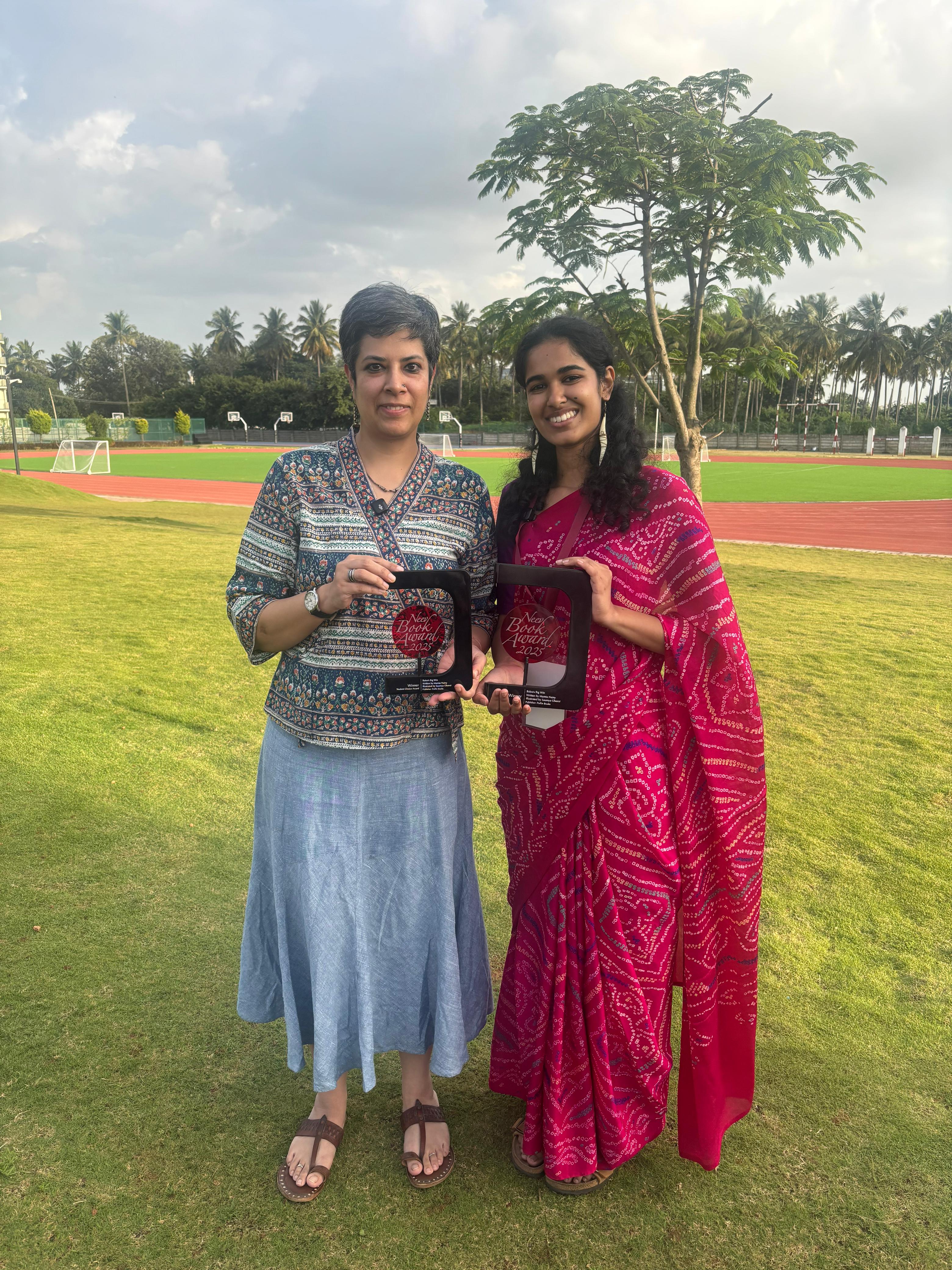
Veera Hiranandani, who was raised by her Jewish mother and Sindhi Hindu father in the US, shared that her book The Night Diary, which is set during the 1947 Partition, has been banned by school districts in Florida and Texas. “Banning books, I think, is about banning people,” she said. Since her father experienced the Partition as a child, the book is deeply personal. She added, “I grew up feeling very different as a child because there was nobody with exactly the same background as mine.” Mamta Nainy from Delhi, who wrote Baloo’s Big Win: How Palwankar Baloo Broke the Caste Barrier in Cricket, advocated for the need to talk sensitively and responsibly about caste in children’s books instead of shying away from such a crucial topic.
The struggle to fit in and be accepted can be a terrifying experience for children and teenagers, so it was heartening to see how the idea of celebrating a child’s individuality came up as a powerful theme during Bengaluru-based Niyatee Sharma’s session based on her book Perfect the Way You Are. She writes, “Some girls like dressing up,/ but you don’t really care;/ you’d rather get your hands dirty,/ and make a mess of your hair.” In the same vein, she adds, “Most boys have short hair,/ but you like yours long;/ it’s okay to stand out,/ and sing your own song!”
Gendered expectations were countered in a beautiful adaptation of Richa Jha and Mithila Ananth’s book Giggi and Daddy by Goshtarang, a grassroots initiative connecting children from all across Maharashtra to books through theatre. This book offers a gentler alternative to toxic depictions of fathers in popular culture, who run away from participating in childcare. Giggi is a girl whose father joins a “school for super dads” that teaches him “the ABC of daddyhood”.
Pablo Cartaya, an American author of Cuban heritage, who has written A Hero’s Guide to Summer Vacation and The Epic Fail of Arturo Zamora, made a compelling argument to “allow boys to access and express vulnerability”. He cautioned against making the grave mistake of assuming that boys who are passionate about sports are not emotionally intelligent. “We need to give them space and grace. It appears that they aren’t listening but they listen in their own way.”
A galaxy of stars from the Indian children’s publishing industry were in attendance, lending the festival an air of grandeur. It included veterans like Paro Anand, Radhika Menon, Anushka Ravishankar, Priya Kuriyan, Samina Mishra, Jerry Pinto, Shabnam Minwalla, and Bijal Vachharajani but also made space for younger talents like Rishita Loitongbam and Ogin Nayam, who are taking Indian children’s literature in new directions with their creative brilliance.
Those who were not in the mood to attend sessions could curl up in the quiet company of a book at the pop-up marketplace set up by Mayura Misra, founder of Storyteller Bookstore in Kolkata. It was designed as a warm and inviting place to lose oneself in the magical world of stories.
Chintan Girish Modi writes about books, art, music and films. He can be reached @chintanwriting on Instagram and X.


