
 E-Paper



Review: Birds, Sex & Beauty by Matt Ridley
The author combines his birdwatching accounts in England’s Pennine hills with a chronicle of the scientific debates around evolution

 Prefer HTon Google


In a video that has caught the imagination of millions on social media, a groom and his entourage are showing off their dancing chops, while the bride watches appreciatively. Among the thousands of adulatory comments they received, one goes, “So this is what birds feel like!”
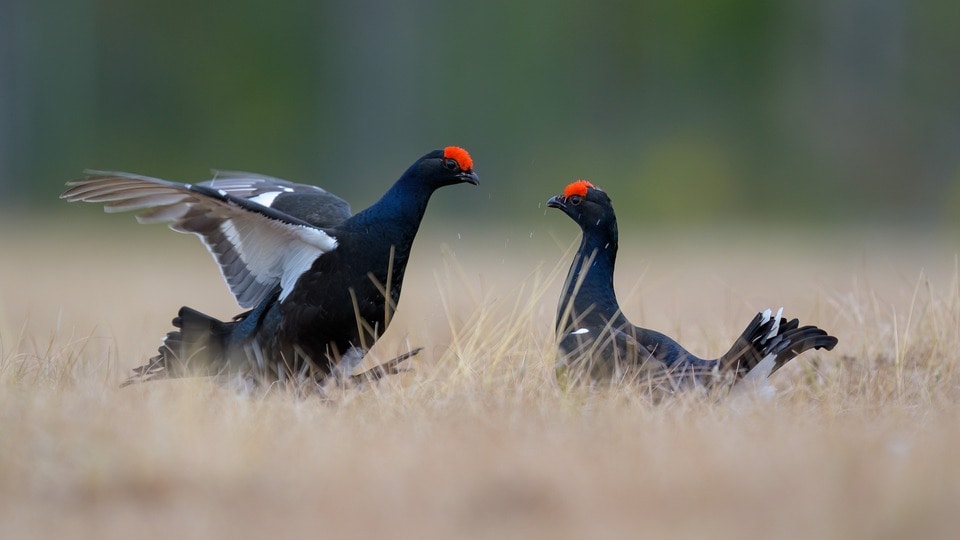
While many birds, like flamingoes and peacocks, rely on spectacular dances to find a mate, others deploy different tactics. The black grouse, for instance, gathers with other males in an open ground known as a lek. There, they strut, fan their feathers, and produce a distinctive bubbling and cooing sound. Each male defends his territory within the lek, engaging in elaborate displays and occasional fights. The females watch from a distance, typically favouring dominant males in the lek’s centre, though there are multiple hypotheses for what drives mate choices. While a few males find multiple partners, most get none.
The mating is an avian version of “wham, bam, thank you, ma’am” — it lasts only a few seconds and the sexes do not interact again until the next year. The males play no role in nesting, incubation, or rearing chicks. They return to the same lek every spring for their annual breeding ritual and begin their displays before dawn, hoping to get lek-y. Observers have described this courtship as dramatic, comical, and quirky. However, it is not unique to the black grouse; great bustards and birds of paradise, among others, similarly congregate to reproduce.
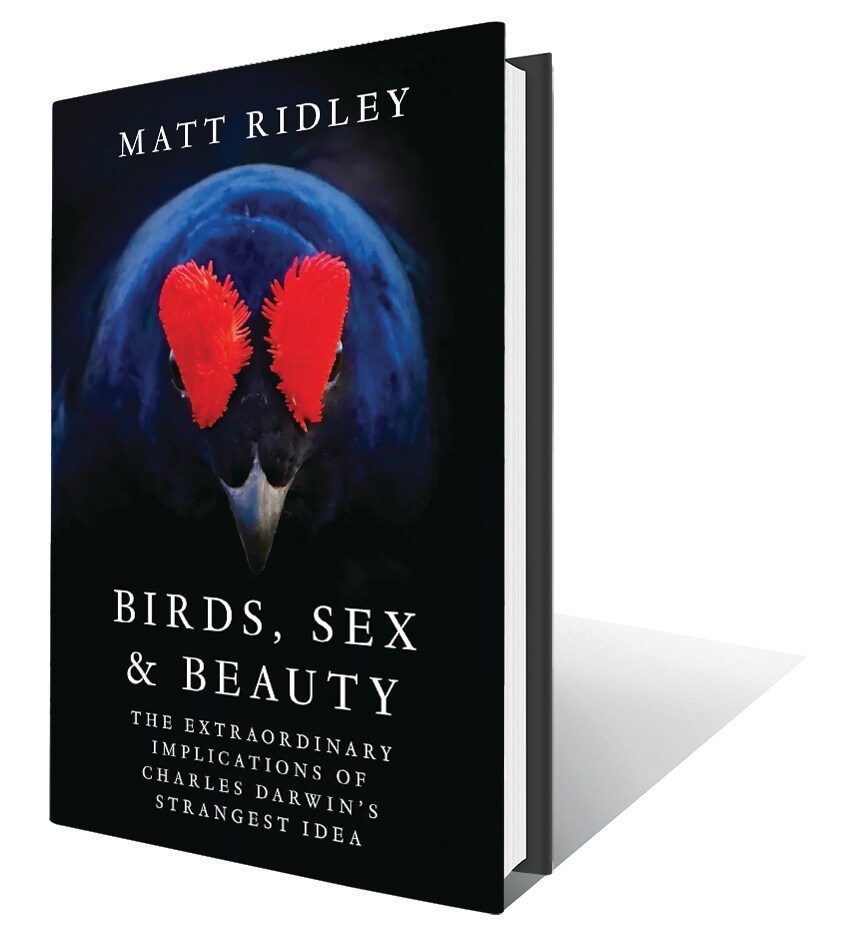
Matt Ridley investigates the black grouse’s courtship rituals and why it might have evolved in his book Birds, Sex & Beauty: The Extraordinary Implications of Charles Darwin’s Strangest Idea. He explores the concept of sexual selection, which posits that certain traits evolved because they help an animal reproduce rather than survive. Where natural selection is encapsulated as “survival of the fittest”, Ridley terms sexual selection as “reproduction of the sexiest”.
While Darwin proposed both concepts, the latter has less currency in popular culture. Scholars, however, have extensively studied and documented it. As the scientists Hosken and House wrote in a 2011 paper, “Sexual selection is a concept that has probably been misunderstood and misrepresented more than any other idea in evolutionary biology, confusion that continues to the present day… Recent claims that sexual selection theory is fundamentally flawed are simply wrong and ignore an enormous body of evidence that provides a bedrock of support for this major mechanism of organic evolution. In fact, it is partly due to this solid foundation that current research has largely shifted from documenting whether or not sexual selection occurs, to addressing more complex evolutionary questions.”
In his book, Ridley combines his birdwatching accounts, especially of the black grouse in England’s Pennine hills, with a chronicle of the scientific debates around evolution. It provides an engaging history of science for readers who might not be familiar with how researchers have viewed sexual selection over the years. The book’s penultimate chapter, which explores how sexual selection might have shaped the human mind and art, is more speculative than empirical.
Ridley is a fascinating writer — not because of his craft but because he has successfully greenwashed his unscientific, environmentally damaging ideas with nature writing. He frequently dismisses the scientific consensus on climate change, claiming that global warming is “mostly beneficial”, and criticising efforts to transition to renewable energy sources and reduce carbon emissions.

What makes his position as one of the UK’s leading climate sceptics more egregious is his commercial stake in the fossil fuel industry. An aristocrat with coal mines on his estate, his stance serves his vested interests rather than the environment. His penchant for propounding unscientific ideas is even more ironic given that he has (rightly) decried the alarmism about genetically modified foods as not evidence-based. If one can cherry-pick science to confirm one’s prejudices rather than universally follow the scientific method, then one could equally well lend credibility to creationists, who try to undermine the theory he writes about: evolution.
How does one reconcile Ridley’s rhapsodies about nature being “magical and fascinating, both beautiful and true” and a source of “awe and wonder” with his espousal of actions contributing to the natural world’s destruction? While this might seem like an apparent contradiction, it has a long legacy in the colonialist approach to conservation.
The quest for the over-extraction of resources has engendered the belief that conservation in one region can compensate for environmental damage in another. The carbon credits system and corporate social responsibility programmes often permit the destruction of habitats in one biome, only to plant trees in a completely different one. While this allows them to play-act virtuousness, it might not necessarily be environmentally sound.
Where many indigenous cultures view humans and nature as interlinked, the colonialist framework sees them as separate. Thus, what often happens in conservation programmes is that indigenous peoples, who have stewarded their lands for centuries, are displaced to create a natural reserve devoid of humans. A collective resource becomes walled off, available only to those who can pay to access it. Nature is permitted to “thrive” in these spaces, while unsustainable practices continue elsewhere. These dichotomies have allowed people to rhapsodise about nature while actively harming it.

As I read Ridley’s book, I wondered if it were possible to discount his unscientific views while appraising his nature and science writing? I got my answer in the last chapter, “Saving the Black Grouse”, where the best idea he can propose to conserve the species is permitting hunting!
While dedicated hunting grounds have been a conservation strategy in certain instances and could control predators, he dismisses habitat protection as a failure and sings the paeans of hunting, both without discussing the scientific evidence. Considering that he benefits from despoiling habitats on his estates through coal mining, one wonders if advocating for their preservation might be unprofitable for him. His nature writing, thus, inspires little awe and wonder. Instead, it embodies the Orwellian inversion of the novel 1984: “War is peace. Freedom is slavery. Ignorance is strength.”
Syed Saad Ahmed is a Boston Congress of Public Health Thought Leadership Fellow 2024. He speaks five languages and has taught English in France.


