Swarms of people walk with an empty look in their eyes, holding children and sacks of belongings, leading a goat or two down muddy paths. Others are on crowded carts pulled by skeletal bulls. This is the image evoked by the Indian partition.
It is a powerful picture yet if it is played over and over again, it loses meaning. While it still evokes empathy, it loses the power to evoke the critical reaction that can make the viewer step back in awe. For many millennials especially, the movement for Indian independence has been relegated to the history books. Non-cooperation, civil disobedience, and satyagraha are just familiar terms, not ones that are appreciated for their original power.
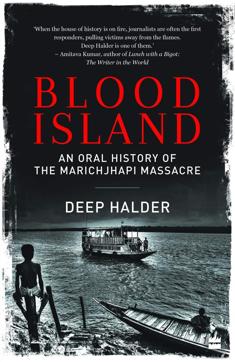
While stories of the partition have almost lost their power through frequent retellings, the 1979 Marichjhapi massacre is entirely forgotten and does not find a place even in history text books. Indeed, the magnitude of the historical negligence by the State and its citizens over killings in the lush mangroves of the Sunderbans has never been in focus. Few even know about it, and a handful have lived to tell the tale. Deep Halder’s Blood Island – a series of recitations by those who remember the experience -- is an attempt to right this wrong.
Though Blood Island opens and closes with a memory, it is a strictly journalistic endeavour and documents history well. From a shifting lens, the author gives a rounded view of the island that was once home to Hindu refugees from Bangladesh, and that eventually turned into a battleground.
{{/usCountry}}Though Blood Island opens and closes with a memory, it is a strictly journalistic endeavour and documents history well. From a shifting lens, the author gives a rounded view of the island that was once home to Hindu refugees from Bangladesh, and that eventually turned into a battleground.
{{/usCountry}}The book charts the unfulfilled promises of the Jyoti Basu-led Left government in West Bengal and shows how the refugees were shifted from one terrible camp to another until they decided to make the island of Marichjhapi their home. Justifiably, Blood Island does not hold back in its criticism of the government. Witnesses talk of the state-sponsored violence that killed thousands (although officially, the death toll is in single digits) gathered there. The book hints that the state action against harmless refugees was motivated by caste politics, that the animosity of the ‘people’s government’ towards the group was influenced by their position in the social hierarchy.
Read more: Author Deep Halder: It’s important to revisit tragedies that have been glossed over
The relevance of a book on historical events is often tethered to contemporary events. Though the events described took place in the 1970s, Blood Island’s urgency emerges from the immediate parallels the reader draws to the death of immigrants in the Mediterranean sea, to tales of human trafficking, to the sordid stories emerging from detention camps on the borders of the most powerful country in the world, and also how immigrants who cannot establish their ‘Indianness’ in the northeast are now being treated by the Indian state.
A foreboding line in the book says Marichjhapi island “would make history in the coming months”. With all the apathy towards what is happening around us, I wonder, will it, really?