
 E-Paper



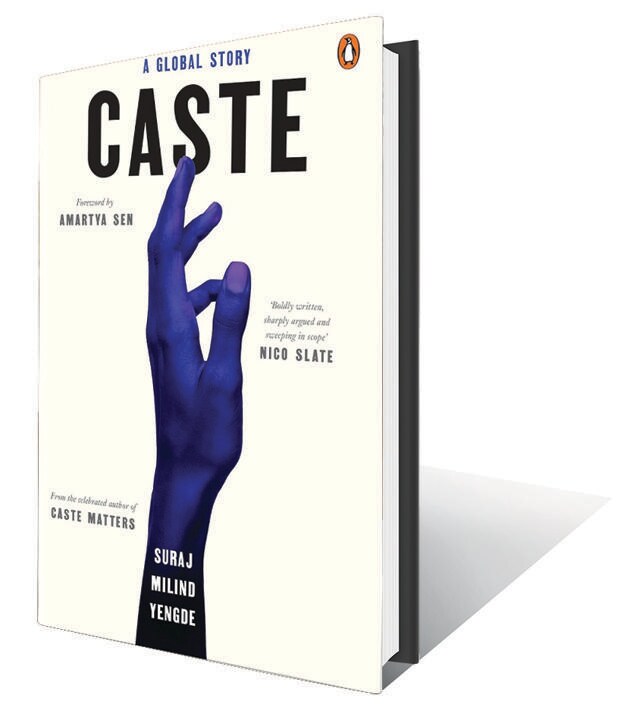
Review: Caste; A Global Story by Suraj Milind Yengde
An unflinching history of the struggle against oppression, which argues that the impact and scope of caste extends far beyond the shores of India and any meaningful understanding of it must interrogate how the dogma has imbued lives in foreign lands

 Prefer HTon Google


In July 1982, Prime Minister Indira Gandhi was set to visit the US. Triumphant after her return from the political wilderness following the debacle of the Emergency, Gandhi’s meetings with US President Ronald Reagan were meant to project power – after all, her supporters argued, she had stared Richard Nixon down and helped liberate Bangladesh. And now that a crisis in Afghanistan was unfolding and her party was back in the saddle in Delhi, she held the cards.
But the visit didn’t go fully to plan. Her trip was rocked by protests from groups that had requested to meet her and inform her of their concerns about growing Dalit atrocities in India. After receiving no positive response, members of VISION or Volunteers in Service to India’s Oppressed and Neglected started lobbying US senators who promised to take up the matter with Gandhi. In separate letters addressed to Laxmi Narain Berwa, a US-based oncologist who headed VISION, Democrat heavyweight Paul Sarbanes and senior Republican Charles Mathias Jr applauded him for bringing the concern of untouchables in India to their notice. Newspapers in the US covered the protests.
Irritated, Gandhi wrote to Berwa. In the terse letter, she defended her government, saying it had “gone all out” to help “the weaker and poorer sections. She admitted that “incidents” happened but added that they were “strongly dealt with”. “It does not help for those who are living in affluence abroad to comment on situations about which they have little knowledge,” she chided the organisation.
This little-known exchange underlines the key thrust in academic Suraj Yengde’s new book, Caste: A Global Story, which argues that the impact and scope of caste (and what it shaped) extend far beyond the shores of India and therefore any meaningful understanding of caste must interrogate how the dogma imbued lifestyles and traditions on foreign lands. A successor volume to Caste Matters, the book uses ethnography, archival work and the author’s research to etch an unflinching, if somewhat dry, history of the struggle against caste oppression.
The book unfurls in six chapters that look at colonial attitudes towards caste, parallels and similarities between the Black and Dalit experience, Dalit activism in regions such as North America and West Asia, and the hope of Dalit futurism. Of course, the sweeping scope of the slim volume means that writing is dense and jumpy in places, and the uninitiated reader might struggle to remember the cornucopia of names and incidents that follow in quick succession. The lists of names and organisations mentioned, important as they may be, break the flow of the narration. But the book is studded with fascinating insights and incidents, unearthed clearly by painstaking research. Take, for example, the scholar MN Wankhede, who served as a bridge between Dalit and Black American literature during his stint as a professor of English at the historic Milind College and founded the influential Marathi magazine, Asmita; or Pandit Thiruvenkatasamy, who identified himself as Adi Dravida and began publishing in 1872 what Yengde describes as the “first known Dalit newspaper”, Sooryodhayam; or Shivram Janba Kamble, who began the publication of Somvanshiya Mitra, the Dalit community’s first Marathi-language magazine, in 1908 and called on people to organise and protest against caste atrocities.
Packed with names and information, the book sometimes appears torn between presenting itself as an academic volume and a popular read. The promise and pitfall of electoral politics is a running motif, but is constrained by its focus on Maharashtra. For me, the most influential sections of the book were its exposition of the diaspora in Trinidad and the US, and the growth of caste among the Indian communities there. Over two chapters, Yengde underscores the very different ways in which the diaspora grew in these countries (and presents the book’s most memorable line – while the Atlantic represented a passage to slavery, the Indian Ocean was the route of indenture).
In Trinidad, tens of thousands of people from largely middle and lower castes were sent as indentured labourers to work in plantations while in the US, people from largely privileged castes made their way to a new land in search for opportunities. The presence of caste in Trinidadian communities was neither linear nor straightforward – sometimes pushed by the reproduction of the Ramayana and other Puranic stories, sometimes as personal or associational feeling, sometimes as reinvention of their own (lower) caste status, and sometimes to curry favours in an overwhelmingly Hindu milieu. Maybe a larger discussion on Hinduism and its various facets could have been more instructive.

As I read the ways in which Dalit groups fought to gain a toehold on foreign shores, especially in the US, struggled to visibilise how caste continued to function not just in personal but also in community life, and strained to establish connections or parallels with Black American lifeworlds or literature, I was reminded of Isabel Wilkerson’s Caste; The Origins of our Discontents (2020) – the vastly popular if somewhat simplistic effort to engineer the reverse project of retrofitting facets of caste to explain other discontents.
Drawing comparisons between race and caste has been one of the most vexed (and doomed) endeavours for now over a century and Yengde does a commendable job in teasing out the nuances, parallels, and disagreements between the two experiences. Moving away from the flavour of his earlier book, Caste: A Global Story is drier, more informative, less rousing and a tougher read. But for me, the real value of the book lies in the hundreds of names, events and strands that most readers would have never heard about. Against a backdrop where the contribution of Dalit people is often minimised and their lives erased, these people and organisations painstakingly fought both discrimination and the invisibilisation of caste in governing material lives. Whether underlining the guile of the English while designing census categories for caste in the 19th century or the astonishingly casteist attitudes of the great constitutionalist BN Rau, the book shines when putting the spotlight on stories glossed over by history. In this endeavour to build a Dalit lifeworld and philosophy for universalism, it is peerless.


