
 E-Paper



Insurance firms as major stakeholders in cleaner air
Insurers can begin immediately by directing CSR funds towards air quality interventions and measuring the impact on claims

 Prefer HTon Google


As policymakers debate how to clean Delhi-NCR’s air, a striking comparison has emerged. Recent analysis suggests that around ₹3,000 crore of targeted public support could significantly accelerate the electrification of heavy trucks in the region, delivering substantial air-quality benefits. Health insurers pay roughly the same amount every year in air-pollution-related hospitalisation claims in Delhi alone. The comparison raises the question: If pollution imposes a direct and growing financial cost on insurers, shouldn’t they become active investors in prevention?
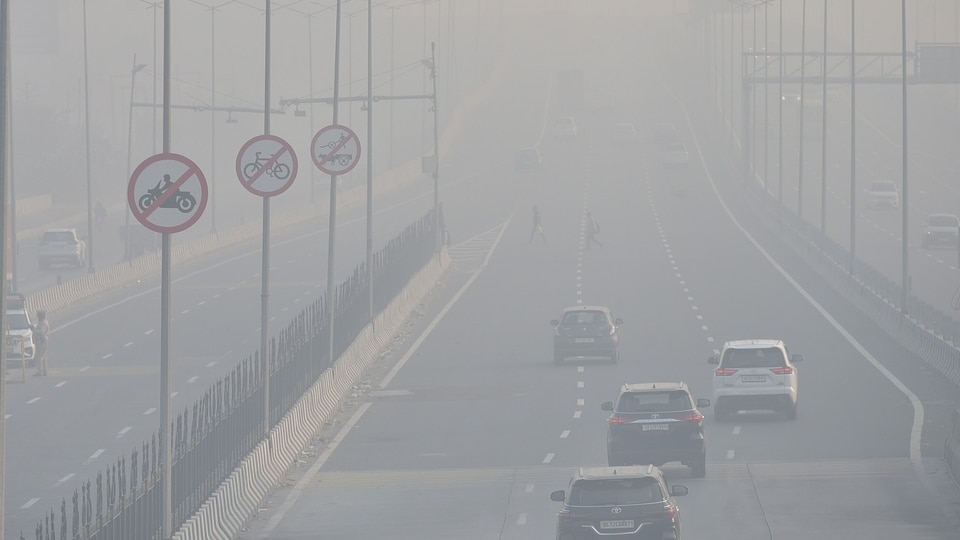
Air quality-linked illnesses now constitute 9% of all hospitalisation claims in India, up from 6.4% in 2022. Delhi, home to just 2.5% of India’s population, accounts for 38% of hospitalisation claims attributable to poor air quality. The insurance industry’s reported discussions with the Insurance Regulatory and Development Authority (IRDAI) on a 10-15% premium loading for Delhi residents reflect this reality.
According to the IRDAI Annual Report 2024-25, health insurers paid roughly ₹0.80 in claims for every rupee of premium collected. With air pollution accounting for an estimated 8-9% of claims, the industry’s annual pollution-linked payout burden may exceed ₹7,500 crore. In Delhi alone, as mentioned earlier, insurers are estimated to pay around ₹3,000 crore annually -- far exceeding public expenditure on air quality improvement.
The Union government recently announced a vehicle replacement scheme for Delhi-NCR, which has reignited debate on transport emissions. Some analysts argue that stronger incentives for electric freight vehicles could deliver significantly larger air-quality benefits. Viewed differently, the NCR vehicle replacement scheme may have inadvertently created the perfect pilot for testing an air-quality improvement market: a defined geography, measurable interventions, established monitoring systems, identifiable beneficiaries, and a potential buyer base in the insurance sector with an economic interest in cleaner air.
India already has a policy instrument that could provide the architecture for such a pilot. The Green Credit Programme (GCP), launched in 2023, is designed to monetise verified environmental improvements. Unlike the Carbon Credit and Trading Scheme (CCTS), the GCP is not narrowly focussed on emissions. With an appropriate methodology, the programme could potentially be extended to recognise verified air-quality improvements, creating a mechanism through which their environmental value can be measured and monetised. A 2022 study using health insurance records in China found that every 10 µg/m³ reduction in PM2.5 reduced healthcare expenditure for respiratory and circulatory patients by 16%. Applied to India, where the average insured air-quality-related hospitalisation costs ₹55,263, the savings can be substantial.
Insurers can begin immediately by directing CSR funds towards air quality interventions and measuring the impact on claims. They can also participate as investors in green bonds and other sustainable-finance instruments linked to emissions reduction. To scale such instruments, IRDAI should clarify whether verified green credits qualify as permissible investment assets. This would allow insurers to deploy investment capital, and not merely CSR budgets, towards reducing future underwriting risks.
Over time, new instruments akin to impact bonds could link verified air-quality improvements directly to reduced healthcare costs, creating a self-reinforcing market for prevention.
Measurement is the foundation on which this model rests. India already possesses strong air pollution monitoring infrastructure. What is missing is a standardised, independently verified attribution methodology for green credits. India’s Digital Public Infrastructure (DPI) could strengthen this ecosystem further. A citizen choosing public transport on a Red AQI day could receive a green credit in their Digi Locker wallet. This approach leverages DPI to deliver measurable public health and air-quality outcomes.
The logic of insurers investing to reduce covered risk is not new. India’s first air quality-based parametric insurance product was introduced in 2025, covering construction workers in Delhi with automatic payouts when AQI exceeds 400. While parametric insurance remains reactive, it points toward a future where insurers invest upstream to reduce claims altogether. India’s insurance sector has an opportunity to move from being a passive bearer of air-pollution costs to an active participant in reducing them. Achieving this will require coordinated action across insurers, IRDAI, government agencies, auditors, and DPI actors.
[Ashok Kumar Thanikonda is India program lead at the Global Green Growth Institute (GGGI) and Pawan Mulukutla is executive program director for Integrated Transport, Clean Air and Hydrogen, WRI India. The views expressed are personal.]


