
 E-Paper



Review: Chikkamma Tours (Pvt) Ltd by Unmana
Set in Bengaluru, this cosy murder mystery follows three women who work at a small tour company as they try to solve the murder of the owner of the bookshop above their office

 Prefer HTon Google


Generally, the phrase “crime fiction” brings to mind murders and detectives of the hardboiled kind; grisly, violent killings; experienced male investigators. Of course, such a narrow conception did not hold true even during the golden age of detective fiction when some authors subverted expectations in the most interesting ways, and it certainly does not hold true today. Agatha Christie’s Miss Marple novels are perhaps the blueprint of cosy crime — although there was nothing really “cosy” about those murders — and Unmana has produced a superb Indian addition to the sub-genre. Dubbed “A Bibliomystery”, Chikkamma Tours (Pvt.) Ltd takes place in Bangalore and follows three women who work at a small tour company as they try to solve the murder of the owner of the bookshop above their office, who is stabbed to death in the building one night.
Most of the novel is written from the viewpoint of Nilima Deka, a queer woman who is the newest employee at Chikkamma. She has a crush on her boss, Shwetha Shetty, an older upper-class woman, who started the company after moving back to her home city, post her divorce. Nilima has a slightly competitive relationship with Poorna Radhika, a twenty-three-year-old, who is the only other employee. A huge bibliophile with a particular love for crime fiction, Nilima is initially rattled since she discovered the body but quickly sees the crime as an opportunity to play amateur detective. Emulating the investigators she reads about, she starts collecting clues and interviewing suspects. Her colleagues are drawn into the process too and the three of them are soon assisting the police.
Jagdip Book House was started a few decades before by Mr Desai who named it after his two sons, Jagat and Dipen. After his death, the store passed on to them and was managed by Jagat Desai, the elder brother, who later bought out his younger brother’s share though Dipen continued to work there like before. The book opens with Jagat’s murder as he is shutting the bookstore and heading home close to midnight. While he did not have any enemies as such, he was a difficult boss. He was also involved in shady land deals with unscrupulous local gangsters. Nilima and gang find it easy to gain the trust of the people around Jagat and manage to check alibis and chase down leads all while portraying themselves solely as concerned work neighbours.
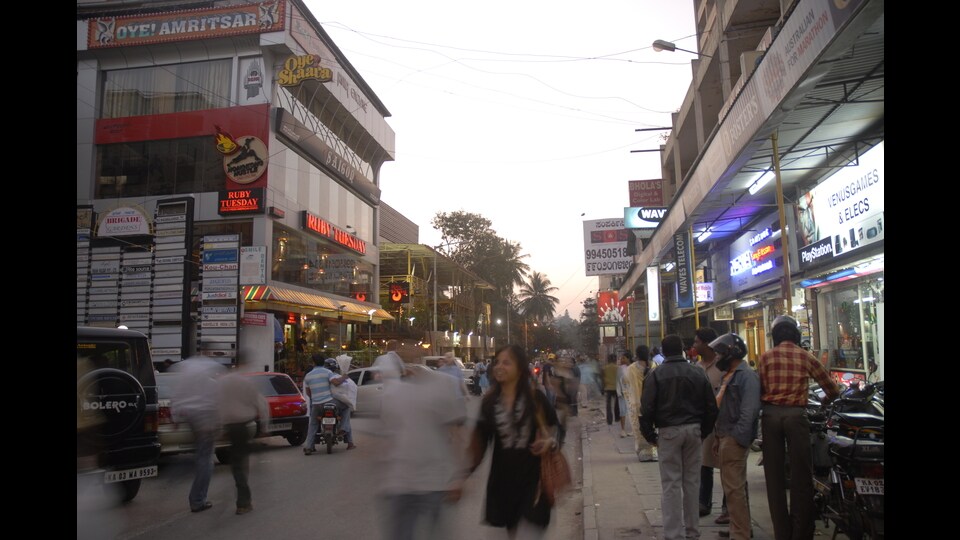
One of the strongest aspects of Unmana’s writing is its sense of place. It is impossible to not recognise the roads and bylanes of Bengaluru as you read the book. From Jayanagar to Koramangala, Indiranagar to Church Street, the book consciously evokes actual spaces without relying on too much expository prose. Even Jagdip Book House seems to be modelled on Blossom Book House, down to the blue sign, though the real bookstore is also mentioned by name a few times. The city’s rapid spread, the traffic jams and the rain showers — it’s a place occupied by real people instead of an insensate metropolitan backdrop. The local tours and walks that Chikkamma conducts also sound tantalising.
Another feature of the book is queer representation, especially Nilima who gets the most fleshed out characterisation by virtue of being the sole point of view. Readers get a glimpse of her struggles with her identity and her body, her wavering levels of self-esteem, and her life of daily precarity in the city. Nilima’s family did not accept her sexuality and she was forced to run away from home. Now, after more than a decade and the marriage of her younger sister, there are overtures on both sides and attempts to heal the relationship even if it cannot go back to how it was before. But Nilima’s story isn’t only about tragic elements. Her crush on Shwetha unfolds in quite a fun manner, and hilariously enough, it turns out that the lady inspector investigating the murder is dating her ex-girlfriend. Mehnaz, a trans woman who works at the bookstore, is another interesting queer character.
The only flaw is that the murder mystery plot line could have been worked out better. None of the suspects really made an impression and the real murderer was fairly easy to figure out, although their motivations and the execution of the murder were poorly developed. The novel perhaps leans a little too much into the “cosy” aspect of cosy crime. The snooping around of Nilima and gang is low-stakes and there isn’t really a feeling of risk or danger. The police are also weirdly accommodating of amateur detectives. The way the Chikkamma trio collects evidence does stand out but a lot of the time Nilima’s mental jumps are poorly communicated and the connections are not clear to readers. Still, it is a debut novel and these are not considerable flaws.
Unmana has crafted a gripping novel with a nice hook, rounded characters, and solid prose. That the main protagonist is a bookworm and that the crime scene is a bookstore is an added bonus. The detective trio click perfectly in terms of relationship dynamics. It makes for a fun, enjoyable read that does not demand too many of the reader’s brain cells. Nor does it get dark and disturbing enough to leave them shaken. Hopefully, this is just the first instalment in a long-running series. The Chikkamma gang need to keep solving murders in many more future books.
Areeb Ahmad is a Delhi-based freelance writer and literary critic. He is @Bankrupt_Bookworm on Instagram.


