
 E-Paper



Review: Day by Michael Cunningham
Set over three afternoons on three consecutive years of the Covid-19 pandemic, the novel brings back memories of long-distance hugs and silent cities

 Prefer HTon Google


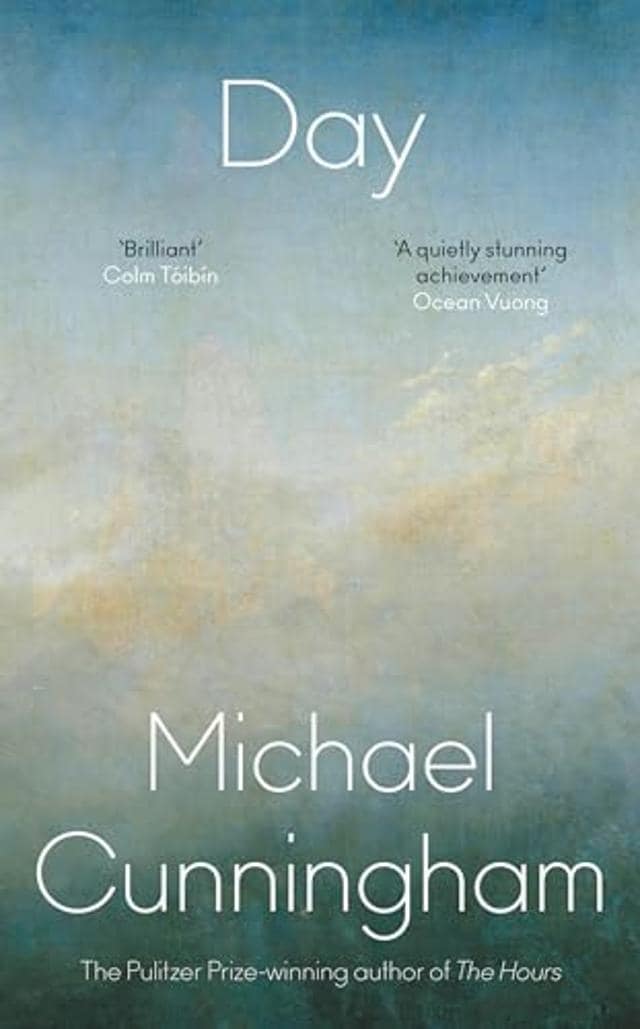
Michael Cunningham’s latest novel Day is set during the Covid-19 pandemic. Divided into three sections, the 270-page work takes readers through three years from 2019 to 2021 with the story beginning in Brooklyn as three adults and two kids attempt to make sense of where their lives are headed.

The 2019 section opens with Isabel observing life in Brooklyn from her window as her career and marital life begin to seem pointless. Dan, her husband, heads to the kitchen to get breakfast ready as his life as a musician is at a standstill and he is comfortable fulfilling house-husbandly duties. Isabel’s brother Robbie — loved by both Isabel and Dan — is in the attic reading essays on Christopher Columbus written by the sixth graders he teaches, even as he toys with the idea of moving out of their house. Life in three corners of the apartment is going somnolently until Robbie and Dan begin talking about ten-year old Nathan and five-year old Violet while Isabel remains aloof. It seems as though the children belonged more to the two men than to Isabel and Dan.
The premise of this novel is reminiscent of Cunningham’s earlier book, By Nightfall (2010), where a couple invite the wife’s brother to live with them in Manhattan. Mizzy, the brother starts appearing more like his sister to the husband, Peter, making for an intense read. A similar intensity pervades Cunningham’s Day. The author’s attention to detail and emotional investment in each sentence admirably reproduces the tension implicit in the complex dynamics between the characters. Robbie and Dan’s “volley of gay-speak are strictly private — they never occur when Isabel is in the room.” The kisses on the lips that they casually exchange also recall Peter and Mizzy’s story. Here, the reader is led to believe in the normalcy of two men related to a woman sharing an affectionate bond without hurting anyone in the trio.
While the exposition in the first section with too many characters can get a little overwhelming, it is the second part, set in the afternoon of April 5, 2020, that drives the plot forward. Robbie is stuck in Iceland. Isabel and Dan are putting up with each other as Nathan fights for privacy and Violet is anxious about contracting the virus. This section recalls Elizabeth Strout’s pandemic novel, Lucy By the Sea. A New Yorker too, Lucy Barton is suddenly taken to a seaside town by her ex-husband William. They stay together as the world falls apart. Cunningham’s characters speak to each other in letters, mails, phone calls and messages, and like Lucy, Dan, Robbie and Isabel find themselves undergoing a similar dilemma of beauty and apathy. Stuck in their homes, they appreciate the beauty of “being alone together” even as they whinge about the “sirens” and empty streets. The author’s stunning portrayal of that year bring back forgotten memories: the long-distance hugs, the meet-ups through barricades, the silence of the cities, and the sorry state of the hospitals. As the afternoon unfolds for the characters, readers will feel tempted to hug the book tightly both for Cunningham’s characters and their own selves that have survived the lethal disease.
The last section, the evening of April 5, 2021, is the shortest as the family comes to terms with what the year has done to them. Their lives have stopped being the same. As each character imagines their future, the reader is confronted with a series of unsettling emotions and questions. Cunningham’s sentences in this section are guttural and yet strangely pleasing. Like the characters, readers step out of the novel feeling heartbroken and changed. This is the case with some of this author’s other books, most strikingly, the 1999-Pulitzer Prize winning novel The Hours, where the stories of three women affected by Virginia Woolf’s Mrs Dalloway come together in a single day. The structure of three stories, three parts of one day but in three different years is similarly reproduced, and heart-wrenchingly so, in Day.
What is also noteworthy is Cunningham’s insistence on using different forms of art to speak to the characters’ inner thoughts. Unlike a novel in The Hour, or paintings and novels in By Nightfall, here the author has taken recourse to social media. This is a radical move to show social media as representative, or the medium of individual identity in the contemporary world. Robbie and Isabel have created a fake account of the sibling they’ve fantasised about since childhood — Wolfe — who shares his flamboyant queer life with his 3000+ followers. Wolfe becomes a character existing in his own reality; an alter ego of the siblings. Isabel sighs at the idea of leaving Dan, and hates the fact that she has to ask Robbie to find a home elsewhere. Robbie is uncertain if rejoining medical school would be wiser than brooding over all those men who abandoned him.

Despite the charm with which Cunningham connects his reader to the characters, there are moments when the novel goes off-kilter. In many instances, the children seem to think more like adults. It is as though Cunningham has stolen their voices and replaced them with that of the omniscient narrator. Some stilted images like that of Isabel’s clothing as her “dignity” reduce the marvellous gender politics the author attempts to explore through his interesting set of characters.
Still, Day is a soothingly hurtful representation of contemporary life; it hurts in the right places and then manages to fix that with equal amounts of love and beauty.
Rahul Singh is a PhD candidate in Sociology at Presidency University, Kolkata.


