
 E-Paper



Review: Hot Butter Cuttlefish by Ashok Ferrey
With a plot shot through with humour, and fantastic characters, this is a bizarrely funny story set in a time of great global distress

 Prefer HTon Google


Guess what was spreading faster than the coronavirus at the start of this decade? Digital wildfires. Defined as “inaccurate, counterfactual, or intentionally misleading pieces of information that quickly permeate public consciousness and have serious real-world implications”, digital wildfires, according to the World Economic Forum, are among the top global risks of the century.
What’s the connection between digital wildfires and Sri Lankan author Ashok Ferrey’s latest novel, Hot Butter Cuttlefish? One of its plot points has to do with how the miraculous water promoted as a cure for coronavirus (mis)informs the lives of the novel’s characters – Malik, a personal trainer, Kamala, the maid of the 58-year-old Arthur Reginald de Fonseca, Chanchala, a 23-year-old ballet dancer, and Biju, a sitting minister in the government and effective spreader of misinformation.
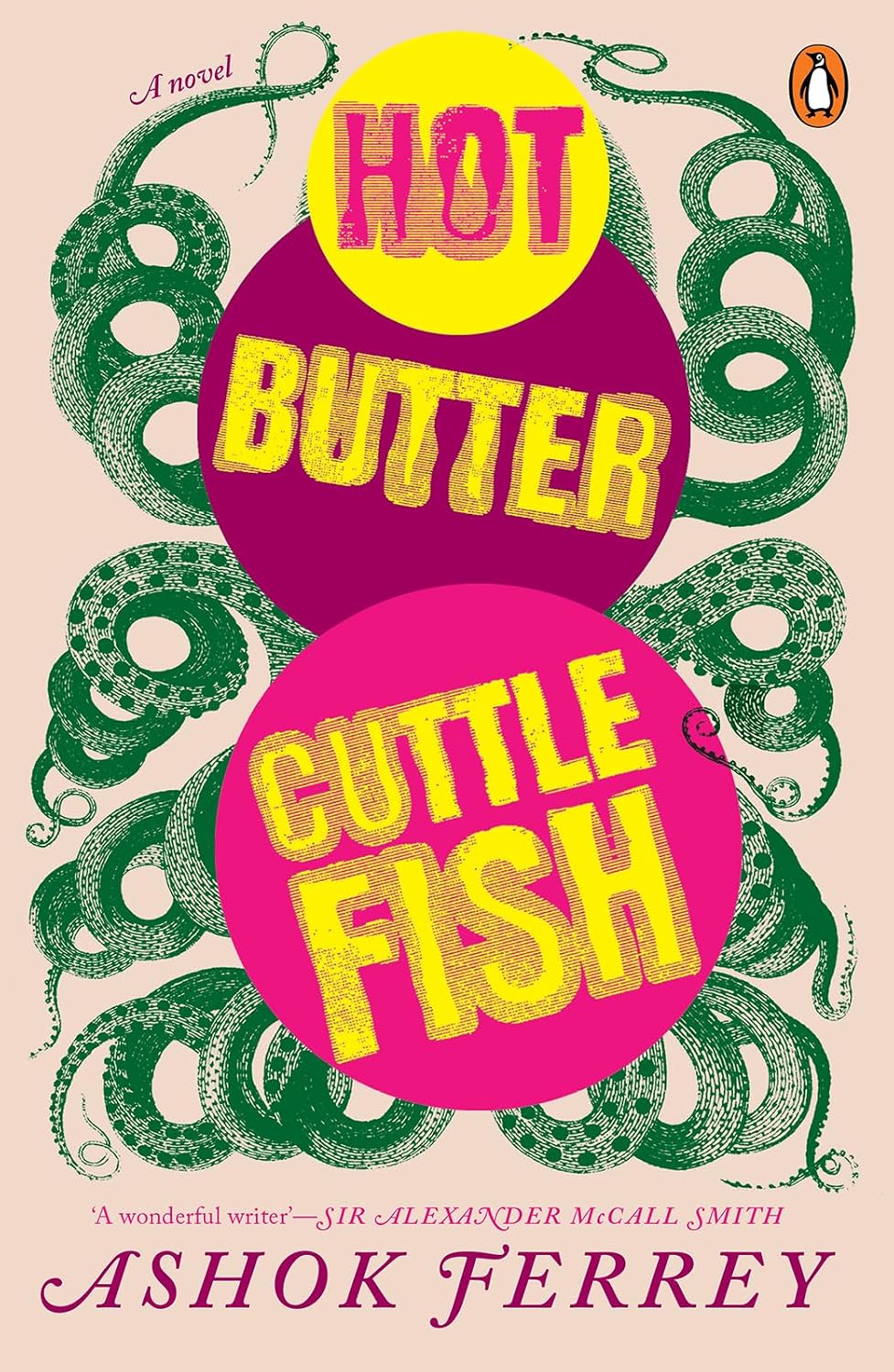
Before the novel begins and the reader learns of the (funny) ethics of this personal trainer who has made Kalabola his home – he moved from Colpetty after the “Fiona fiasco”, a failed relationship – Ferrey shares three news snippets. The first is about an Ayurvedic syrup, a cure for coronavirus; the second, about a faith healer with supernatural powers, who convinces the Sri Lankan health minister about a “miracle water to end the coronavirus pandemic”, and the third is a too-little-too-late demotion of the health minister.
This is what fiction writers from South Asia have to compete with — reality! Why would anyone need to invent an ingenious plot or a story when the country and those who claim to run it are fantastic characters straight from a bizarre work themselves? But Ferrey tries anyway, and he pulls it off in style.
Full of sly humour that centralises the peculiarities of the Island nation, Hot Butter Cuttlefish is a delicious work. Malik dreams of being “trainer to the rich and infamous”; in reality, his clients “ride push-bikes or motorbike; some even take the bus. Others walk.” His redemption comes in the form of Arthur de Fonseca, a history-less, English-speaking single man “with no obvious source of income” and an incredible past. Grandchild of the “robber barons of the nineteenth century”, de Fonseca lives in the family villa and fears Kamala.
Descended from Kandyan nobility, Kamala has an interesting back story. The de Fonsecas had once tried to arrange her marriage with Arthur but things did not work out. A decade later, the Villa Fonseca needed house help and Kamala applied. How did Arthur not realise it was her? Well, when news tends to compete with fiction, then the reader doesn’t find it hard to believe that anything can happen. Ferrey writes, “Who now would believe how easily she had slid, like a child in a playground, down the dizzying spiral from marriage prospect to maid of all work? To admit that descent now would be an event greater loss of face.” Why did Kamala continue? Because she addressed Arthur as “Mahattaya”, a Sinhala term for gentleman and husband, everyone in the small village assumed Arthur was Kamala’s husband. Because if a woman of her background lived in a villa for 20 years, she had to be the lady of the house.
As interesting as the humans are in this novel, it is Fritzi, Malik’s dog, who is one of the most masterful characters. Early on, Malik is as disturbed by Chanchala calling him an “Uncle” as he is curious to find out what prompted her to take up with Arthur, “this weird old man, this sorry excuse for humanity”. When Arthur walks out with the girl, Malik says: “Fritzi gave a roar and made a spirited rush at them, hurling himself at the bars [of the gate]. Always knows our Fritzi when it is perfectly safe to attack, and when to pretend you haven’t seen them.”
Some of the novel’s scenarios make the reader chuckle as Ferrey effectively peels layers upon layers of social hypocrisy: “It was widely assumed in the village that I was gay,” says Malik, “This gave me some measure of protection. I just had to learn to be extra gay when Natasha [Biju’s wife] was around. This was not without its own problems. The two hefty bodyguards were somewhat that way inclined. The gayer I got, the more excited they became. I tell you it is not an easy thing being a personal trainer in Sri Lanka. Far easier being a politician.”
Throughout, Ferrey seems to suggest: Does it matter how excruciatingly important an ordinary thing, for example, exercising, is in our lives, unless its value is highlighted in extraordinary circumstances, as in the face of a pandemic? Substitute this for, say, human rights and you get the same answer.
READ MORE: Ashok Ferrey: “Often the comedy was way too black to put down on paper”
Hot Butter Cuttlefish might be set in a small corner of Sri Lanka but it makes the reader think about the world’s large issues like racism; like how the coronavirus was used to discriminate against specific people: “Why were there even Chinese in Kalabola?” Malik wonders extending a local enquiry to the global level.
The best comedy presents large concerns – those with which governments and common people are grappling – with a light touch. This is what Ferrey does by telling a seemingly funny story set in a time of great global distress. Hot Butter Cuttlefish demonstrates that it is possible to derive humour not only from the everyday but also from the extraordinarily tragic.
Saurabh Sharma (they) is a nonbinary, queer writer, essayist, and culture critic. On X: @writerly_life; Instagram: @writerlylife.


