
 E-Paper



Review: Katabasis by RF Kuang
This speculative novel features two bright Cambridge students of ‘analytic magick’ travelling to hell to bring back to life their supervisor

 Prefer HTon Google


RF Kuang’s propensity for satire has won her a cult following. While her speculative fiction novel, Babel (2022), crucified the very foundations of Western ‘liberal’ knowledge production, Yellowface (2023) was an indictment of the contemporary publishing world, located in the ‘Global North’, which thrives on appropriating and marketing marginalised narratives to an unaware audience. Her latest literary outing will remind her devout readers of both of these predecessors. While Katabasis marks a return to the genre of fantasy writing, for which the author is known and loved, the critique of academia is scathing in a narrative replete with political commentary on the state of scholars and of universities today.
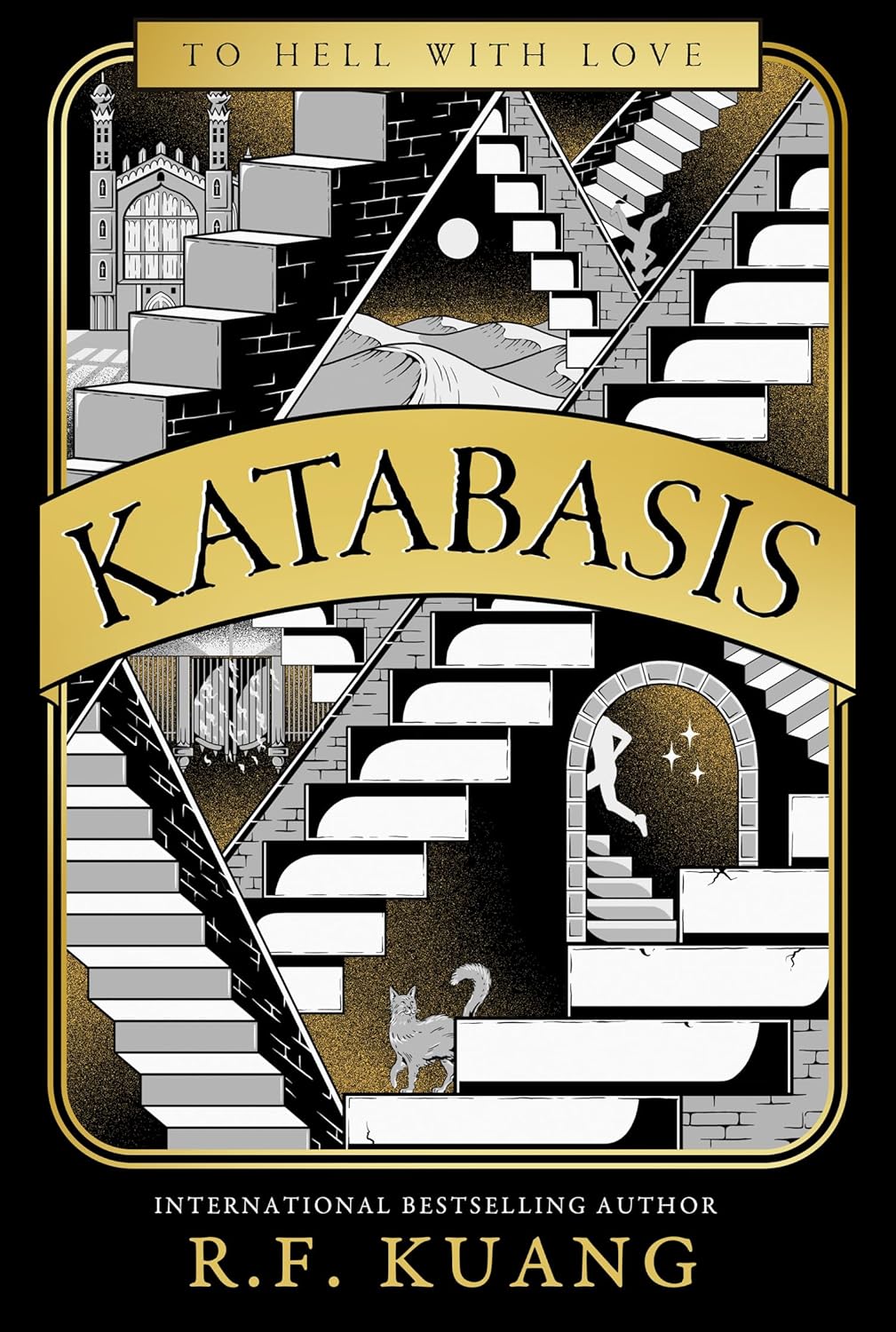
The narrative is designed as a quest to the ‘Underworld’ undertaken by two bright minds in the discipline of ‘analytic magick’ at Cambridge: Alice Law and Peter Murdoch. The two protagonists are on a mission to bring back to life their supervisor Professor Jacob Grimes, who died as a result of an experiment gone wrong. What follows is Alice and Peter’s adventures in Hell in the hopes of coming out on the other side having lost years of their lives in the bargain but regaining their star supervisor who can make their academic dreams come true. This trade-off is a no-brainer. The narrator claims Alice “would sacrifice her firstborn for a professorial post”. And thus begins the protagonists’ journey into the netherworld.
True to Kuang’s style, the novel starts off strong with a punchline on every page. There are constant zingers like, “academia respected discipline, rewarded effort, but even more, it adored genius that didn’t have to try”. Alice decides to carry a “volume of Proust” to Hell in her survival kit because “Cambridge had made her the kind of person who wanted to have read Proust”. Hell itself is imagined as being a campus where the first circle, Pride, is a library. The residents of this, the First Court of Hell, includes sinners such as the self-proclaimed Communist who hadn’t read Das Kapital and another who recited pi “to show off” and yet another who was guilty of having had “more of a comment, not a question”. The allusions and interludes peppered throughout the 541-page novel showcase the genius of Kuang’s nuanced writing. There is a reference to anti-immigration sentiments currently taking hold of the Euro-American imagination, with the addition of new wall in Hell that must be climbed being referred to as “postwar chthonic immigration control”. “Funding cuts for universities, shrinking departments, vanishing opportunities” due to conservatives on “both sides of the Atlantic” are also mentioned. Oscillating between light humour and intelligent satire, the novel lays bare the contradictions at the very foundations of academic institutions that thrive on a culture of oppression. This becomes even more evident as Alice and Peter, the two supervisees of an abusive celebrity in the academic world, share their struggles honestly and openly with each other during the course of their treacherous sojourn.

While the narrative drags in the second half, Kuang’s wit keeps the reader hooked. As a research scholar, who has spent over a decade in academia, I felt both seen and heard; there were points when I wanted to put down the book to clap my hands wildly at how smoothly the author demolishes the delusions of the gatekeepers of the knowledge producing industry. RF Kuang’s superb storytelling skills will keep you turning the pages while also anticipating which hallowed institution is going to be desecrated next by her powerful literary voice.
Simar Bhasin is a literary critic and research scholar who lives in Delhi. Her essay ‘A Qissa of Resistance: Desire and Dissent in Selma Dabbagh’s Short Fiction’ was awarded ‘Highly Commended’ by the Wasafiri Essay Prize 2024.


