
 E-Paper



Review: My Life in Indian Politics by Mohsina Kidwai
The voice of Muslim women’s intervention in politics in the post-Independence period presents her view of the complex personalities who dominated the nation over six decades

 Prefer HTon Google


In an era when politics is anything but admirable, can the autobiography of a political icon restore hope? The answer cannot be found in the world of narcissistic politicians. Some political memoirs, however, offer a gripping alternative narrative centring around efforts to shape national identity and affirm the core values that bind us. Mohsina Kidwai’s book is one of them. My Life in Indian Politics is slightly different in that it works within the as-told-to format with the journalist Rasheed Kidwai fashioning the key episodes of the subject’s political life into a flowing narrative. The voice of Muslim women’s intervention in politics after Independence, Kidwai seeks to construct a national history and present her view of the multilayered and complex personae of a number of politicians who dominated the political scene over six decades and more. Her observations and reflections in this long overdue volume are not blunt or sarcastic, nor are there any juicy disclosures, drama or innuendos.
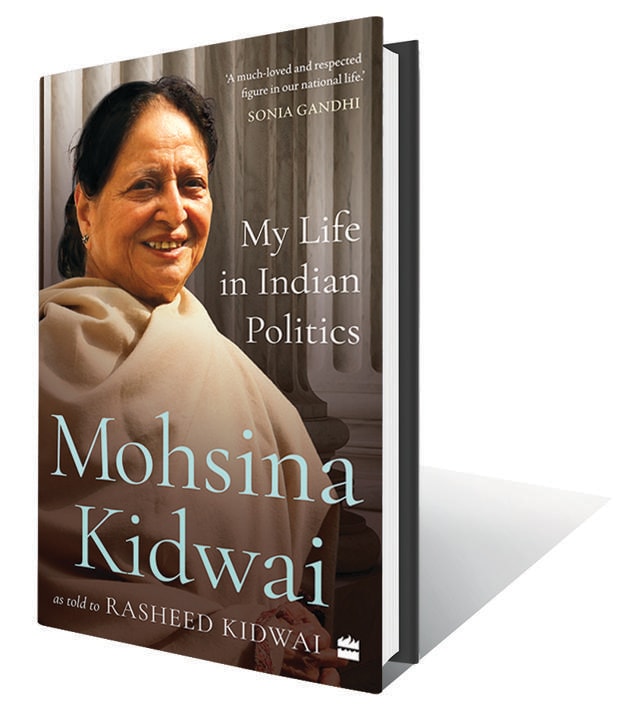
Kidwai spells out what she intends to do at the outset: “My book is an effort to unite the various streams of ideas and should be seen as a document produced by someone who has spent a lifetime in Indian politics following the visions and ideals of our founding fathers. I am from that school of politics where the grand idea of mass welfarism triumphed over any lesser considerations, and this should continue. The games of agenda-setting, smear campaign, and narrative distortion are no longer puzzles for the keen observers of Indian politics to indulge in. Like in my personal and public life, I have made a conscious attempt not to venture into areas where I would not be myself.”
Nuanced and not overtly subjective, My Life in Indian Politics provides explanations that help us understand the significant issues and political practices of the post-Independence era. This, then, is an acute picture of a crucial period of national history and also the story of a woman who successfully navigated a world that was and is still dominated by men.
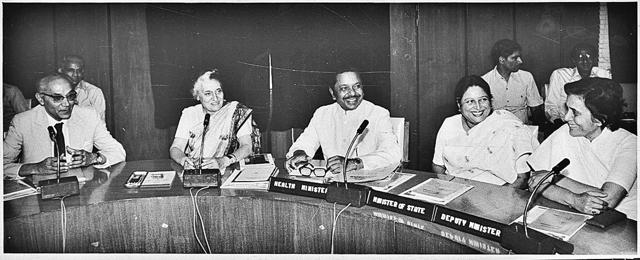
While things might occasionally have been difficult, Kidwai avoids negativity and is quite admiring when sharing her impressions of older fellow politicians like Mulayam Singh Yadav, HD Deve Gowda, Chandra Shekhar, Lalu Prasad Yadav and of younger ones like Arvind Kejriwal.
Remarkably, she does not use her memories of being active at the highest levels of government as a political weapon and instead sticks to telling several inside stories to do with the Congress, once the most influential political party of the country, from the standpoint of a woman in search of truth and freedom. Her reflections on the tumultuous period that marked the defeat of Indira Gandhi are especially interesting.
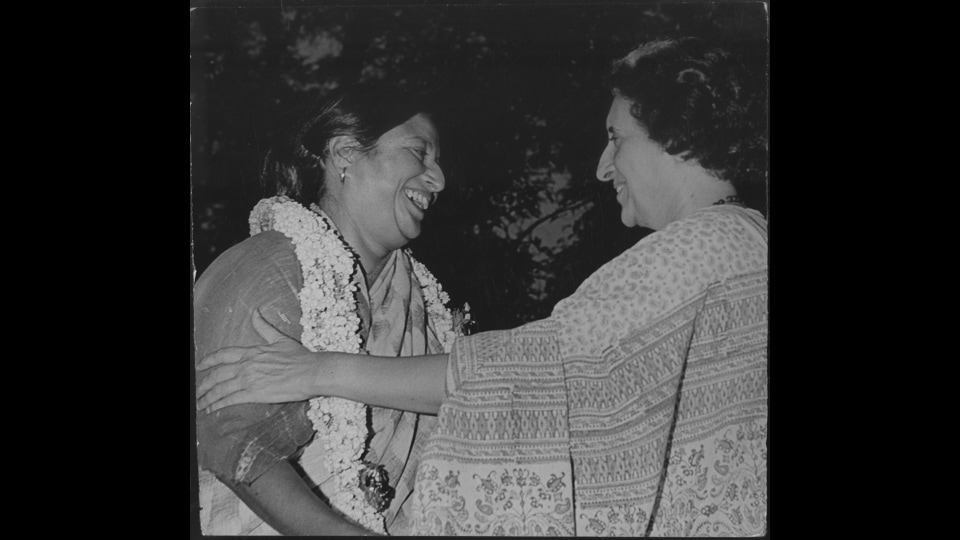
Divided into seven sections, the book intermittently juxtaposes self-exaltation and self-effacement to explore the chaos of Indian politics where being upright has perhaps always been a rarity. The book begins with the Azamgarh by-elections that took place after the crushing defeat of Indira Gandhi in 1977. Kidwai provides details of Indira Gandhi’s campaign and is at pains to dispel the notion that she was arrogant or authoritarian, instead stressing on how considerate she was. Here, she reminisces about an election meeting: “The organizers had arranged for snacks, locally made samosas and sweets, and tea in earthen pots. I noticed Indiraji taking the snacks on a plate and walking up to the drivers to eat. She drew water with a hand pump and used a corner of her sari to wipe her hands.” The victory in Azamgarh was a turning point that paved the way for the return of the Congress.
While Kidwai does attribute the fall of the Congress in the 1970s to the aggressive implementation of the family planning programme during the Emergency, it is surprising that a woman politician of her standing who has pursued a life of activism and female empowerment refers to Shah Bano’s case as a sketchy one. Slipping up on this particular issue was what led to the rise of divisive politics and the gradual decimation of the country’s oldest party.
That aside, Kidwai’s candid comments about her roots, her meeting with Nehru, her various roles as a member of the union cabinet, president of the UP Congress committee, chairperson of the Central Haj Committee, her foreign visits and splits in the Congress all provide fresh insights into a vanished era.
The fourth section, Daughters and other Reminiscences presents Kidwai’s family life and personal engagements and even touches on some of her errors of judgement, which adds to the overall humanity of this self portrait.
This is an imminently readable narrative that reinforces the notion that when women emerge victorious, everyone wins.
Shafey Kidwai, a bilingual critic, is a professor of Mass Communication at AMU, Aligarh


