
 E-Paper



Review: Nothing Will Be Forgotten: From Jamia to Shaheen Bagh by Nehal Ahmed
An account of the tumultuous events in and around Jamia Millia Islamia in the months between October 2019 and February 2020, the events described in this book are symbolic of a larger tussle over the experience and terms of living in India

 Prefer HTon Google


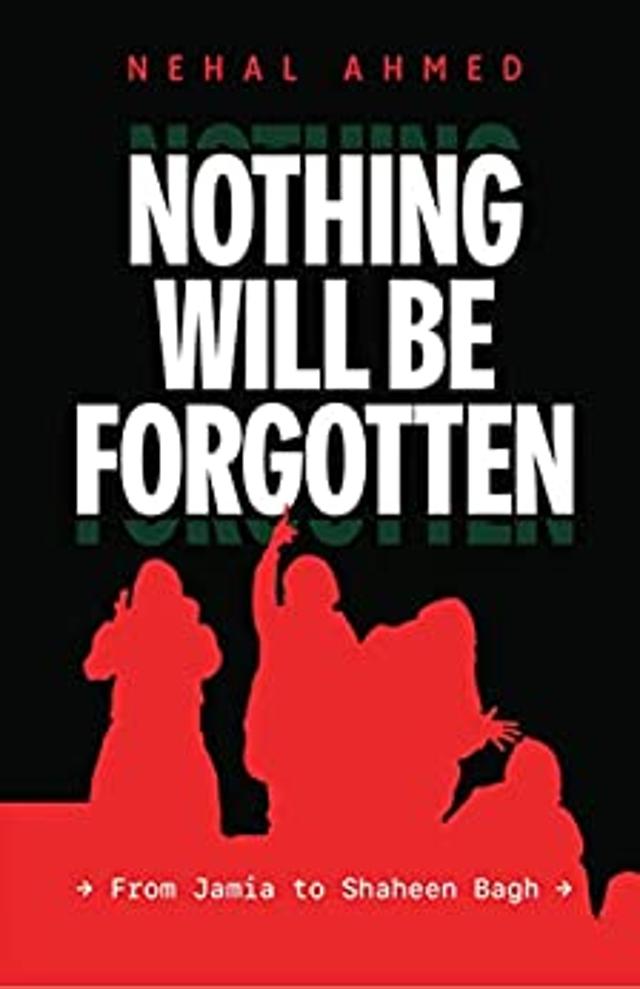
Nehal Ahmed’s book begins with the statement: “15th December was the black day in my life”. Subsequently, the book returns multiple times to the events of this day and to what happened at Jamia Millia Islamia, a premiere Indian university in Delhi.
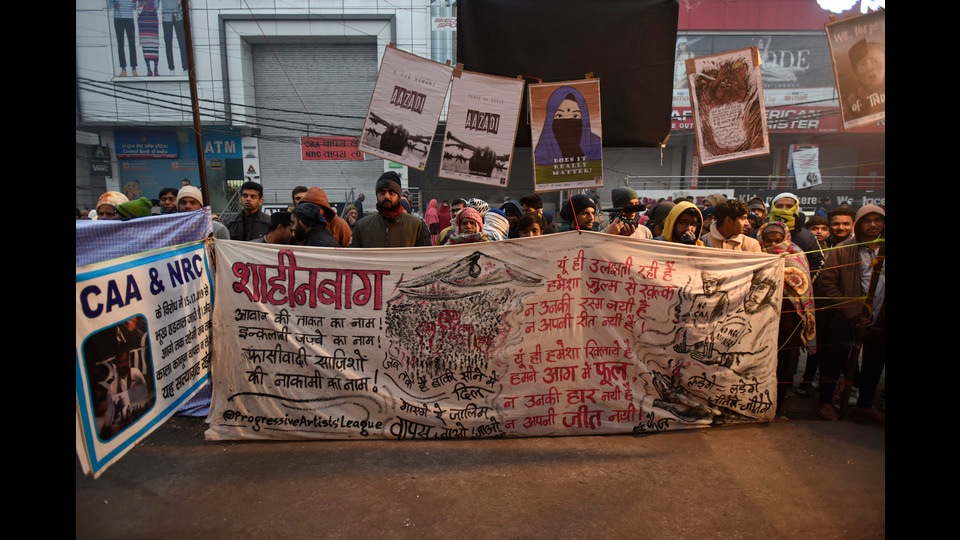
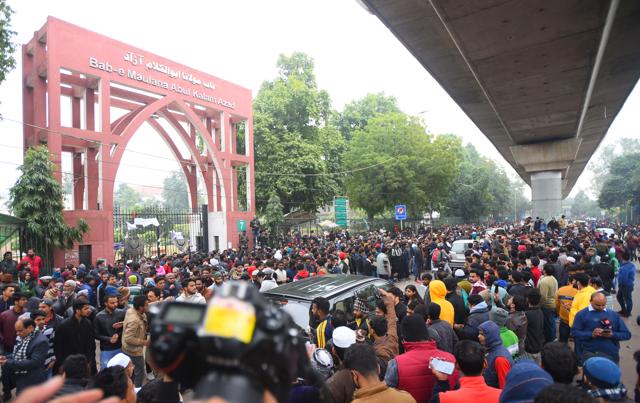
It was on 15th December, that Delhi police entered the campus in large numbers, attacked students and vandalised property. Many were beaten and suffered broken ribs and bones, one lost an eye, others were corralled into the library from where they were marched out in a line with their hands up in the air. The state had turned against its own people. The author, a doctoral student at the university, found himself in the midst of these events: “By the evening of 15 December, many erroneous assumptions about the citizenship of Muslims in India became clear… I understood the meaning of the term ‘identity crisis’”.
Ahmed compares it to the slap that forces the protagonist of the film Thappad to analyse her marriage. The events of that day caused a rupture in the dearly-held idea of India’s secular Ganga-Jamuni culture and to the trust in the Constitution that had encouraged so many Muslims to stay back in India during the Partition. This book captures that moment of disillusionment and identifies the crisis as “the crisis of a Muslim who begins to feel that composite culture and our citizenship rights are mere illusions”. This crisis is not new; perhaps each generation of Muslims in India has had to face it. As a student of political science, Ahmed himself would have been well versed in the debates on secular-nation formation but was forced to reassess his own position when his university and surroundings were in the direct line of a hostile state.
An account of the tumultuous events in and around Jamia Millia Islamia that happened in the five months between October 2019 and February 2020, the book’s narrative looks at four main events: the students’ protest against Israel’s partnering at a university event, the anti-CAA protests and the Delhi Police’s crackdown at the university campus, citizens’ protest at Shaheen Bagh, and the riots in east Delhi. While the book largely follows a chronological sequence, it often includes reflections on the author’s upbringing, his childhood, his grandparents’ dreams and convictions, and his own political readings, all of which are linked to the specific experiences of being an Indian Muslim.
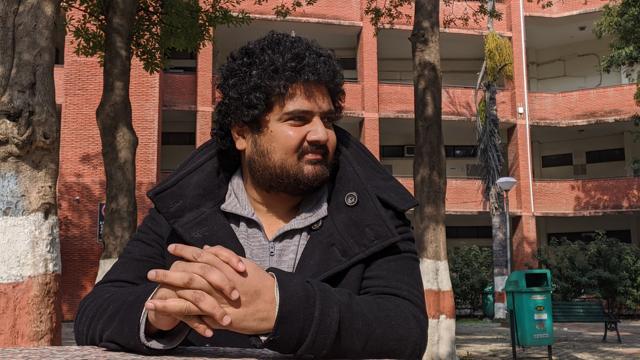
It is unusual to have an account of a movement by an ordinary participant who is not an activist or a leader. The vulnerability in the authorial voice is uncommon and precious. This young man’s disbelief, confusion and disorientation are trauma responses displayed in the face of a betrayal by the nation state. The skilled narration makes the reader empathise with his grief at the breakdown of the long-cherished ideals of secular India and consequently, of his idea of himself. These feelings are soon replaced with hope, faith, camaraderie and creative engagement in the chapters detailing the resistance at Shaheen Bagh. These chapters are the bright core of the book that illuminates the way out of desolation. With its wealth of description, this section is also particularly useful to students of social movement studies.
Unlike what the book’s subheading suggests, the journey it takes is not from Jamia to Shaheen Bagh but from Jamia to East Delhi. After the experience of the citizen’s protest at Jamia and Shaheen Bagh, the violence in East Delhi hits a higher scale, as if in a response to the resistance. It crushes the spirit and, to an extent, instils fear. The last chapter is abrupt, short and sombre. But it is important to remember that the book begins after the riots as a way for the author to deal with the effect that the news of the violence has had on his psyche.
The events described in the book are symbolic of a larger tussle between two sides over the experience and terms of living in India. Though the dice seems loaded in favour of those in power, it is reassuring to note that people have resisted time and again. The only way ahead is to reclaim agency through protests, through collective action, as well as individually, through writing, remembering, and refusing to forget.
Kopal is an assistant professor at Ambedkar University, New Delhi
The views expressed are personal


