
 E-Paper



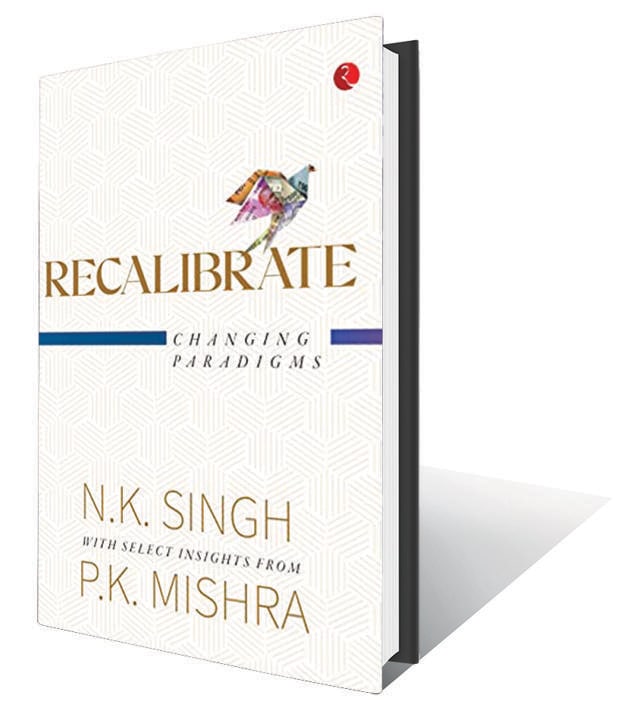
Review: Recalibrate by NK Singh, With Select Insights from PK Mishra
A new book provides valuable snapshots of the evolution of Indian policymaking while also pointing out where policy shifts are needed

 Prefer HTon Google


This is a gem of a book which creeps up on you as you begin reading it. My first reaction on coming across it was “Why should I read it? It’s probably a mere rehash of two distinguished civil servants’ careers and a narration of the government’s current initiatives.” But once I started reading, I couldn’t put it down and found I had much to learn. In a very welcome recent trend, many of our senior and retired civil servants are penning their experiences and lessons gained from their long public service.
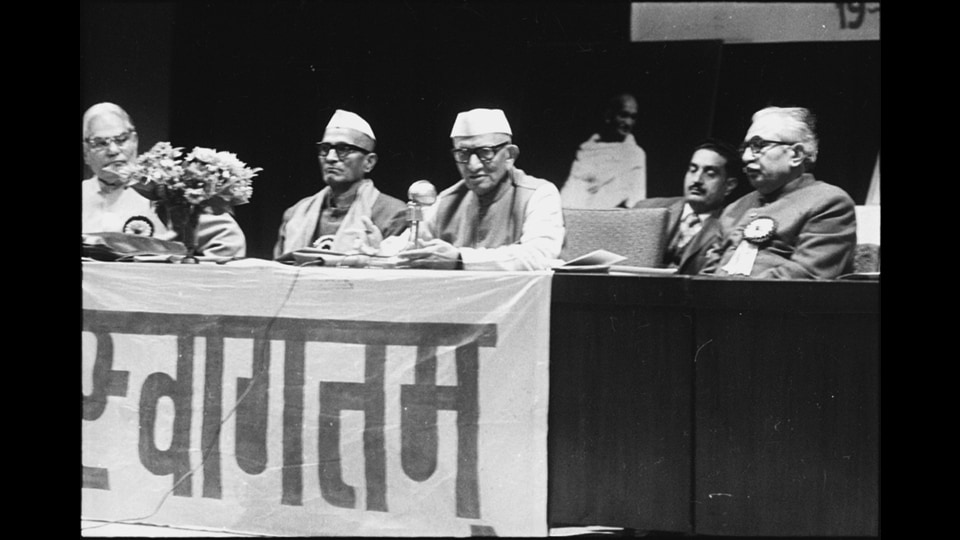
There are many remarkable features of this book. First, two civil servants with very different backgrounds and interests jointly write a book, which comes together very well. Second, several chapters contain valuable snapshots of the historical evolution of Indian governance institutions and policymaking, some dating back to the eighteenth century. These historical accounts are well referenced so the interested reader can happily follow up to make themselves more knowledgeable. The important lesson here is the remarkable continuity in Indian governance despite a continuous thread of change. Third, even though the book naturally reflects their personal experiences, the authors cannot be accused of hagiography. Fourth, consistent with the title, the authors provide valuable pointers to where important policy shifts are needed, given the changes taking place globally and domestically. Some of these, like the shift of economic power from the Atlantic Ocean to the Indian Ocean may well be epochal.
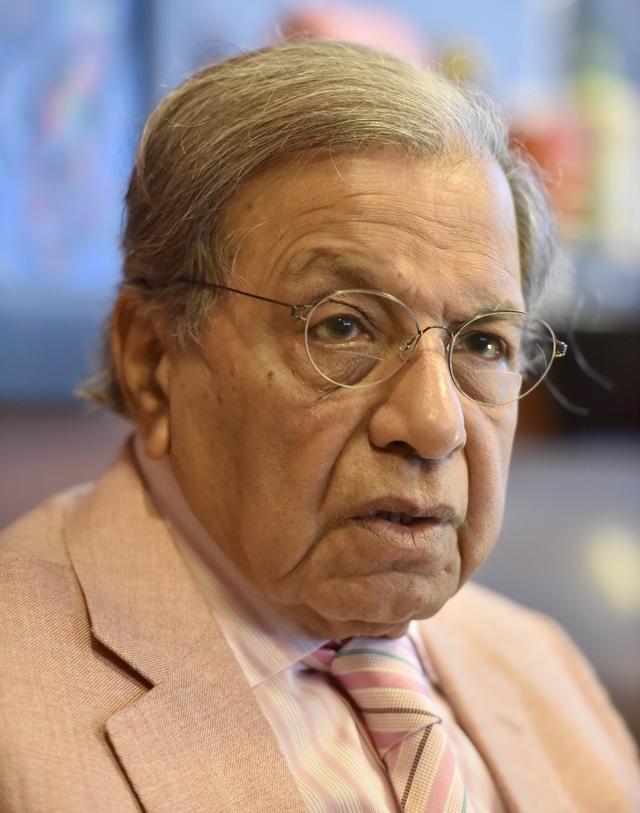
As may be expected from the authors’ varied experiences, the book covers a wide array of subjects, including the evolution of central governance, fiscal issues and federalism, competition, local-level administration, disaster management, health, and education. In general, PK Mishra (PK) focuses on administrative trends, local and national, while NK Singh (NK) is more concerned with fiscal and macroeconomic management. It is difficult to review such a wide scope of subjects so I will concentrate on those of contemporary interest.
Health and education have probably been the most neglected areas in India’s public policy since independence: the ongoing improvements in these areas need to be accelerated to ensure sustainable growth and human welfare. So, it is very refreshing to see a focus on health policy by both authors. NK provides a valuable brief history of public health policy in Japan and the UK, among other countries, followed by a more detailed history of Indian public health policy, from the 1946 Bhore Committee report, through the five-year plans, to the National Health Policy 2017. He candidly acknowledges that “health funding in India is directed to helping middle- and upper-income groups…” which “results in issues of equity for the lower classes, who do not receive the benefits of this funding”. Despite his general concern for fiscal prudence, he endorses the recommendation of various committees to increase allocation to public health from around one percent of GDP to 3 percent. PK’s chapter on health provides valuable context to this, listing new initiatives to enable universal health coverage (UHC), especially the AB-PMJAY. As in other spheres he is a keen advocate of technology as a tool for universalising access to public services. With the support of these two Maharathis, one hopes health policy will receive the importance it has been given in this book.
Another policy focus by both authors is the “third tier,” often a most neglected area in Indian governance. PK’s reflections via his reminiscences in the chapter “People, Politicians and Bureaucrats” highlight the importance of effective local governance in tackling local problems. He was actively involved in the districts in the 1970s when Panchayati Raj institutions began to gain importance in Gujarat and notes the importance of mechanisms for local people to express their grievances, and for local people in power to heed these. There was even an expectation at that time that “the colonial institution of district collector would be replaced by district panchayats”. NK goes further and, after his usual historical review, provides an action plan for the third tier. He bemoans the failure of states to appoint regular State Finance Commissions, which has hampered the financial strengthening of local governments to equip them to provide local-level services. He notes that India’s share of local government revenues in GDP is among the lowest globally. Given the rapid urbanisation taking place, strengthening the third tier in terms of finances and management capability is no longer a matter of choice.
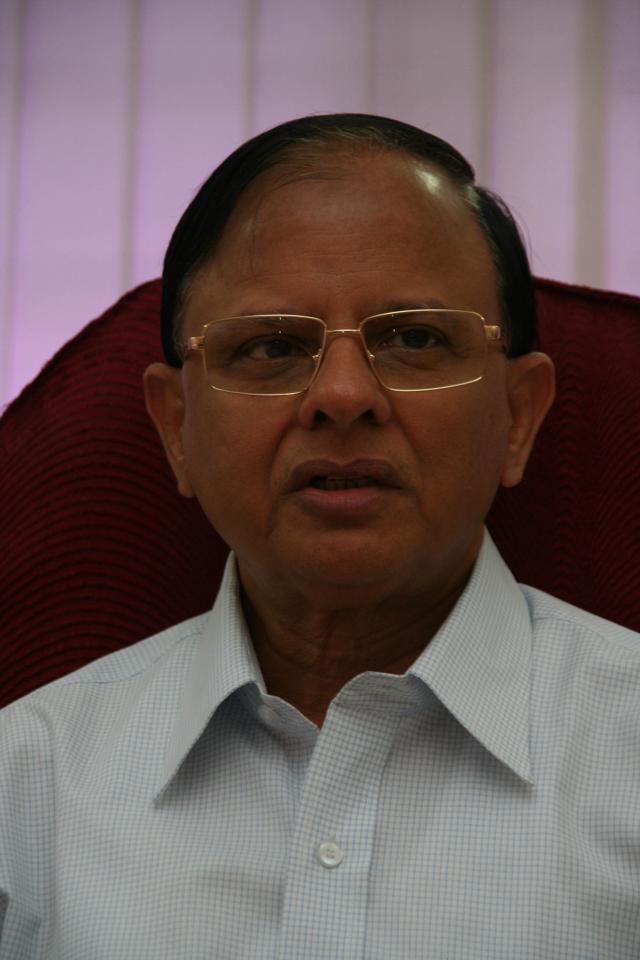
The third area on which the book places new and welcome emphasis is disaster management. Here PK draws on his lifelong practical experience – successfully managing the aftermath of the 2001 Kutch earthquake – and his policy and ideational work setting up and managing disaster management agencies. With the ongoing Covid disaster and the possibility of more frequent climate change-related, weather-induced black swan events, a significant role has to be carved out for active disaster management. NK addresses this from a wider international perspective related to climate change and financing mitigation and adaptation measures.
Finally, at various points the authors discuss the changes needed in governance structures at various levels. NK provides a historical account of how the relationship between the cabinet secretariat and Prime Minister’s office (PMO) has evolved. He has restrained himself from suggesting the ideal relationship, perhaps in deference to the position his co-author holds, as principal secretary to the prime minister. However, he does provide guidance in characterising the PMO as an “agent of change” and the Cabinet Secretariat as a “fulcrum of stability.” These observations are amply illustrated by the periods of political instability, in 1988-91 and 1996-99, when the cabinet secretary provided admirable continuity and stability in policy; and in 1991 when the PMO led the charge on unprecedented economic reforms, but in close cooperation with the cabinet secretariat.
My one complaint is with the absence of a discussion on changes required at all levels of governance, and the importance of enhanced state capability to equip us to cope with the various issues so eloquently and candidly discussed. I have not reviewed the sections covering fiscal issues, dubbed by NK as a “fiscal conundrum,” since these continually receive wide coverage. Needless to say, these sections are invaluable as a primer on the country’s fiscal situation and a pointer to the direction in which we need to go.
This book will become a classic and is essential reading for all those interested in public policy and macroeconomic management.
Rakesh Mohan is President and Distinguished Fellow, Centre for Social and Economic Policy, and former Secretary, Ministry of Finance.


