
 E-Paper



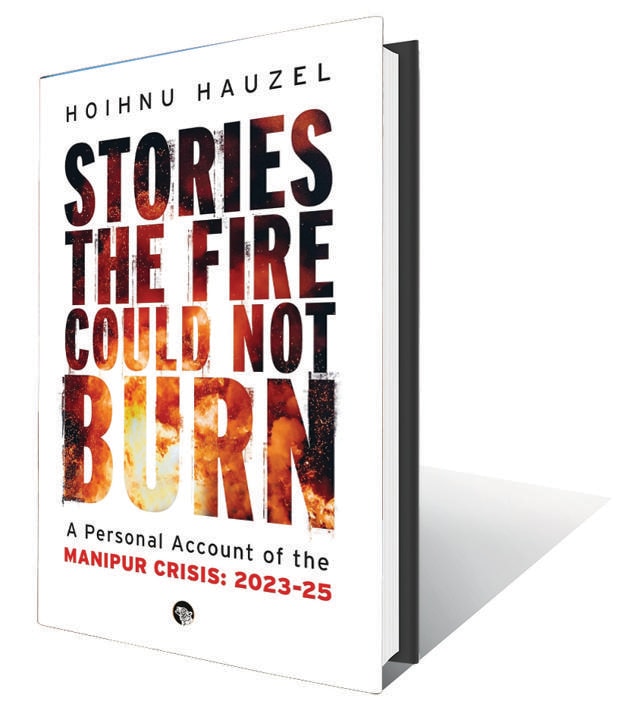
Review: Stories the Fire Could not Burn by Hoihnu Hauzel
A book that seems like a shout into the void, this personal account of the conflict in Manipur is an act of bearing witness

 Prefer HTon Google


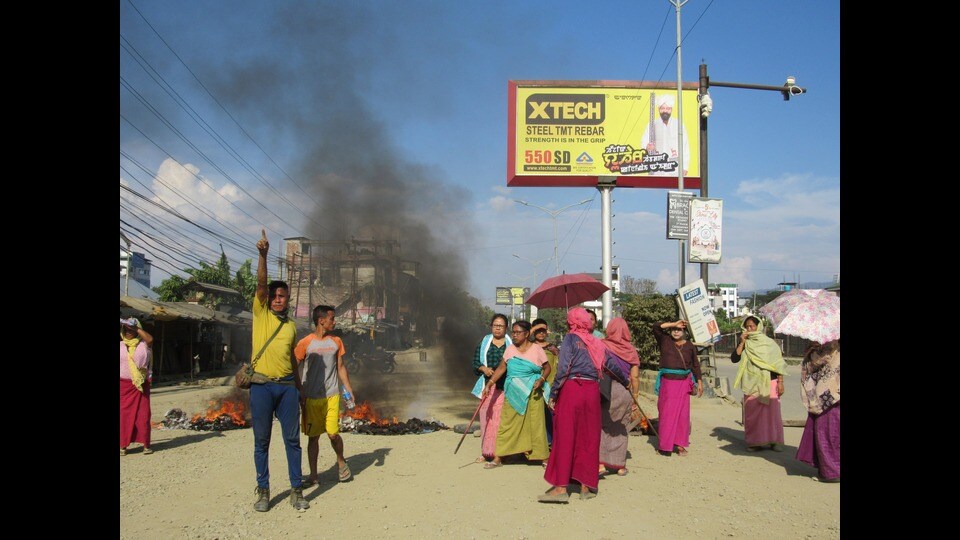
Manipur has just passed the grim milestone of three years since the start of the conflagration involving the majority Meitei people and the minority Zo ethnic tribes, who were simplistically lumped together as “Kuki”. The trouble, the most serious the state has encountered yet in its blood-splattered history, has consumed the place since it began on 3 May, 2023. Currently, the two sides are stuck in a stalemate. After a spell of President’s Rule, a new government was recently installed with Yumnam Khemchand Singh, a Meitei, as Chief Minister and Nemcha Kipgen, a Kuki, and Losi Dikho, a Mao Naga, as Deputy Chief Ministers. The killings have more or less stopped, notwithstanding recent outbursts of violence which seemingly dragged the Nagas, the third major community in the state, into the conflict. However, the geographical and demographic partition between the warring communities, marked by “buffer zones” has held. Most of the internally displaced persons on both sides remain displaced, and reconciliation remains elusive.
Compared with previous events, this crisis has been well reported in the national media. Detailed reports have been published, including from independent activist groups and media bodies. The authors of many of these ended up with FIRs registered against them. Given the extreme polarization, it was daunting for individuals to speak up.
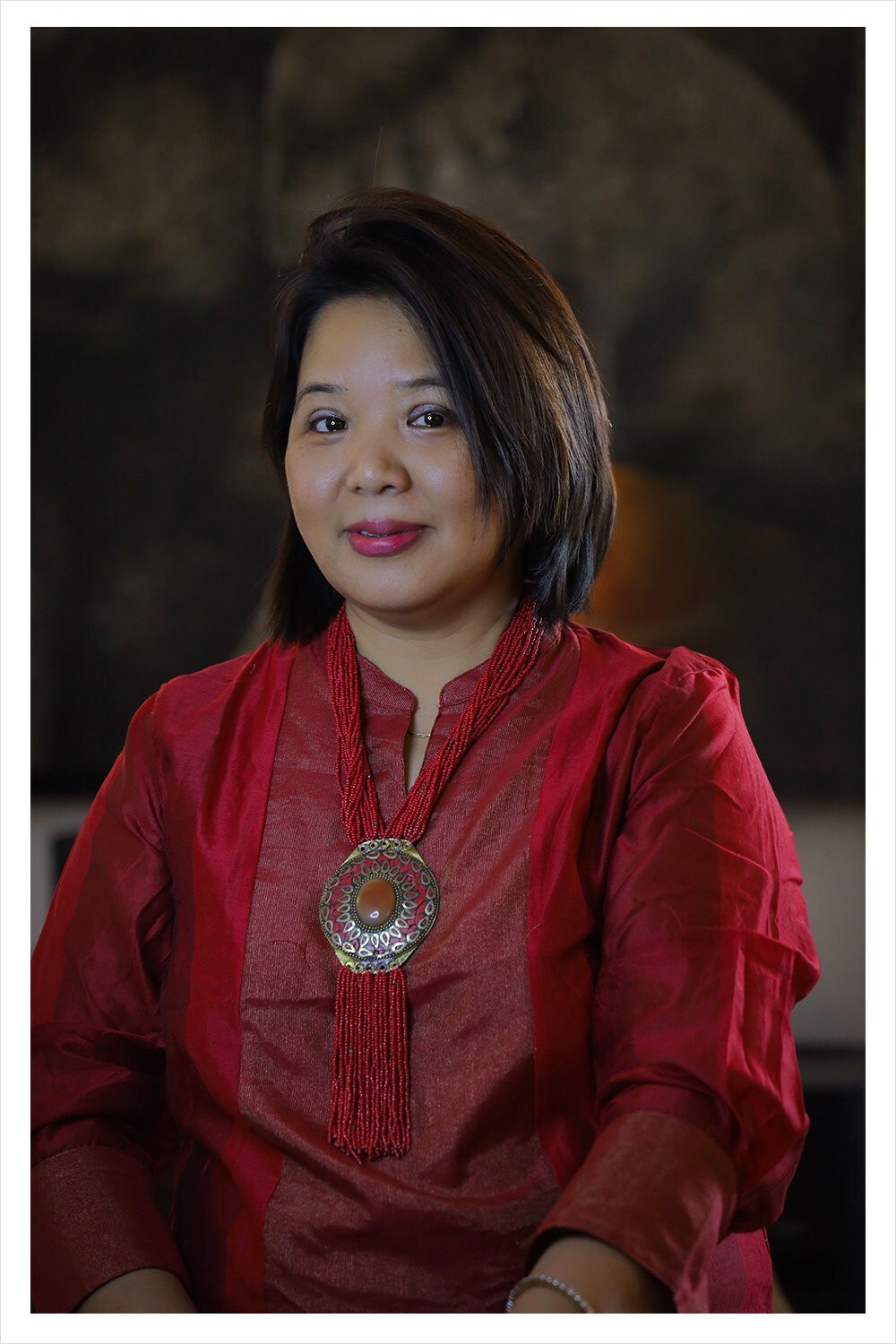
Hoihnu Hauzel was acutely aware of all this. Yet, for her, it was unbearable to stay silent about this “wound that refuses to close”. Stories the Fire Could Not Burn, her personal account of the conflict as an observer, victim and survivor, is an act of bearing witness. “Some may call it biased. Let them”, she states unapologetically.
A senior journalist and author who has worked in major Indian newspapers, Hoihnu is from the Paite tribe, one among the many Zo tribes. Born and brought up in Imphal where her family had lived since the 1960s, she is the daughter of a renowned chronicler of tribal history, who retired as director of the Tribal Research Institute (TRI) in the state capital.
A slim book consisting of a preface and seven chapters, Stories the Fire Could Not Burn can be finished in one sitting. Yet, as you read, the weight of the prose slows you down, and you occasionally find yourself needing to pause. Those who see Hauzel on television debates will know that she is not the sort who shouts or shrieks. Still, her feelings of hurt and betrayal, disillusionment and exasperation drip from these pages: “What does one do when home becomes hostile? When the soil you were born from rises to expel you? When even your suffering is denied legitimacy by those who claim authority over your fate?” It is a cry of despair, a shout into the void.
Chapter one provides a searing description of the initial hours on 3 May when Hauzel’s parents’ home and those of other members of the Zo community in Imphal were attacked, looted and burnt by a mob led by some of their own neighbours. Hauzel herself was in faraway Gurgaon. She was on the phone with her family throughout, as her aging parents and toddler-nieces hid and watched their home burn before escaping to army camps. It is difficult to decide which is worse: to be there physically, or to be far away and helplessly watching the whole macabre spectacle play out on the phone in real time.
Other chapters contain the author’s ruminations on the close-knit communal life that she was part of when she lived at Paite Veng; her lamentations for a home full of childhood memories, now violently extinguished; the physical and emotional toll of relocating to a new place, especially for infants and the aged; and a retelling of some of the most egregious incidents during the conflict, including the beheading of David Thiek and the sexual assault and parading of the two Zo woman, the viral video of which shocked the nation.
Chapter five, titled Shattered Sanctuaries discusses the demolition of three churches in Imphal in April, 2023, a few days before the outbreak of the violence. It is a story that deserves retelling. The churches were among hundreds of other religious and public structures deemed to have been built on government land without valid authorization. The court order presented the government with three choices: remove the structures, relocate them, or regularize them. The government chose not to regularize these three. In the case of the Evangelical Baptist Convention (EBC) church at Tribal Colony, the oldest among the three and built in 1974, the police arrived in the wee hours with bulldozers, gave the pastor and caretaker five minutes to collect their belongings, and demolished the building along with everything inside. And here is the detail the book missed, but which makes this action unconscionable. The church, after its appeals were ignored, had not even objected to the demolition. The church leaders had informed the police that they would rather demolish the church themselves. Community members planned to remove the furniture and worship tools inside before demolishing the building on 12 April. A farewell worship service was actually held at the church on the evening of 11 April. But the authorities chose to arrive around midnight and destroyed the building and everything inside. It was a needless provocation and calculated humiliation. A few days later, the conflict erupted.
This book evokes sadness more than it evokes anger or hatred. The sadness is exacerbated by the overwhelming lack of faith for a better future. There is no sign of people introspecting on both sides, just finger-pointing. The routine, official corruptions have increased, not decreased. Where does Manipur go from here? The book is short on prescriptions. But, for starters, why did the conflict become so intractable? This is an essential question that the book does not ask.
Curiously, part of the answer may have to do with the loss of faith in the idea of Manipur that unlikely people like Hoihnu Hauzel have now come to feel because of the conflict. Manipur is no stranger to conflicts, as the book documents. The hill-plain divide is well documented. But this is the first time that an ethnicity-based population transfer of this magnitude has happened. It is also the first time, that MLAs from a particular ethnic group openly came together to advocate “separate administration.” Unlike previous conflicts, it was the most affluent Zo tribal elites in Imphal who bore the brunt of this conflict, while on the Meitei side, the poorest sections in the foothills suffered the most. In previous crises, Zo tribal elites in Imphal acted as a bulwark against full-blown severance with the valley people. These influential elites – retired and serving central and state officials, MLAs, businesspeople, lobbyists, and journalists – have been so deeply invested in the state that they did not allow the link between the hills and plains to be snapped. Nor did they want to see Manipur fracture. They are the glue that tie the hills and plains together. Whenever trouble erupted in Churachandpur or Moreh, these people came together with Meitei civil society leaders to facilitate talks. Now, they have bitterly realised, as Hauzel did, that the “spirit of coexistence was never there – I had perhaps only imagined it.” This sense of betrayal is widely shared. Florence N Guite, also a native of Paite Veng, now living in the US, stated in her testimony at the UN Human Rights Council meeting in September 2023 that she was “ashamed to say that if my home had not been burned, I might still not have been drawn into this fight.” By throwing out this class of people from Imphal, the self-proclaimed defenders of Manipur’s integrity have deprived themselves of partners and interlocutors with whom they can negotiate and discuss peace. These people were never for separation. Now, they are at the forefront.
So, here we are three long years later, still clueless and adrift. It is a sad story. But as a careful reading of the book shows, there is hardly anything surprising about it.
Thangkhanlal Ngaihte is assistant professor of Political Science at Churachandpur College, Manipur and PhD candidate at Mizoram University, Aizawl.


