
 E-Paper



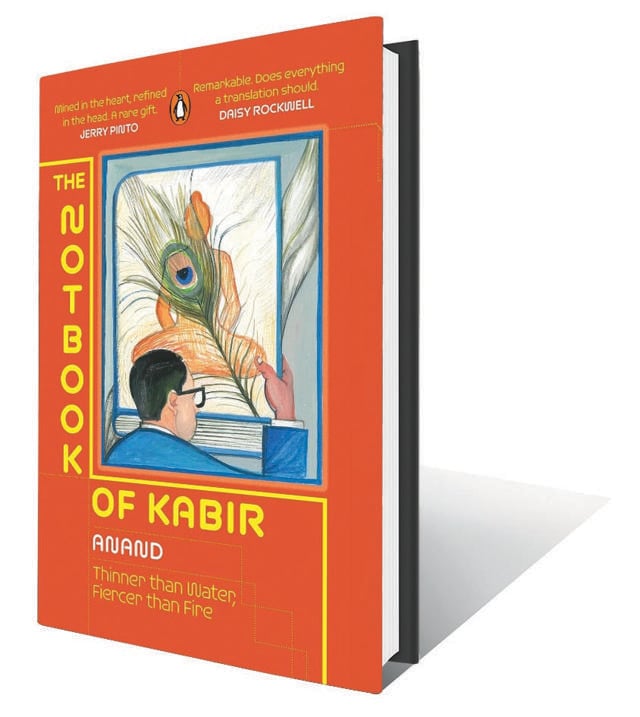
Review: The Notbook of Kabir by Anand
In The Notbook of Kabir, the author Anand, who is sharply aware of his own entitlements and privileges, draws readers into a journey of discovering the medieval saint-poet beyond scholars and school books

 Prefer HTon Google


The Notbook of Kabir cannot be read. It needs to be heard – as music, poetry and protest that, far from raising its fist in the air, playfully sings and laughs its dissent. There’s a song playlist at the end of the book that aurally transfers the poetry printed in two languages. The volume, among other things, becomes a tribute to folk musicians and singers of Kabir bhajans like Prahlad Singh Tipaniya, Mahesha Ram, Kaluram Bamaniya, Mukhtiyar Ali, Fariduddin Ayaz and Abu Mohammed, in whose voices these poems have been nurtured, within public consciousness and memory.
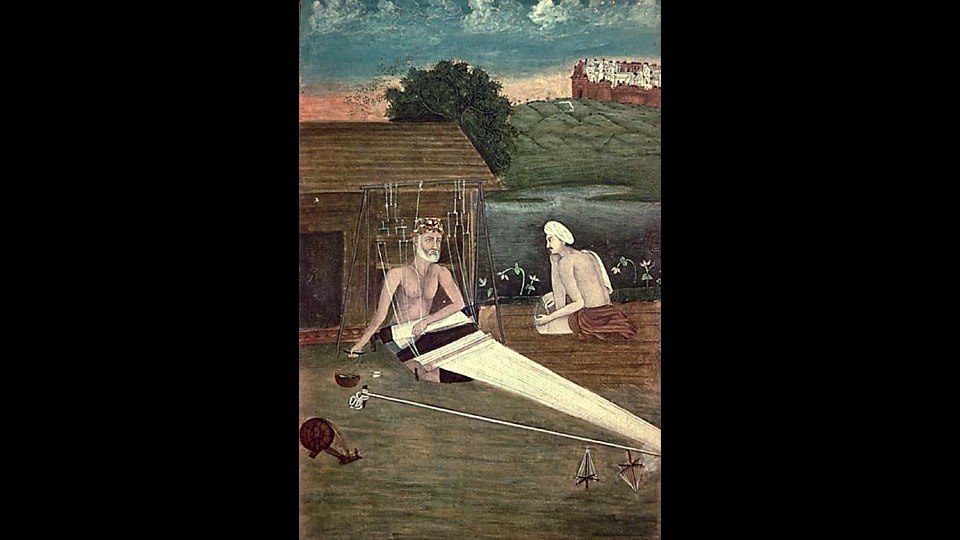
The Notbook of Kabir becomes a side dish in a feast featuring – not just music as main course, but also questions about caste, God, words, ragas, life, death, place, no-place, poetry, losing voice, finding voice, music, silence and everything between. Anand doesn’t just translate Kabir, the medieval mystic and saint. He interprets him through a triangular lens in which Ambedkar and Buddha are the other two vertices. It is not Kabir the person you meet through Anand’s explorations but Kabir the consciousness, Kabir “the antigod”, Kabir “the theme, the concept.” Kabir, then, in this book, becomes a gateway to the work of other poets, philosophers, reformers and warriors for equality. Anand uses him as a diving board to plunge deep and takes his readers along, inviting them to make their meaning.
You are invited to find your own Kabir/s outside the Notbook, because, as the author establishes early on, no book can contain him. How could it when the “most alive of all dead poets” has at least three tombs that hold his mortal remains? Besides, he is accorded two years of birth. “One book says he was born in 1398, another says 1594,” Anand writes in the preface. Through The Notbook, the author invites readers who are “adepts” to “find Kabir anew,” while drawing the attention of those who have never heard Kabir before to his way of threading together the “pleasures of language” with the “abstract thought of music.”
From his own background of being an outsider to many places and languages, Anand related to Kabir, who made him “feel at home everywhere and nowhere, in language and in music.” Rather than attempting the impossible task of “snaring the breeze in a box,” the author chooses to weave himself into a living, breathing body of Kabiri music and poetry. In The Notbook, he presents these song-poems (some have been written by other poets working in the same vein) that pulsate in the voices of long-time practitioners. These songs might also leap out of the page at seasoned listeners. And yet, the meaning might dance just out of reach. This is where the author offers his creative interpretations, which emerge, not just from his understanding of the songs, but also of his lived experiences as an Ambedkarite and keen follower of Buddhist scripture and philosophy.
While responding to the poetry, Anand gives himself plenty of poetic license, knowing that the irreverent, iconoclastic Kabir wouldn’t mind at all. So, Ram often becomes Bhim; intensely religious iconography or references are expressed in more secular terms; lots is written, not just about why the guru is called garu, garu ji and even rugu (“a word to come,” the author promises) but also about how problematic the institution of the guru is. In the chapter entitled All I ask of you is you, Anand offers “a belated word about bhakti” and his “unease with it” but nevertheless writes quite a few words that might speak to innumerable readers jaded with institutionalised religion and distressed by the bigotry it has induced. In the chapter, Things that do not know their name, renowned qawwal practitioners Fariduddin Ayaz and Abu Mohammed string together “a garland of songs of and for Kabir.” Another chapter that stands out is Songness stillness in which Anand, quite breathlessly (as evidenced by the absence of even a single full-stop in the four-page chapter) describes Kumar Gandharva’s rendition of Nirbhay Nirgun, alongside telling the story of the classical vocalist’s healing through the floating voices of “mendicants and wandering minstrels who sang for no one yet everyone,” while lying in his sickbed in Dewas.
Sprinkled with photographs, drawings and pictures of handwritten notes, The Notbook tells of multi-faith meetings being held during Kabir’s time. It reports rich conversations between working class poets who comprised the Sharana movement in Karnataka. It joins the dots between Tamil, Marathi, Kannada and Hindi literary movements. It weaves in questions thrown up by the research of scholars like Jayant Lele and Gail Omvedt. Yet, it nudges the reader to believe that Kabir, Mira and Gorakhnath, who were not contemporaries, might have interacted. “You don’t have to be a devotee or a believer to get this. You just need the love of the Word,” writes Anand.
Word play is a consistent feature of Anand’s poetic responses to Kabiri song-poems. If you are a reader who is partial to “earnest, meaning-fixated” translations, this is not the book for you. Anchored in “a desire to capture the active secularisation of a spiritual experience,” the author draws readers into a journey of discovering Kabir beyond Kabir, beyond scholars and school books, even while writing from a place of sharp awareness of his own entitlements and privileges. Fariduddin Ayaz is quoted in the book: “You can’t get Kabir’s knowledge from universities, scholars or professors… You’ll have to break free of your shackles and go” while folk practitioner Mahesha Ram says, “Kabir ne bhagwan se mazaak kar li.” Anand sees Kabir “more as a sceptic” and “has fun” with him.
Charumathi Supraja is a writer, poet and journalist based in Bengaluru.


