
 E-Paper



Review: The Life and Times of George Fernandes by Rahul Ramagundam
This biography of the most important non-Congress and non-Hindutva politician in post-Independence India fills a major gap in the nation’s chronicles

 Prefer HTon Google


One of the most iconic images of the Emergency (1975-77), the 22-month period when former prime minister Indira Gandhi suppressed the press, imprisoned opponents, and ruled by decree, is of trade union leader George Fernandes raising his shacked fist in a defiant gesture after being arrested in 1976. Fernandes was already an iconic anti-establishment figure when he organised the strike of Indian Railway workers in 1974, which was possibly one of the reasons Mrs Gandhi declared the Emergency. Before that, he had made a name for himself as an organiser of strikes that would bring the city of Bombay (now Mumbai) to a halt.
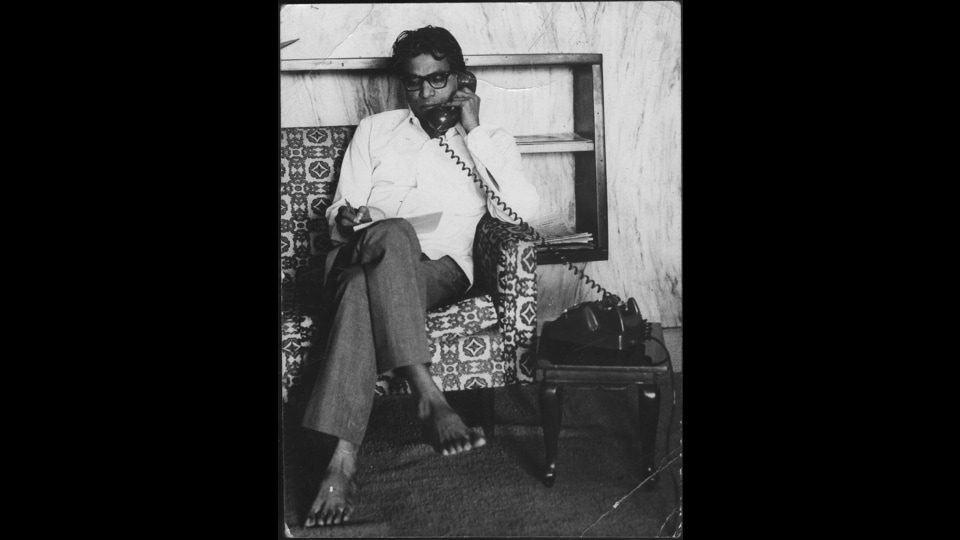
After the Emergency, as the industries minister in PM Morarji Desai’s short-lived government, he managed to drive IBM and Coca-Cola out of India. He also served as defence minister under PM Atal Bihari Vajpayee during the contentious nuclear tests at Pokhran in 1998 and the Kargil War of 1999. Given the key role Fernandes played in India’s post-Independence politics, his new biography by historian Rahul Ramagundam is a major contribution to the ever-increasing literature on the country’s modern history. In a recent interview with Firstpost, Ramagundam claims that he wanted to tell “the history of independent India by making it coterminous with George’s life”. He succeeds to a great extent.
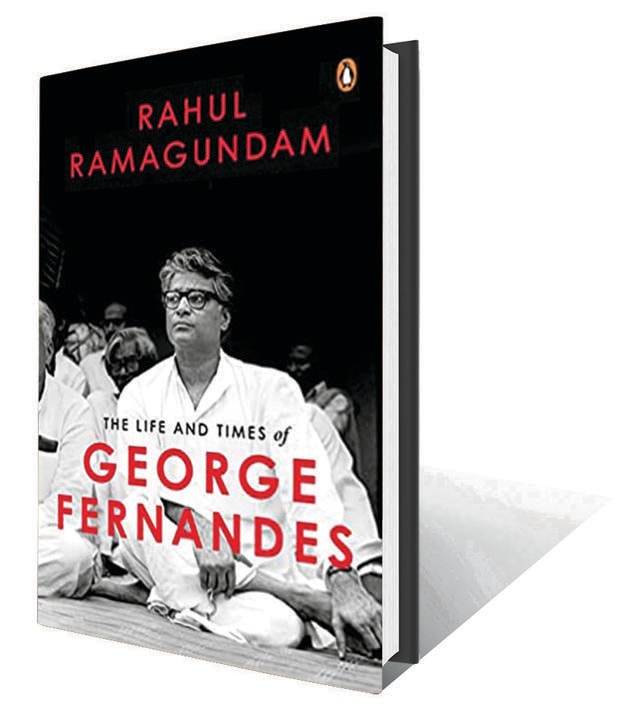
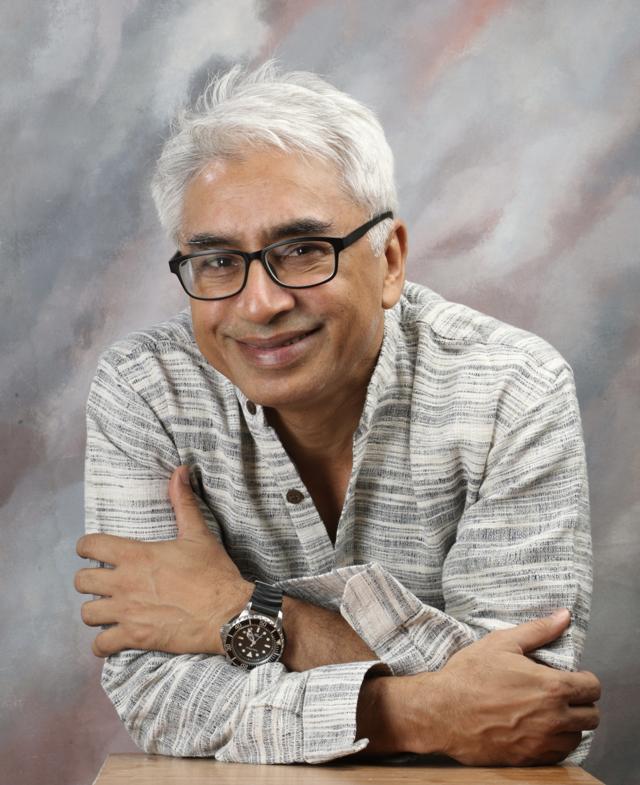
Ramagundam, who has a PhD in modern Indian history from Jawaharlal Nehru University, teaches at Jamia Millia Islamia in New Delhi. His earlier books include a study of khadi as a political metaphor, and histories of Adivasi land rights movements as well as the politics of inclusion. The Fernandes biography was supported by a New India Foundation fellowship, a prestigious grant that has helped produce some of the best contemporary works of history over the past decade including journalist Akshay Mukul’s award-winning Gita Press and the Making of Hindu India and documentary filmmaker Saba Dewan’s Tawaifnama, among others.
For this book, Ramagundam accessed a wide variety of archives and sources. One of the primary archives he consulted is Fernandes’ personal papers, which chronicle his decades-long political life. He also interviewed hundreds of people — Fernandes’ comrades and competitors, family, and friends — who have provided a varied texture to the portrait of this complicated personality. Ramagundam has also taken a deep dive into the various archives around the country that preserve papers of Fernandes’ contemporaries as well as newspapers, magazines, journals, and films. With archives around the world under constant threat from vested lobbies across the political spectrum, such historiography is likely to become a part of history sooner than later.
Ramagundam’s book traces Fernandes’ life from an agricultural family in Mangalore to a Catholic seminary in Bangalore, where he was admitted to become a priest. It follows him to Bombay, where he sleeps on the pavements and works as a proofreader, experiencing the proletarian life that would eventually transform him into a rare political figure who, in Ramagundam’s words, was “always for the people and never with the establishment”. As Ramagundam writes early in the book, Fernandes is arguably the most important non-Congress and non-Hindutva politician in post-Independence India. His biography is not only his life story but also a subaltern narrative of modern India. In some cases, such as the epic strikes of textile mill workers or Indian Railway employees, it gives us a glimpse of, to borrow historian Rochona Majumdar’s words, India’s “forgotten futures”.
The writer also creates an epic framework to provide a context to the text of Fernandes’ life. This allows him to segue into short, dense — and very interesting — micro-histories of subjects such as the fate of the Socialist Party of Jayaprakash Narayan and Ram Manohar Lohia that Fernandes joined as a 19-year-old in 1949. Similarly, the reader is provided a fly-on-the-wall perspective of Opposition politics and the power struggles for the leadership of the Janata parties. However, this narrative technique also has a few inherent faults. For instance, early in the book, Ramagundam devotes several pages to the arrival of Christianity in India, how it spread across the Konkan coast, and the many conflicts early Christians encountered with their Muslim and Hindu neighbours.
This can also be a pitfall. For instance, readers learn of the enslavement and forced conversion into Islam of Mangalorean Christians by Tipu Sultan, the 18th-century ruler of Mysore, and how that continues to be a contentious issue even now. Ramagundam asks: “(D)id the memory of a grievance that his community suffered at the hands of Tipu Sultan, rankle in George? Did its existence prod him to become the first credible leader from a non-RSS background to join the NDA bandwagon?” Fernandes’ decision to defend the BJP in the aftermath of the 2002 Godhra riots, despite his secular and socialist credentials, did disappoint many of his supporters. However, the attempt to try and find reasons for it in a perceived, historical religious conflict is wholly in the realm of speculation and completely unnecessary in this book, which is a product of solid and empirical research.
Readers should be able to accept Fernandes as a man of contradictions. They will be delighted in the deliciously textured portrait this book produces.
Uttaran Das Gupta teaches journalism at OP Jindal Global University, Sonipat. His novel, Ritual, was published in 2020.


