This book has appeared at a time when the police is making headlines every day — mostly for the wrong reasons. It should worry us all that the cases of custodial torture, murder, extortion, and manipulation of evidence by the police are on the rise. Their unlawful acts are too numerous to discuss here but trends like criminalising dissent and arresting activists, intellectuals, and journalists on false charges are pointers to democracy’s downward slide in India.
What can explain their rising contempt for law and the lack of accountability? And what can be done to make the police work for the citizens rather than for the rulers of the day? This, in nutshell, is the theme of the book. The author, Prakash Singh, is renowned for his outstanding career in the police and also his petition in the Supreme Court which led to a landmark judgment that should have — but didn’t — change the course of policing in India. The book shows how the powers that insidiously run the ‘system’ have succeeded in obstructing meaningful police reforms.
The famous court case, Prakash Singh Vs Union of India, was filed in 1996 when Singh hung up his boots after heading the BSF and the state police in UP and Assam. He and his lawyer Prashant Bhushan relentlessly pursued the PIL, while his joint petitioners, Common Cause, the civil society watchdog, and retired IPS officer NK Singh, stood by him. The PIL is a fine example of legal draftsmanship and is rightly taught at many law colleges and universities.
The book is a brief history of policing in India. It shows how politically useful police have always been there to obey orders, right or wrong. “We would have been saved the trauma of several riots and massacres, scandals and scams… if the police had not become a pliable instrument in the hands of the executive,” the PIL argued with real-life examples of abuse and partisanship. It also documents a decade of meticulous submissions in court and our collective inaction. For its gravity and diligence, the book is a must for anyone interested in police reforms in India.
{{/usCountry}}The book is a brief history of policing in India. It shows how politically useful police have always been there to obey orders, right or wrong. “We would have been saved the trauma of several riots and massacres, scandals and scams… if the police had not become a pliable instrument in the hands of the executive,” the PIL argued with real-life examples of abuse and partisanship. It also documents a decade of meticulous submissions in court and our collective inaction. For its gravity and diligence, the book is a must for anyone interested in police reforms in India.
{{/usCountry}}The 2006 judgment, we must not forget, came as a welcome break from the past. It directed the states to set up bipartisan State Security Commissions for the independent functioning of the police and Establishment Boards for transfers, postings, and promotions. The directions included the formation of Police Complaints Authorities and a separate wing for investigation. It also ordered fixed tenure of operational police chiefs to resist undue political pressures and the setting up of a commission for the selections of heads of central forces.
In an ideal world, the milestone judgment should have checked the political executive’s misuse and manipulation of the police. The book shows how the system is gamed at every step by those in power. At one stage, the PIL for police reforms was tagged with the Best Bakery case (National Human Rights Commission Vs the State of Gujarat, 2003). When the matter finally came up, after a six-year-delay, the counsel of the petitioner argued that if police reforms had been addressed, atrocities like the Best Bakery would not have happened.
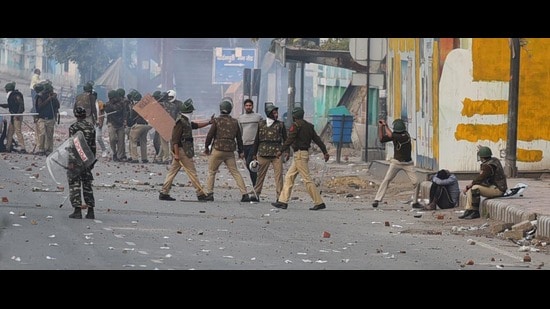
The list of what could have gone wrong without police reforms is endless as it is ominous. Riots in Delhi and Gujarat, which find notable mentions in the book, are reminders that a civilised society must not allow business to go on as usual. It must discuss, document, and draw lessons from each and every case of police brutality, however nauseating they may be. For instance, P Jayraj and his son J Beniks were allegedly tortured by the Tamil Nadu police in 2020 and made to clean their own blood from the floor of the police station before they collapsed. They were killed for keeping their mobile repair shop open beyond the Covid-19 curfew hours — an offense which would have got them a minor fine or a few weeks in jail.
Similarly, a Supreme Court-appointed judicial commission held that the 10 cops involved in the Hyderabad encounter of four murder accused, three of them minors, should be booked for murder. The alleged crime — rape and murder of a young woman — was indeed horrific but it was neither lawfully investigated nor proved. The state government is in a tight spot after publicly lionizing the cops.
What is common in all these cases is that the police have been wilfully violating the Constitution with impunity. The book shows how the unaccountable in the police have the backing of the political class and why the court’s crucial order is not implemented in letter and spirit. And that is why police reforms need to become everyone’s business rather than being left to the courts or the policymakers.
Vipul Mudgal heads Common Cause which brings out the Status of Policing in India Reports