
 E-Paper



Savie Karnel: “An army is built with thousands of stories”
The author of the award-winning Laxmi Panda: The Story of Netaji’s Youngest Spy on her subject’s work with Rani of Jhansi regiment

 Prefer HTon Google


After winning the Binod Kanoria Award, you wrote an Instagram post saying, “A little girl from a small town on the western coast dreamt of writing, and the rest has been blessings and bonuses.” How do you look back at this journey?
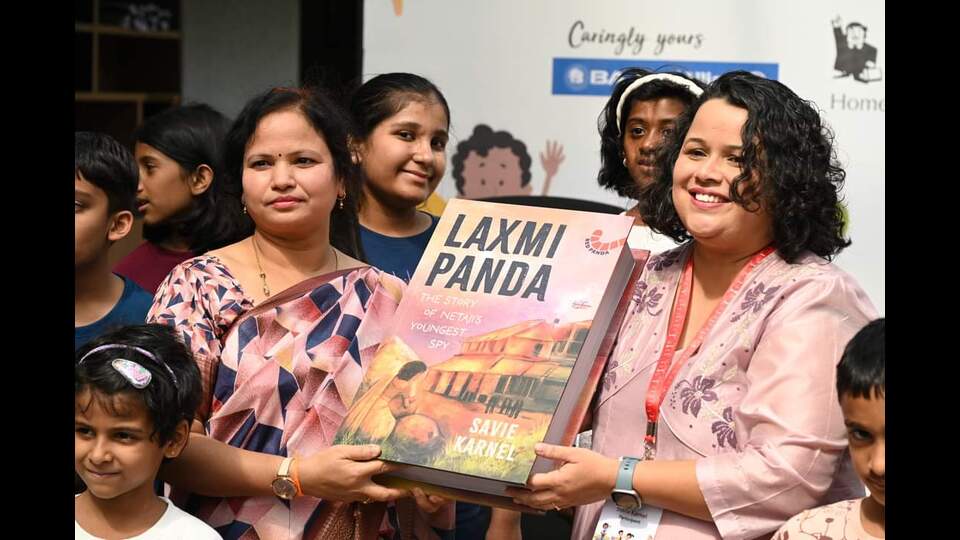
I grew up in Karwar, where there is still no book shop selling non-academic books. My parents introduced me to children’s magazines and to the panchayat library, and later the district library, and opened new worlds to me. I dreamt of writing like the authors I read. I thought that was impossible. When I was about 11, the Karnataka tourism department advertised Karwar as the place on whose beaches young Rabindranath Tagore wrote his first play Prakritir Pratisodh. I said to myself, “If Gurudev, who was visiting his brother, could write his first play in Karwar, I have grown up playing here. Why can’t I write?” I decided to be a writer. My dream was to see a book with my name on it. From then on, I have worked towards it. Even when I was a journalist, I made mental notes of people and incidents that I could someday use in my books.
When I finally wrote my first book, I could not find a publisher. The spiral bound manuscript is still lying in my almirah. Now when I go through it, I find many flaws and I understand why nobody wanted to publish it. I then read several other books by contemporary writers, studied them, worked on myself and wrote The Nameless God. This too was met with rejection from every publisher I sent it to. This time I was dejected. I sulked, and didn’t write for five years.
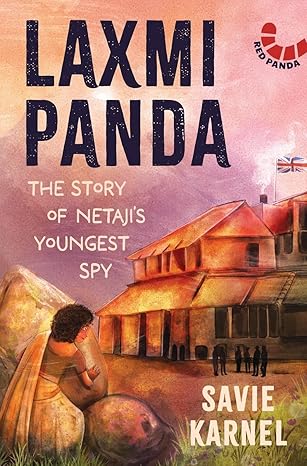
After an accidental fall in Dharamshala, when I thought I could have died, I made a last attempt and sent the manuscript to all the publishers again. Vidhi Bhargava from Westland Books replied. After a year, I became a published author. My dream was fulfilled. To my surprise, the book did well. During the Covid-19 pandemic, it ran into reprints, and was also shortlisted for an award.
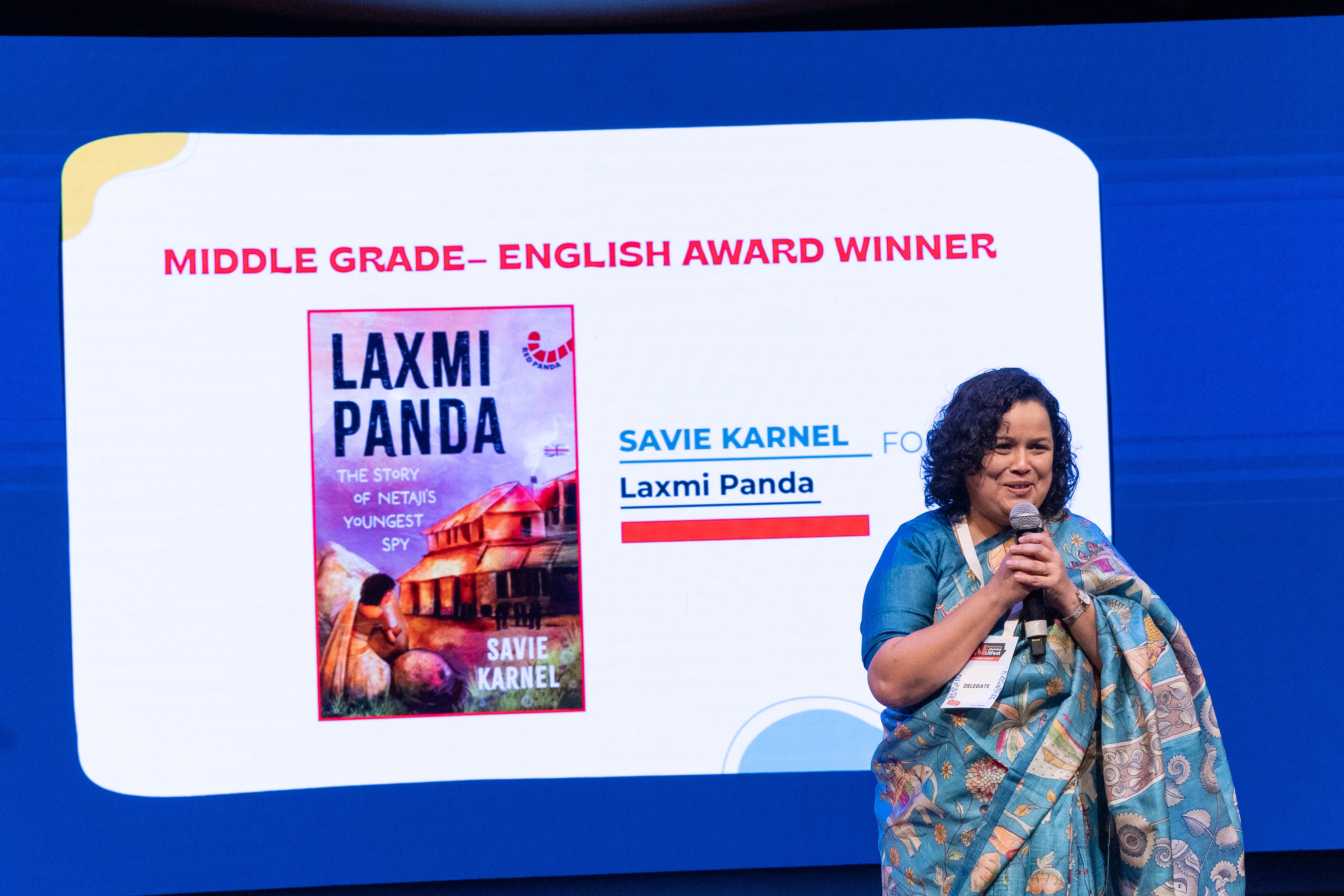
My second book Laxmi Panda: The Story of Netaji’s Youngest Spy has won the Kalinga Literary Festival Book Award, and the Binod Kanoria Award. All these are just blessings and bonuses.
You began to take an interest in the life of Laxmi Panda when her grandson, Probin Raj Patro, approached you in your former role as a journalist in 2008. What makes her story so special?
Laxmi Panda represents the thousands of unknown soldiers of the Indian National Army (INA), whom history has forgotten. When we speak of INA, the spotlight is mainly on Netaji Subhas Chandra Bose. We think of the army behind him as a mechanical entity, often ignoring that it is made up of many individuals and their lives, dreams, families, and sacrifices. An army is built with thousands of stories. Without these men and women behind him, perhaps even Netaji would not have been known as he is today. Yet, we know so little about the soldiers he commanded.
Laxmi Panda was working as a domestic help when her grandson approached me in 2008, fighting to get her freedom fighters’ pension from the union government. After her story was highlighted by the media, and with the efforts of a social worker, Anil Dhir, Laxmi Panda was conferred the Rashtriya Swatantrata Sainik Samman by President Pratibha Patil, who also promised to release her pension. Two weeks later, Laxmi breathed her last. When Probin called me with the news, my heart sank. She never received what was due to her during her lifetime. When the recognition came, it was too late.
As a domestic worker making ends meet, she was part of a faceless, neglected workforce in India. I wonder if things would have been different if she belonged to the upper strata of society. Would she have been glorified when she was alive? Would people have believed her easily then?
I often thought of Laxmi Panda over the years. After the publication of my first book, The Nameless God, I was asked in an interview published on Women’s Day if there was any woman who inspired me, and I replied: Laxmi Panda. It was then that I realised that even over a decade after her death, the story of her valour as a child had not been told, and I decided to tell it.
Tell us about the research that went into this book?
There is very little known about the exploits of the INA, let alone about Laxmi Panda, or foot soldiers like her. As for the Rani of Jhansi Regiment (the women’s regiment of the Indian National Army), the general notion is that they mainly constituted the medical corps. It was surprising to me when Laxmi revealed that she was a spy, and trained to use a rifle and sword. In her words, ‘a good spy never gets caught,” and she was never caught or went to jail. So, there was no recorded information that was easily available.
Thankfully, Anil Dhir, the INTACH Convenor of Bhubaneshwar Chapter, had taken Laxmi into his home and cared for her in her last years. He had collected all the documents proving her claim and even found the number of the rifle issued to her. He had also made video interviews of Laxmi speaking about her time in the INA. He shared them generously with me.
Her grandkids shared experiences of the training in INA and the war they had heard from their grandmother, and I cross-checked incidents and methods.
Of all the anecdotes that you heard about Laxmi’s work as a spy gathering intelligence against the British, which ones did you find most intriguing?
The first time Laxmi revealed to me that she was a spy was when she mentioned catching frogs. I asked her what she meant. She replied nonchalantly, “We caught frogs, and entered the British camps on the pretext of selling them to the soldiers. There, we would gather information about the plans and strength of the British and pass on the intelligence to the INA and the Japanese.” She said that she was once almost caught, but since she was young, puny and looked malnourished, nobody suspected her, and they let her go.
Being married to an army officer, you know about the personal sacrifices people make to serve their country. How did this knowledge and access contribute to the book?
When I gathered information about the Rani of Jhansi Regiment, and the INA, I learnt about major incidents. To write an engaging story, I needed to know the small things — the routine, the training, the rituals, the bonding and camaraderie among soldiers. The INA was mainly made of Indian soldiers in the British Army who were taken as Prisoners Of War by the Japanese after the fall of Singapore. The Free Army or the Azad Fauj that was formed carried on with some practices that they followed in the British army. I had access to museums in army cantonments, which have exhibits about the British army, the World War in Burma, and also war propaganda like pamphlets used by the British and the INA. When I had to understand Laxmi’s journey, my husband drew the maps of the region and explained the terrain and the various British posts and garrisons that she might have come across along her way.
I have lived in North-East India, including Manipur and also visited some villages bordering Myanmar. These experiences helped me with descriptions of the region.
How has the book been received by children?
Children have received the book with enthusiasm and excitement. They are intrigued when they find out that Laxmi Panda is not a fictional character, but was a real person. I was also surprised that many children knew Netaji and the INA, but were unaware of the Rani of Jhansi Regiment. I hope that this book opens up for them a part of history that seems forgotten, and nudges them to try to discover more about the incredible women soldiers of the regiment.
Chintan Girish Modi writes about books, music, art and films. He can be reached @chintanwriting on Instagram and X.


