
 E-Paper



Shida Bazyar: “The majority of Iranians want democracy”
At the Kerala Literature Festival, the German-Iranian author of The Nights Are Quiet in Tehran spoke about the brutal clampdown on protests in Iran

 Prefer HTon Google


Your novel spans four generations of an Iranian family from the 1979 revolution to present-day Germany. What drew you to tell this multigenerational story, and how did you approach representing such a vast historical sweep?
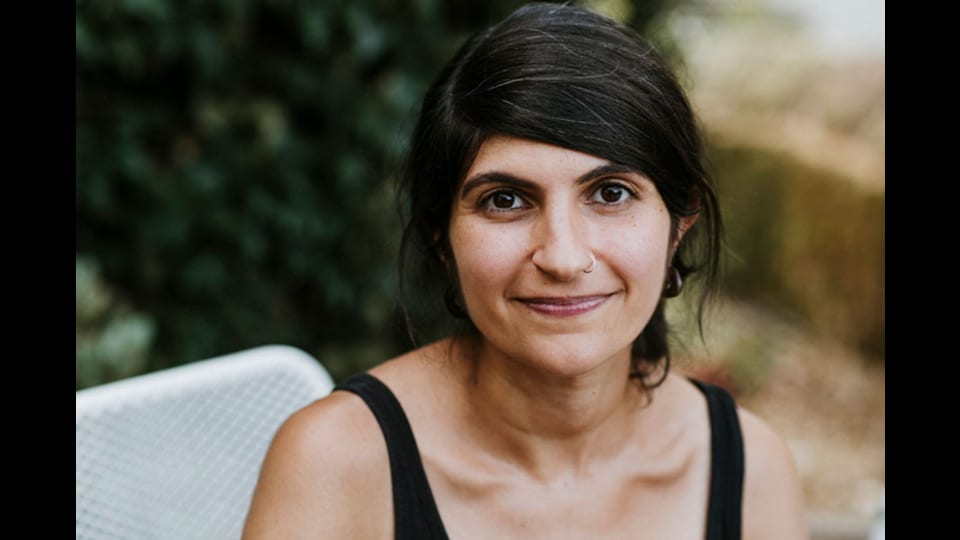
Above all, I wanted to learn more about this topic myself. My parents were politically persecuted – first by the Shah and then by the Islamic regime – which is why they had to flee Iran a year before I was born. But that was all I knew. The details of how they became politicised, when they realised they had to flee and what their fears and hopes were, were not part of our family stories. So, I used my work on the novel as an opportunity to interview my parents and ask all the questions you don’t normally ask in a family. These interviews, along with my further research, formed the basis for the fictional family in the novel.
The novel moves between Tehran and Germany, between political upheaval and everyday family life. How do you see the relationship between the personal and the political in your work?
As long as we live in a world where power is distributed unevenly and people are oppressed, everything we do is political and nothing we do is free from these structures. As an author, I am, of course, very aware of this. When I describe everyday life and the seemingly banal aspects of a character, it always reflects the larger context. It is also always a political decision whether I have a male or female character narrate the story. Writing a novel means making a lot of decisions, because you usually have a lot of possibilities and ideas. When writing, I try to find a balance: what serves the text from a narrative perspective – usually this has to do with the characters’ personal lives – and what is the political dimension of it.

The 1979 revolution is a pivotal moment in your novel. How do you see the echoes of that revolution in contemporary Iranian society and in the recent protests?
A 2024 survey revealed that 90 per cent of Iranians want democracy. A small but powerful elite section benefits from the current system, while the rest of the country suffers the consequences. The vast majority of people have no freedom of expression, no democratic rights, and face pressure from the economic situation. When the major protests began in 2022, they were a movement of minorities. Starting in the Kurdish provinces and triggered by a long-standing feminist tradition of resistance, it was not only the Kurds anymore who chanted “Woman, Life, Freedom”. To me, this shows that people are trying to learn from past mistakes. We must not forget: after the 1979 revolution, it was also left-wing groups that accepted the oppression of women and minorities.
Your other novel, Sisters in Arms, focuses on three women of colour in Germany navigating racism and belonging. How does the experience of being part of a diaspora shape the characters’ sense of identity and political consciousness?
I deliberately did not mention the exact origins of the three friends because I wanted to show that it does not matter and that these kinds of details are not necessary for understanding the characters. Their identity is not based on a particular diaspora or community. What shapes them, however, is being part of a minority. All three experience racism in a German society which claims that racism does not exist. They face this struggle every day, each in their own way, and each of them has their own strategies for fighting it. But this struggle also brings them closer together. They don’t need to explain themselves to each other — they simply support one another.
Your novels often centre women’s perspectives and experiences. What role do you see for women’s voices in telling stories about political resistance and migration?
I believe that we can only formulate political resistance if all voices are heard. I am not a big fan of upholding female voices simply because they are female voices. I want to uphold them because they have been underrepresented in past centuries. And I would do the same for all minorities, including those with a gender identity beyond the binary, for example. For me, the most important thing is that we bring all voices together, combine them, and allow them to contrast or unite.
You write in German about Iranian experiences and about the lives of people of colour in Germany. How do you navigate questions of language, audience, and cultural translation in your work?
When writing, I try to focus solely on the characters, because I believe in a universal language of literature. If we understand the humanity of a character, we don’t need their cultural background explained in such detail. That’s why I focus on the characters when I write, rather than on who might understand them and how. In the end, it is not so important whether readers can relate to the actions and views of my characters or not. What is more important is that they engage with them and get to know them.
The protests that began after Mahsa (Zhina) Amini’s death in September 2022 were led largely by women and young people. As someone who writes about Iranian women’s experiences, what has it meant to you to witness this movement?
It was a significant moment because the ‘Woman, Life, Freedom’ movement represented all those hated by the Islamic Republic. It began in Kurdistan, a region where people were oppressed by both the Islamic Republic and the Shah. The movement also attracted queer people and other minorities and important alliances were formed between different minority groups. If I were to imagine a revolution, it would look like this movement, because there is no better foundation for democracy than a strong intersectional movement. Unfortunately, the necessary economic classes in Iran failed to support this movement, as did the international community. In the end, the regime brutally suppressed the protests without any consequences.
Social media has been crucial for documenting and spreading information about the protests despite internet shutdowns. How has technology changed the nature of resistance compared to earlier movements you’ve written about?
On the one hand, modern technology has made it easier for opposition groups to network and has led to a greater awareness of democratic structures and justice than in previous dictatorial systems. Unfortunately, however, those who wield power are often much better at using modern technologies to their advantage. They use them not only for propaganda and falsifying facts, but also for spying and threatening people. The shutdown in Iran was intended to isolate the entire country from the outside world and to commit mass murder in secret. We can consider ourselves lucky that there are enough courageous people in Iran who have filmed and sent their videos abroad anyway. In summary, it can be said that both sides depend on access to the internet, so it is no surprise that the battle is also being fought at the level of digital structures.
With respect to the more recent protests in Iran, whether or not these specific protests lead to regime change like they did in 1979, they’ve clearly marked a shift in Iranian society. What do you think has fundamentally changed?
For a long time, many people firmly believed that the regime could be reformed. Perhaps the biggest change is that people are no longer talking about reforms, but about a regime change. Those who supported the system for a long time have finally realised the kind of people they were dealing with. Women have been particularly successful in this regard, having used the smallest of opportunities for decades to fight for their freedoms. Year by year, step by step, they have secretly achieved what no one would have expected a few years ago. The fact that so many dare to leave the house without a headscarf, and even appear on the internet without one, bringing the private into the public sphere, is thanks to the courage of every single person in Iran, who broke the rules. The revolution has long since taken place in people’s minds. It is time for the regime to finally give up.
Literature often captures truths that journalism cannot. What role do you see for fiction in making sense of ongoing political movements?
Reading literature makes one more aware of feelings and perspectives that are not our own. In my opinion, empathy is the foundation of all political action. I can only fight alongside and for other people if I recognise that there are countless truths beyond my own. I know of no better way to experience this than through literature. Now, in an era of multiple wars and international conflicts, it is perhaps a good time to read more international literature and remember that these conflicts are about people, not numbers.
In my third novel, which will be published in Germany this year, I deal with the Nazi era and the fact that it was ordinary people who chose fascism and turned against their friends and neighbours. So, it’s historical material, but also material that seems to be becoming increasingly relevant worldwide.
Arunima Mazumdar is an independent writer. She is @sermoninstone on Twitter and @sermonsinstone on Instagram.


