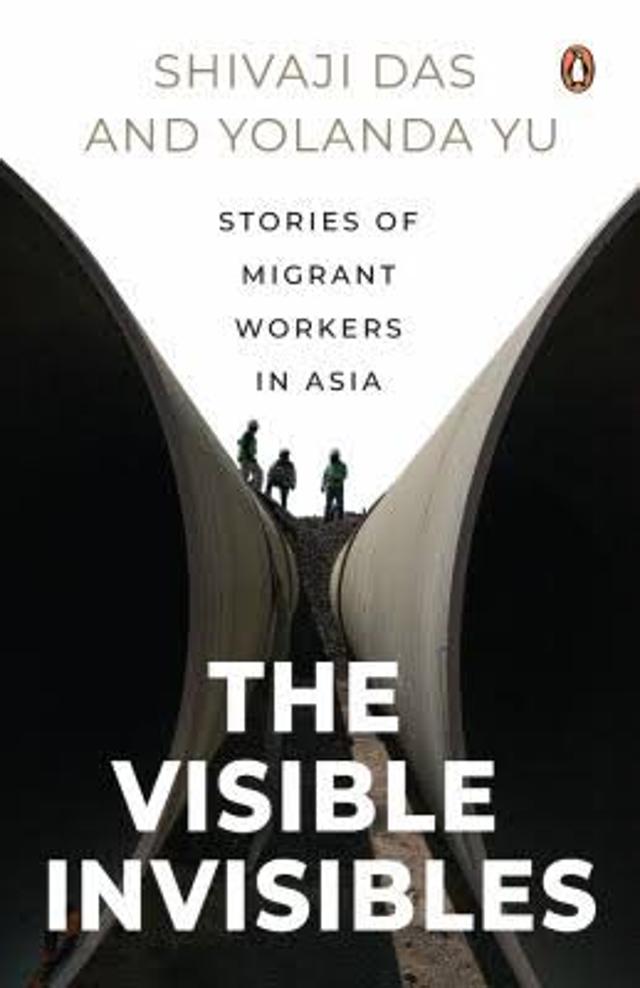
The stories are grouped under different sections on the basis of the issues highlighted in them ending with the final part titled Potpourri of Musings. How did you go about deciding on this structure and was there any confusion as to the categorising of these stories in the separate parts?
Yolanda Yu: The sections are defined loosely by questions each explores in more depth than the rest: is becoming a migrant worker a matter of choice, or a lack of one? How do political conditions shape the course of their life? What prejudices do low-wage migrant workers have to face? Are they able to shed their own biases? How does migration change them?
And yet, there are many overlaps between the various sections. We made a conscious decision about not being too rigid about the structure because that is how all our lives are, without clear categories or chain of consequences. So we felt that such loosely defined sections would be the best suited for a book about life stories.
The stories are narrated in the first person and you mention how it was important to the overall project in the introduction. How did you come to that decision and did the storytellers also approve their contributions before publication?
Shivaji Das: It was important for us to give a direct voice to migrant workers as the key objective was to make them visible. This has also been the core idea behind the design of the poetry competitions we run for migrant workers – to speak for themselves instead of through NGOs or academics. It is both empowering and powerful. Where we could, given the challenges with accessibility, we got the contributors to approve the draft versions.
How did you conducting these interviews and how did you zero in on the people whom you chose for this project?
Yolanda Yu: Most of these interviews were done during the pandemic. We could still meet the workers who were based in Singapore, where we live. But for those featured workers based outside Singapore, we could only talk to them over video calls. Some stories are also based on our interactions with migrant workers we interviewed during our past travels.
What were some of the challenges you encountered in the process of collecting these narratives? How difficult was it to have the interviewees enter into a vulnerable space during the conversation?
Yolanda Yu: We almost had to do some “detective” work to gain access to some groups of migrant workers such as sex workers, tea plantation workers, and Chinese workers in Indian restaurants. But we also knew many of the featured workers from our past work with them.
The interviewees were surprisingly ready to enter the vulnerable space and share their life stories, thoughts, and feelings with our readers. Many said that this was the first time someone had asked for their life stories and were therefore delighted to reveal all.
Certain uses of derogatory words to describe people of different ethnicities have been kept as is. Was that a conscious choice?
Shivaji Das: It was a conscious choice, by us, and the featured migrant workers. Migration, domestic or cross-border, mashes up people from different cultures and communities. Migrant workers have to deal with employers and co-workers who speak different language or dialects. They have to share the dining table and the kitchen fire with people where one’s food could even be taboo for others. A Bangladeshi could be sharing room with seven Chinese persons. A worker’s religious books and charms could be called back magic and thrown away by the employer. So a big part of a migrant’s life involves dealing with cultural or racial contrasts, conflicts and biases. For some, their own cultural biases get reinforced even further. Thereby, in this book, we kept the expressions of such strong emotions as they were told to us because to ignore them would be tantamount to dehumanizing the migrant workers.
And yet, we found a universal feeling of solidarity among all the migrant workers we interviewed. This transcended all their psychological boundaries. Over time, many formed cherished friendships with the “other”. And a fellow worker’s death by an accident is mourned by all migrant workers, irrespective of their race or culture.
Mingled with the tragic narratives are also stories of hope where migrant workers narrating their struggles also share how they went on to find success in creative fields such as writing and designing. Having organised poetry competitions for migrant workers as well, in your opinion, does art then present itself as not only an outlet but also a potent mode of authentic expression of such precarious existences?
Yolanda Yu: I believe it is much more complicated. First of all, migrant workers’ life is more than struggling and suffering. The experience also encompasses love, friendship, passion, hope, and dignity in intricate manners. This means their art has the potential to and often does reflect such life in its entirety. But migrant workers may also self-censor such expressions, with various motives such as to maintain a certain self-image, or to avoid reprisals by their employer, government, or even families back home.
Shivaji Das: N Rengarajan, a migrant worker, put it elegantly in one of his poems: “Ours is not a foreign life, Our lives are foreign to us.”
Many stories also outline how the pandemic had an impact on their jobs and lives, in addition to how state institutions were not as helpful as NGOs during that period of extreme uncertainty. Which stories stood out that perhaps couldn’t make it to publication?
Shivaji Das: We have not omitted anything that was worth highlighting. Overall, the migrant workers highlighted both positive and negative experiences of life during the pandemic, and we have tried to showcase both.
An important aspect of these tales is how care labour comes to be showcased with workers tending to their employers’ children while missing out on their own child’s life. Was that a recurring narrative?
Yolanda Yu: What you have mentioned is a clear contrast worth noting, underlying which is a more common theme that many low-wage migrant workers miss out on their own children’s life. This, as the nature of migrant life, happens regardless of what they do and who they tend to. However, taking care of other people’s children does bring a new dynamic, making the experience either harder to bear, or easier by creating the possibility of transference.
Shivaji Das: This is a matter specific to certain jurisdictions which restrict low-wage migrant workers from bringing in their own families. Also for caregivers and domestic workers in such jurisdictions, the worker has extremely limited bargaining power compared to her employer, and thereby she often views the employer’s child as a peer or her only friend.
Are there any plans on bringing out a second part? Are any other collections in the works?
Shivaji Das: Our next writing project, showcasing the life stories of Chinese-Indian couples, is due for publication next year. With regards to migrant workers, we would definitely consider a second part a few years later, perhaps exploring the connection between climate change and migration for low-wage jobs.
Simar Bhasin is an independent journalist.

 E-Paper