
 E-Paper



Vivek Nityananda: “It’s important to listen to dissenting voices”
The author of Beyond Doubt on how confidence and ability can be divorced from each other and how overconfidence can be terrible for society

 Prefer HTon Google


You have written many papers on insect behaviour, such as on how praying mantises detect prey. Could you talk about your research and its potential applications?
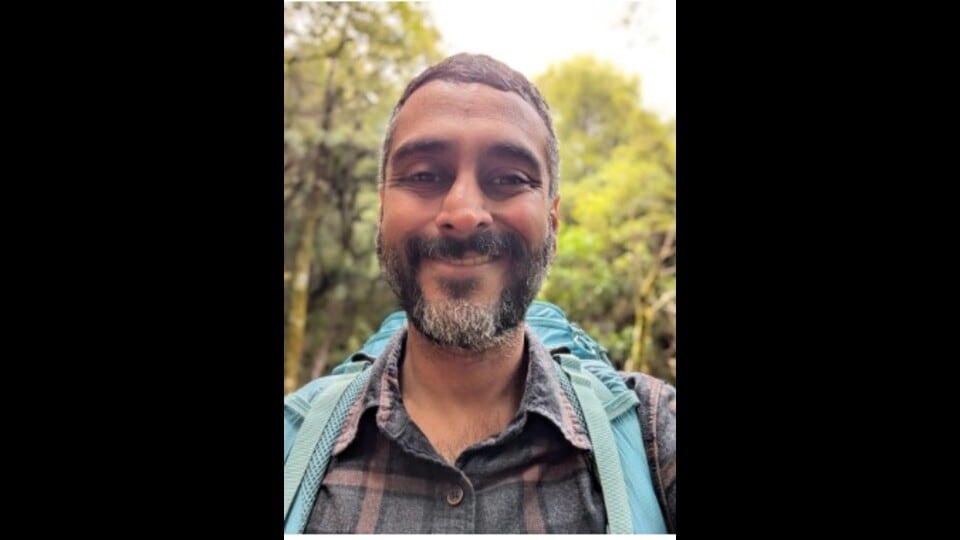
In my work on insects, the focus has broadly been on vision and decision-making. In praying mantises, we’ve been studying stereo or 3D vision. We put 3D glasses on them and showed them images on a screen to figure out how they process stimuli to calculate depth. We also researched how they search for prey and how bumblebees search for flowers, as well as what visual responses and attention look like in these contexts. More recently, we’ve been studying insect welfare: how stress affects, say, bees and impacts their decision-making and responses to ambiguous stimuli. Many of our approaches come from psychology.
The applications? If we could mimic the way insects process the world, we could build new technologies. From a conservation point of view, such research could boost bee welfare and ultimately, help agriculture.
Could you explain how your approaches draw upon psychology?
We take psychological concepts such as attention, optimism, pessimism, and other emotions in humans and animals, and find ways to operationalise and test them in insects. Take the concept of attention. To test it, you could analyse where an insect is looking. In humans, attention affects how easily we see something against a background. We tried to determine if that also happens in insects. Does their ‘attention’ or interactions change when they earn a reward? How do they respond to something ambiguous? Humans might react negatively when anxious and positively when happy. We try to adapt that kind of enquiry to insects. Some of it overlaps with the idea of optimism and overconfidence, which I explore in my book.
You write about how some psychological studies have limited applicability because the test subjects belong to a narrow demographic, such as US college students. For your book, how did you vet the evidence?
I kept track of new research, basically anything with the word overconfidence in it (laughs). When it came to older studies, I identified the most cited papers. In one chapter, I discuss studies from different parts of the world — I actively searched for those. Wherever I featured studies with limited demographic diversity, I qualified them by adding that they were not necessarily representative of the rest of the world.
How did you weave the scientific studies into a narrative? What was the storytelling process like for you?
It was improvisation to some extent. I had an idea of different kinds of psychological effects — Dunning-Kruger effect, better-than-average effect — and how they related to overconfidence. I deep-dived into each, exploring recent research and critiques of these concepts.
Simultaneously, I kept track of the different emerging threads: how overconfidence changes around the world, impostor syndrome, etc. I didn’t want to ignore them by sticking to a rigid structure. So, whenever I found a substantial piece of work, I built that into the narrative.
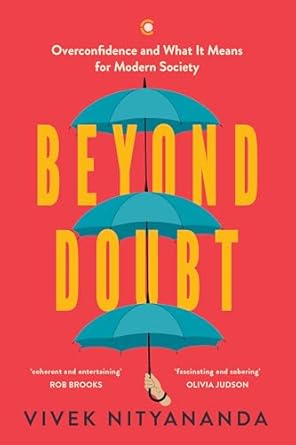
Eventually, a logical progression emerged and the book split into three parts; I didn’t plan it that way. The first part was about what overconfidence is and where it is found. The second touches upon how it works: both the mechanisms and evolutionary reasons. The final section delves into how it applies in day-to-day situations.
Given that psychology is often conflated with pseudoscientific ideas, how can a layperson better interpret psychological studies?
One recommendation would be to initially be sceptical of all studies (laughs), though that’s perhaps too harsh. It’s important to see how many subjects were in the study. Sometimes, you might get flashy insights based on studying a few people, but that’s not true of the larger population. And as we discussed earlier, did they have a representative cohort of participants? Did they test the hypothesis in the context it really matters or was it an artificial set-up? Journalists are also responsible for how a paper is presented to the public. They might suggest that findings apply across the board, but one cannot always extrapolate from specific conditions in a lab to the real world. Sometimes, they might sell stories based on stereotypes. It’s good to be self-aware and investigate one’s own biases: am I accepting this story because it reinforces something I already believe?
One could learn a lot about overconfidence, but not necessarily make changes in their life. How can one make the leap from knowledge to practice?
I touch upon recognising and overcoming overconfidence in the later sections of the book. We should look at how someone is talking or trying to convince us. Are they selling a vision or story as opposed to, say, data or specific details? With regard to ourselves, we need to analyse our beliefs. We might imagine we’re good at something, but when we actually do it, we’re not. In business, war, and other situations, there’s significant momentum to believe in a particular thing. However, it’s important to take a step back and listen to dissenting voices and criticisms. We might eventually reach the same conclusion, but we’ll have a more solid base to arrive at it rather than believing it without evidence. We need to pause and think before proceeding.
Sometimes, your job might depend on you believing something because that’s what your boss wants. Or a politician might have to pander to the public. Those are tough situations.
How have you changed after working on this book? Are you less swayed by overconfident people?
I now definitely pause to reflect. I’ve also been thinking about how confidence works at the societal level. I mention the advantages of overconfidence in the book, but those are not evenly distributed. The advantages and the ability to be overconfident depend on who you are and your standing in society. For many people, expressing confidence can be punished and that changes how they behave. I write about this in terms of gender, but it applies to other groups too. We might reward some people for their confidence, but punish others for the same thing. So, I have become more aware of how confidence plays out in society and how that affects people’s behaviour.
What were your biggest takeaways from the research on this book?
It’s interesting how confidence and ability can be divorced from each other. Some people are confident regardless of how they perform. It can also be a coping mechanism or strategic behaviour to stay motivated and keep going ahead.
The advantages of overconfidence — whether it’s getting promoted at work, people thinking you’re better than you are, or even just motivation — are great at the individual level. However, the net effect can be terrible for society. An overconfident businessperson or politician might achieve their goals, but that can be catastrophic for others. The way institutions are designed can sometimes preempt this. Political systems might have checks and balances, and businesses might have boards. However, these too can be overridden, as we’re seeing nowadays.
Apart from your work as a scientist, you’ve also made plays, films, and illustrations. How was the experience of writing a book vis-a-vis other forms of science communication or artistic expression?
I never thought my first book would be non-fiction. I’ve always written more fiction, but hopefully, I’ll have more coming out.
The book’s starting point was a research paper I had co-authored. I am used to writing about research, but for a scientific audience. So, I had to break away from that and train myself to make it engaging. It’s easier to tell people a story as opposed to reporting the research. My editor’s comments also helped a lot.
The other kinds of science communication I do — poetry, films, etc. — are easier because they are completely in the creative sphere. Of course, even there, I ensure the science remains accurate. However, since they’re so different, I didn’t have a hangover from my research in how I approached them. This book is a bit in between, so it was more challenging.
Syed Saad Ahmed is a journalist and communications professional. In 2024, he was selected as a Boston Congress of Public Health Thought Leadership Fellow. He speaks five languages and has taught English in France.


