
 E-Paper



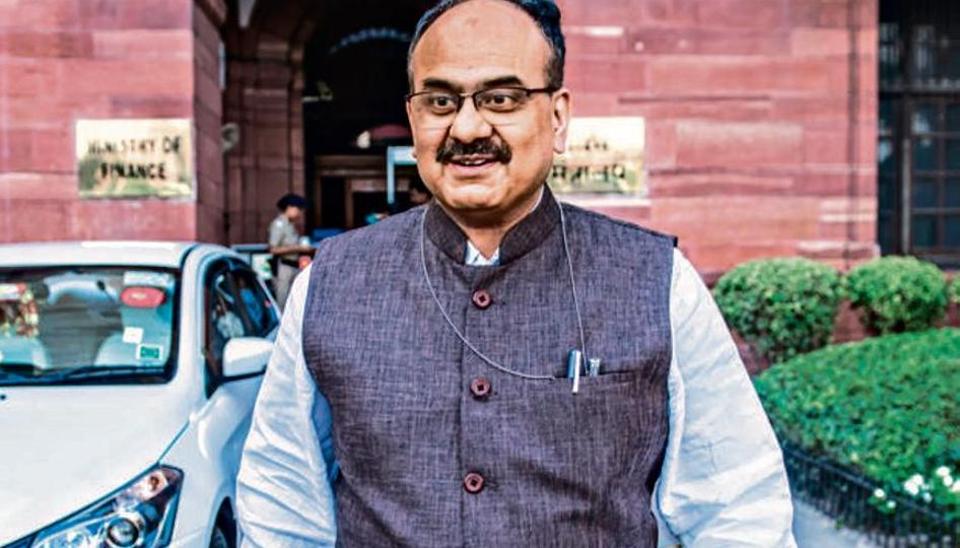
‘GST collection indicates positive growth recovery’, says finance secretary Ajay Bhushan Pandey
Goods and Services Tax (GST) collections have been robust for two months in a row, posting year-on-year growth for the first time since the pandemic.

 Prefer HTon Google


Goods and Services Tax (GST) collections have been robust for two months in a row, posting year-on-year growth for the first time since the pandemic. Finance secretary Ajay Bhushan Pandey told Hindustan Times in an interview that the Indian economy, which shrank 23.9% in the June quarter, is on a path of rapid recovery. Edited excerpts:
The US economy has seen a sharp 33.1% jump in Q3. Do we expect a similar kind of recovery in India?
So far as the economic recovery is concerned; we have seen certain credible signs of recovery, particularly in last two months. In many areas, we have reached the pre-Covid level and in some areas we have gone into the positive territory. In some of these areas we have not only reached the pre-Covid level, but also crossed that and seeing further growth. I will tell you some figures, which are the latest ones. First is that of E-Way bills, which indicates production, movement of goods and also consumption. In order to get E-Way bill generated, you have to produce things, you need to transport them, and then businesses have to receive and sell them. So it gives you an indication of business activity.
This September, the growth in E-Way bills was 10% compared to last year and in this October the growth is about 21% y-o-y [year-on-year]. The other statistics is of electronic invoice [E-Invoice], for which we don’t have y-o-y comparison as it started from October 1, 2020 only.
However, on the first day it was about ₹8 lakh. Now, it has gone up and on October 30 it was more than ₹29 lakh. Similarly, if you see the GST collection figures, we had a positive 4% [annualised] growth in September 2020 at ₹95,480 crore. The collections saw more than 10% growth in October this year at ₹1.05 lakh crore compared to the same month last year, which definitely shows a pick-up in the economic activities. So, as far as the indirect tax is concerned, we have not only reached the last year’s level, but we have also gone beyond.
What is the position of direct taxes? So far, what are the direct tax collection figures?
You see, the total gross tax collection is down by 22%. It consists of corporate tax and also the personal income-tax (I-T). When we make comparison in corporate tax, we have to keep in mind that last year for the first six months, the corporate tax [rate] was at 30%. This year it is at 22%. There was also significant impact due to pandemic and lockdown for first four-five months [of the current financial year]. Now, over the next few months situation will improve further. Eventually, if the indirect tax is doing well, we will see some positive impact of that on direct tax also.
The gross direct tax collection [both corporate and personal income tax] in current financial year [till October] is ₹5,05,000 crore. Last year [till October] it was ₹6,41,000 crore. The gross corporate tax collection this financial year so far is ₹2,65,000 crore compared to ₹3,60,000 crore in the same period last year. Going forward, direct tax collection will also improve along with indirect taxes.
Do you think, another stimulus is required for faster growth recovery?
The government has taken a series of measures since March this year. Various packages have been announced by the Union finance minister. Each time, we stepped in and intervened with relief or stimulus packages as per the need of the hour and the needs of the targeted group of populace, etc. And such packages need to be different to address the different requirements. We were constantly monitoring the ground situation and responded accordingly.
In the month of April, because of the lockdown, what was needed was cash in the hands of the vulnerable section of the society such as farmers and the Jan-Dhan [bank] account holders. We put the money in their hands, directly in their bank accounts. About 80 crore people were given free food grains per month, per family. Similarly, for MSMEs, ₹3 lakh crore fund was provided for their working capital for which the government gave the guarantee and of which about ₹2 lakh crore was already sanctioned. We also gave relief in taxation, by extending timelines, by deferred payments, by giving them TDS relief. So, stimulus can’t be one size fits all or one size will fit at all the times.


