After keeping the repo rate unchanged at 6.5% in line with expectations, outgoing RBI governor Raghuram Rajan will now have to turn his attention to other unfinished agenda, prime among which is the formation of the monetary policy committee (MPC). He will also map out the impact of the GST and the additional funds that will flow into the system from increased salaries following the Pay Commission award.
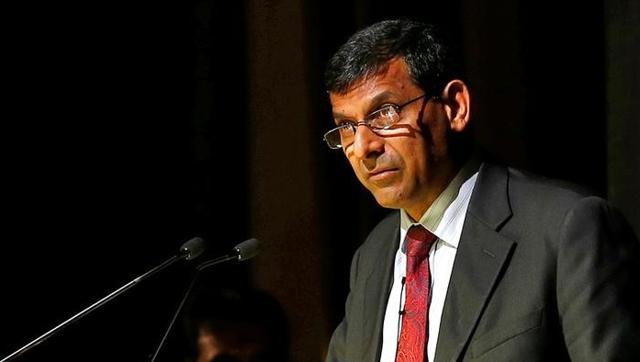
The formation of the MPC is an issue that Rajan feels can institutionalize the mechanism of setting interest rates. The composition of the committee which saw initial run-ins with the government, will be equally divided between the central bank and the government, with the RBI governor having the casting vote. A quick formation of the committee will assist the governor in formalizing the process of interest rate setting.
Rajan on Tuesday also gave an indication on the RBI’s next course of action, with respect to the GST. The passage of the bill to pave way for the new indirect tax augurs well for the growing political consensus for economic reforms, he said, adding that while timely implementation of GST will be challenging, “there is no doubt that it should raise returns to investment across much of the economy, even while strengthening government finances over the medium term. This should boost business sentiment and eventually investment.”
The next item on RBI’s agenda would be the Pay Commission award. “Looking ahead, the momentum of growth is expected to be quickened by the normal monsoon raising agricultural growth and rural demand, as well as by the stimulus to consumption spending that can be expected from the disbursement of pay, pension and arrears following the implementation of the 7th CPC’s award.” The RBI governor said that full implementation of the recommendations of the 7th Central Pay Commission on allowances will affect the magnitude of the direct effect of house rents on retail inflation. “While the direct statistical effect of house rent allowances under the 7th CPC’s award may be looked through, its impact on inflation expectations will have to be carefully monitored so as to pre-empt a generalisation of inflation pressures,” Rajan added.
{{/usCountry}}The next item on RBI’s agenda would be the Pay Commission award. “Looking ahead, the momentum of growth is expected to be quickened by the normal monsoon raising agricultural growth and rural demand, as well as by the stimulus to consumption spending that can be expected from the disbursement of pay, pension and arrears following the implementation of the 7th CPC’s award.” The RBI governor said that full implementation of the recommendations of the 7th Central Pay Commission on allowances will affect the magnitude of the direct effect of house rents on retail inflation. “While the direct statistical effect of house rent allowances under the 7th CPC’s award may be looked through, its impact on inflation expectations will have to be carefully monitored so as to pre-empt a generalisation of inflation pressures,” Rajan added.
{{/usCountry}}Much has also been written about Rajan’s efforts to clean the banking system of the huge bad loans it had taken onto itself. From asking banks to recognize early on and to make provisions for bad loans, to rolling out debt restructuring exercises, actually two in two years, the RBI has been striving uphill. There is still much to be done and much more to do to bring companies and banks together to take harsh decisions.
Bank license is another area where the RBI has a lot to cover. While it has successfully kept away large business houses from owning banks, new banking formats like the small finance banks and the payments banks are yet to develop. The latter has already seen teething problems with shortlisted applicants abandoning their ventures on grounds of viability – enough to annoy the RBI to issue veiled warnings of penalties. But screening of applicants and selecting serious players is less than half the battle; use of technology to allow the poor to transfer money, at a low cost, is a big task.
Then there are areas such as the bond market and financial inclusion. But the biggest feature of Rajan’s legacy and one which the new governor will have to carry forward, is to strengthen RBI’s independence. The role of the financial regulator will also have to be aligned to strategizing financial sector reform. That would be one of the biggest items on the plate.