Driverless cars are on the roads, already, in some places. How about ‘riderless’ bikes?
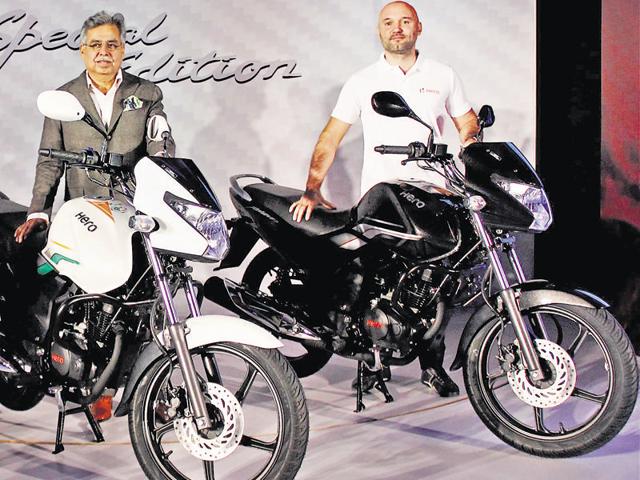
At a time when technology giants and global carmakers are putting their weight behind autonomous or driverless vehicles, Delhi-based Hero MotoCorp is working on self-driving motorcycles that can make two-wheeler rides safer; at present, 25% of road accidents in India involve two-wheeler riders, according to government data.
“By nature, bikes are unstable… The method of the driverless cars needs to be adopted in bikes to prevent accidents, to inform the driver that there could be an accident in the next few seconds,” said Malo Le Masson, head of global product planning at Hero MotoCorp.
A group of engineers at Hero’s Centre of Innovation and Technology, near Jaipur in Rajasthan, are working on a mix of radar and camera technologies that could be affordable to commuters. The technologies will have vehicle-tovehicle and vehicle-to-grid communication. The highway and its surroundings will be mapped on a grid, and the bike’s position and progress on it tracked. The software will inform the rider what is around the corner, literally — whether a vehicle is approaching, at what speed, whether a collision is imminent — and warn the rider to slow down.
The technology is also capable taking evasive action such as bringing the bike to a halt, reducing the speed, or even manoeuvring the vehicle to a safer turn. Radar, Masson said, is useful to measure the distance between two objects, but camera is needed to measure trajectory.
{{/usCountry}}The technology is also capable taking evasive action such as bringing the bike to a halt, reducing the speed, or even manoeuvring the vehicle to a safer turn. Radar, Masson said, is useful to measure the distance between two objects, but camera is needed to measure trajectory.
{{/usCountry}}Hero’s autonomous vehicles will not be driven by autobots (a kind of robot). “We need to find the balance between warning the rider and intervening to take over the vehicle… and ensuring that the vehicle’s stability is not unsettled,” said Masson.
Autonomous technology is normally beyond the reach of commuters. According to a report by consultancy firm IHS Automotive, self-driving technology is expected to make existing cars costlier by around $7,000 (₹4,66,445) by 2025, though the price differential could drop to $5,000 in 2030 and $3,000 by 2035.
Hero wants to bring the cost down sooner. “The technologies are already available, but the breakthrough is the cost at which you bring them to the market,” Masson said.
The average price of a twowheeler in India is ₹55,000-57,000, or less than $1,000. Even a $500 differential would make a bike ₹33,000 costlier at current prices.
Hero wants to be ready to deploy these technologies before 2025. Masson believes regulations will shift towards autonomous driving, and even make parts of it mandatory.
Hero is not the only bikemaker experimenting with selfdrive. Japan’s Yamaha has tested motobots that ride bikes. Yamaha CEO Hiroyuki Yanagi told the Financial Times in March that it will take another decade to build driverless bikes — much the same timeline as envisaged by Hero. Google has sought permission from California authorities to test driverless motorcycles.
Among India’s leading bikemakers, Bajaj is yet to start on the technology, while Honda said is working on driverless concepts in Japan.
Masson said Hero might look at some partnerships with Google and Apple if some common platforms can be used.