
 E-Paper



Budget 2026: Sensex, Nifty 50 record worst budget-day trading in at least six years
Budget 2026: The Sensex and Nifty 50 have registered losses in 8 out of 15 budget days since 2014, when the Narendra Modi govt first came to power.

 Prefer HTon Google


India's stock market recorded its worst budget day in six years after the Union Budget 2026 proposed a higher tax to curb F&O trading and new way to tax share buybacks.
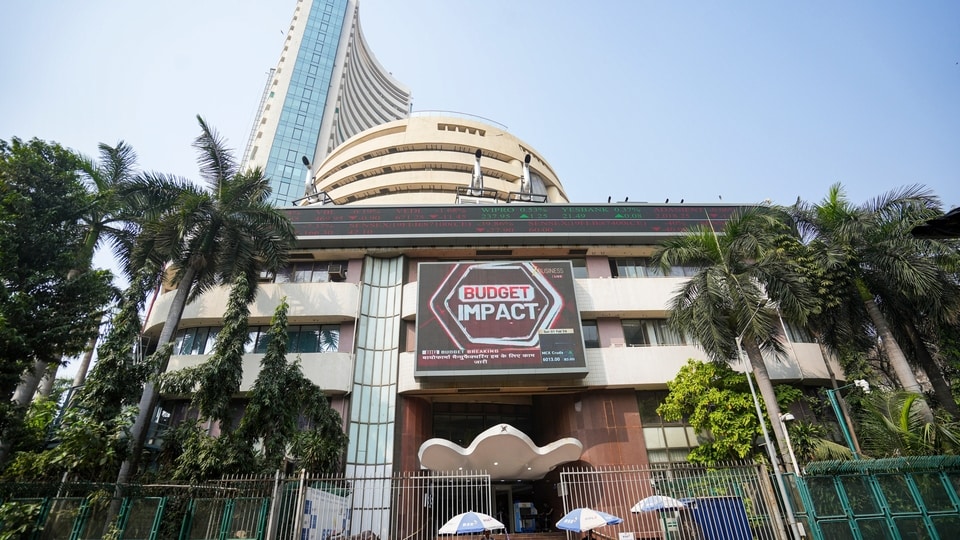
The 30-share S&P BSE Sensex fell 1.88%, or 1,546.84 points, to 80,722.94 even as the broader NSE Nifty 50 fell 1.96%, or 495.20 points, to 24,825.45. Fifteen of 16 major sectors ended in the red. The small-caps and mid-caps slid 2.7% and 2.2%, respectively.
While the budget focused on development, “it stopped short of the firepower that could have delivered immediate excitement for markets,” said Trideep Bhattacharya, president and chief investment officer of equities at Edelweiss Asset Management.
The market drifted lower during the session after the government proposed a hike for STT on F&O trading, a move that divided analysts.
“F&O are a margined, risk-managed product and not typically the primary source of retail excess, which raises questions on whether STT will deliver the desired outcome or instead weigh on liquidity,” said Pranav Haridasan, managing director and chief executive officer at Axis Securities.
Stocks in focus after Budget 2026
- BSE Ltd. fell 7.8%, while brokerages Angel One Ltd. and Groww Ltd. dropped 9% and 5.1%, respectively, after the STT hike.
- Nifty PSU Bank slid 5.6% after no fresh divestment-related measures were announced, while defence stocks retreated 5.1%.
- Nifty IT index rose 0.6% after the government said that buybacks would be taxed as capital gains, a move analysts see as favourable for cash-rich tech companies.
- Paytm Ltd. rose 1.9% on enhanced incentives for the UPI.
- Textile stocks Gokaldas Exports Ltd., Arvind Ltd., KPR Mill Ltd., Vardhman Textiles Ltd. jumped 2-11% as the government proposed setting up of mega textile parks.
The absence of significant incentives for foreign investors, who have withdrawn $23 billion from local equities since the start of 2025, also hurt sentiment.
“At a time when India needs to deepen market liquidity and attract global flows, raising frictional trading costs sends the opposite signal,” said Jimeet Modi, founder and chief executive at SAMCO Group.
Track live updates on Union Budget 2026 here.
Budget history under Narendra Modi govt
10 July 2014: The first budget of the Narendra Modi government was by the late Finance Minister Arun Jaitley—Sensex fell 72.06 points, or 0.28%.
28 February 2015: The first full-year budget of the Modi government presented by Jaitley. Sensex rose 141.38 points, or 0.48%.
28 February 2016: Sensex fell 152.3 points, or 0.65%. Later that year, the government announced demonetisation to outlaw ₹500 and ₹1,000 notes.
1 February 2017: The budget date was changed to allow the government to implement the budget from the start of the fiscal year on 1 April. The Sensex fell 152.3 points, or 0.65%. Jaitley merged the railway budget with the general budget this year. Later that year, on 1 July, the government launched the Goods and Services Tax in the biggest indirect tax reform since 1947.
1 February 2018: The final budget by Jaitley before his death on 24 August 2019. Sensex rose 485.68 points, or 1.75%.
1 February 2019: The interim budget was presented by Union Minister Piyush Goyal due to Jaitley's ill-health. Sensex rose 0.58% or 212.74 points.
5 July 2019: The first budget by Nirmala Sitharaman, who continues to be the finance minister of India. Sensex fell 0.98% or 394.67 points.
1 February 2020: The first full budget by Sitharaman. Sensex fell 2.42% or 987.96 points. Just months later, India implemented a lockdown to curb the Covid-19 pandemic. That sent the fiscal math into a disarray.
1 February 2021: Sitharaman delivered a budget to pull the Indian economy out of a pandemic-induced slowdown. The Sensex rallied 5%, or 2,314.84 points, to 48,600.61.
1 February 2022: Sensex rose 1.46%, or 848.4 points, to 58,862.57.
1 February 2023: Sensex rose 0.26%, or 158.18 points, to 59,708.08.
1 February 2024: An interim budget before Lok Sabha elections. Sensex fell 0.14%, or 106.81 points, to 71,645.30 points.
23 July 2024: Sensex fell 0.09%, or 73.04 points, to 80,429.04.
1 February 2025: Sensex rose 0.01%, or 5.39 points, to 77,505.96.
1 February 2026: Sensex fell 1.88%, or 1,546.84 points, to 80,722.94.


